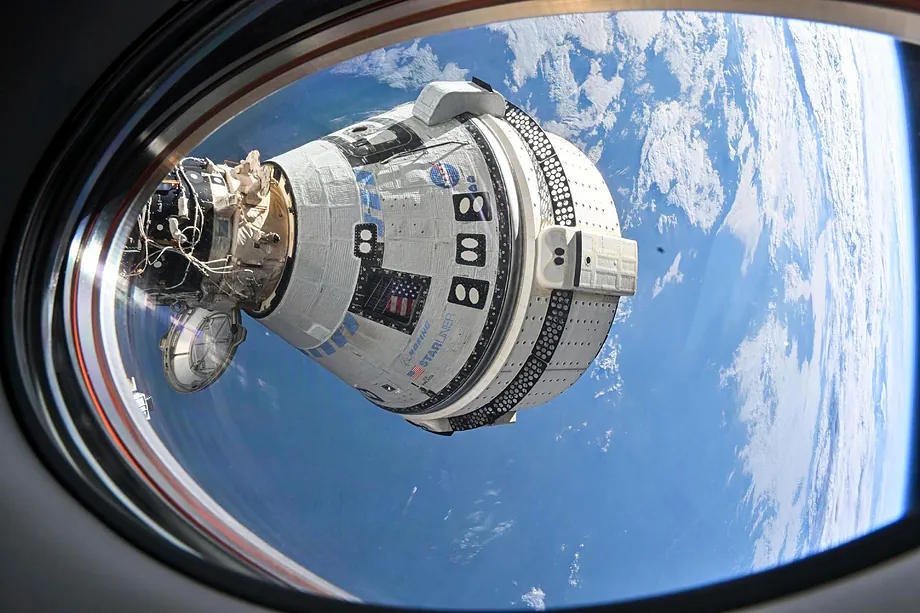
On September 7, 2024, the Starliner spacecraft, developed by Boeing, returned empty and incident-free to Earth from the International Space Station (ISS) after triggering a crisis that affected two NASA astronauts: in June of that year, Sunita Williams and Butch Wilmore traveled to the ISS aboard the vehicle during its first test flight, but a series of failures detected during the journey related to ice leaks and thrusters led NASA to decide weeks later that they would not return in it for safety reasons.
Instead of spending eight days at the ISS, as planned, the two crew members were stranded for a whopping 286 days until March 2025 when it became feasible for them to return in another spacecraft, SpaceX's Crew Dragon, which has been operational since 2020. Although the veterans Williams and Wilmore insisted that such setbacks are part of their job and assured they were fine, the two crew members became popularly known as the astronauts 'stranded' at the ISS.
Nearly two years after the return of the Starliner spacecraft to Earth, NASA and Boeing claim to be ready to shortly resume test flights and finally have this vehicle join the Crew Dragon and become a space taxi to transport astronauts to the ISS.
As announced on Monday night at a press conference, their goal is to conduct an unmanned test flight next December or in January 2027, and if all goes well, carry out a manned test mission in 2028.
"We have worked closely with Boeing to address the issues identified in previous Starliner flights and intend for this vehicle to fly again to support operations at the International Space Station and future commercial space stations," stated NASA director, Jared Isaacman.
According to the agency's top official, "we are living through the most exciting era of space exploration since the Apollo program," which will entail "a growing demand for launch vehicles, transfer stages, landing modules, and, of course, spacecraft capable of transporting astronauts," Isaacman pointed out shortly after SpaceX, Elon Musk's company, achieved a significant milestone in the development of another spacecraft, the Starship, by successfully entering Earth's orbit for the first time.
Boeing's Starliner is part of the Commercial Crew Program along with SpaceX's Crew Dragon, which NASA initiated a decade ago to entrust private companies with transporting its astronauts to the ISS, while the agency focuses on developing spacecraft like Orion for more ambitious goals: going to the Moon and eventually to Mars.
"We will start with an uncrewed Starliner-1 mission to the ISS to validate the improvements made to the spacecraft and collect the flight data we need," explained Isaacman. "From there, we will use what we learn, continue to implement corrective measures identified by our Investigation Team, and complete the necessary testing and certification for manned flights. Our current plan is to resume transporting astronauts on Starliner-2 in 2028," he summarized.
A new rocket to transport astronauts to the ISS
Additionally, NASA announced its intention to use the Vulcan rocket for transporting astronauts to low Earth orbit. To enable it to travel to the ISS when the Atlas V rocket completes its final flight, NASA will collaborate with Boeing and United Launch Alliance.
Last February, NASA released the findings of the investigation that analyzed the technical issues that led to the unmanned return of Starliner during its first test flight with astronauts. In total, 61 recommendations were identified to ensure that future missions meet the required standards for manned space flights.
Specifically, issues were detected in the thrusters of the reaction control system of the service module, which were operating outside the established parameters. This caused the loss of control experienced during the test flight, as detailed by the company in a press release.
Ground tests and analyses revealed that the thruster performance issues were due to various causes, including the thermal environment and certain design characteristics.
Based on these conclusions, Boeing has made thermal modifications to the spacecraft's service module, which NASA will evaluate during the unmanned test flight. Additionally, an additional modification will be implemented in the design of the thruster valves.
Boeing will also introduce other improvements to the spacecraft, including installing new thrusters in the crew module, new batteries, and minor modifications to the parachute system to enhance its performance and reliability.
By the way, the troubled test flight of the Starliner was the final space journey for Sunita Williams, who retired from NASA in January 2026 after completing 27 years of service.