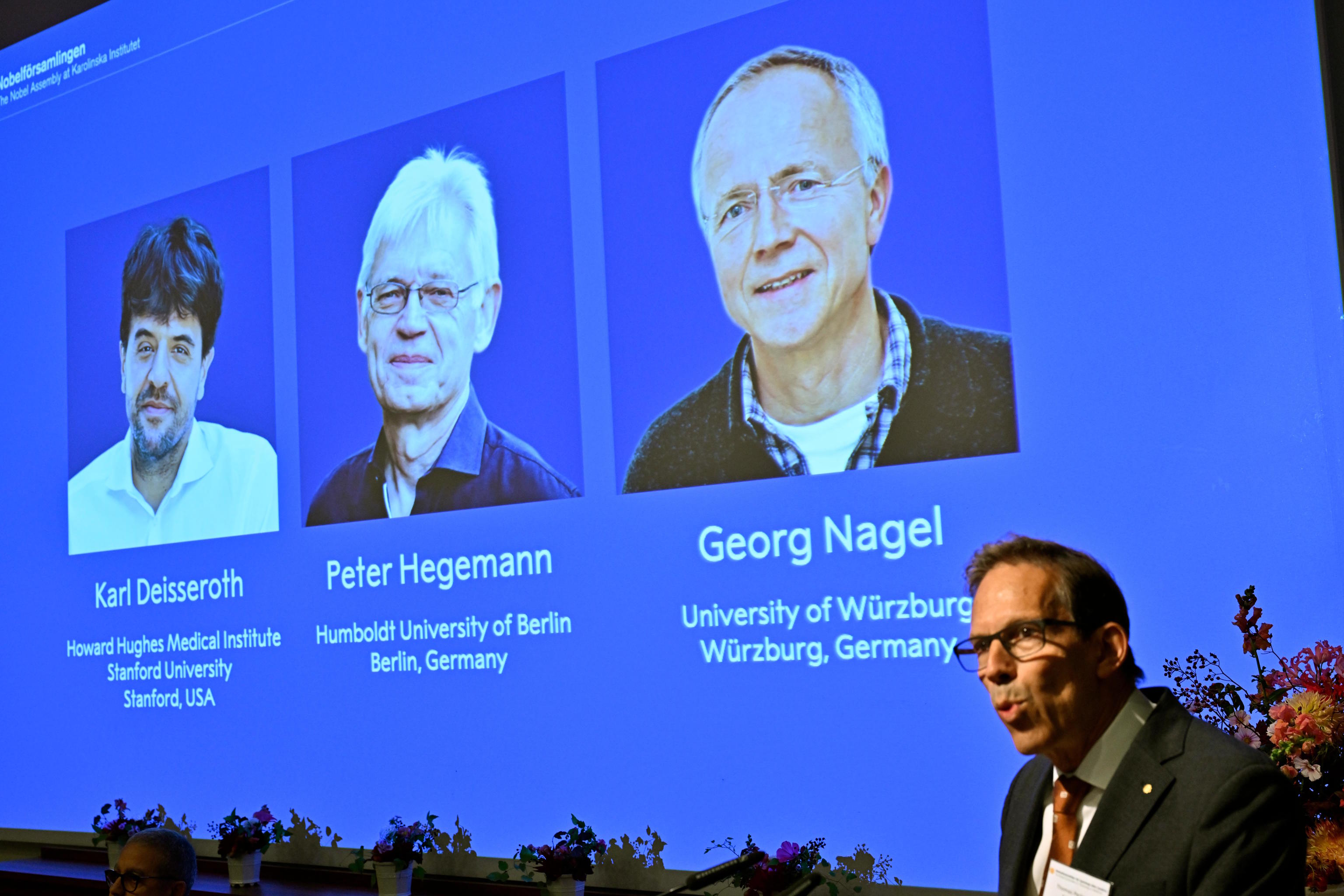
Through optogenetics, the Swedish Academy points out that the awarded researchers have paved the way to understand the brain's functioning, allowing them to "identify the neural circuits that control memories, feelings, and specific behaviors relevant to neurological and psychiatric disorders."
"Optogenetics has radically transformed our understanding of the brain," emphasizes the jury, recalling that "in the field of clinical medicine, this method is being used to attempt to restore vision in visually impaired individuals."
One of the awardees, Karl Deisseroth, received the BBVA Foundation Frontiers of Knowledge Award in its VIII edition.
Last year, the Nobel Assembly at the Karolinska Institute in Stockholm awarded the Nobel Prize in Physiology or Medicine to Mary E. Brunkow, Fred Ramsdell, and Shimon Sakaguchi "for their discoveries related to peripheral immune tolerance."
In 2024, researchers Victor Ambros (Hanover, USA, 1953) and Gary Ruvkun were honored for their discoveries of microRNAs and their role in genetic regulation. Their findings have helped answer questions about why cells in our body differentiate and have diverse characteristics even though they contain the exact same set of instructions in their DNA.
The Medicine award, which traditionally kicks off the Nobel Prize announcements, will be followed by the Physics award on Tuesday, October 6. The Chemistry laureates will be announced on Wednesday, October 7, while the Literature award will be revealed on Thursday, October 8. The Peace Prize will be announced on Friday, October 9, and the Economic Sciences Prize will take place on Monday, October 12.