For over five months, we have been experiencing the latest health crisis related to an infectious outbreak. The hantavirus, specifically the Andes strain, became a known virus for Spaniards, although in endemic areas, people have known and lived with it for many years. For Spain, the hantavirus joined the list of increasingly common outbreaks in recent times in these latitudes (Ebola in 2014, Zika in 2015-2016, COVID in 2020, MPOX in 2022...).
This trend is not going to disappear, but outbreaks and epidemics/pandemics will continue to appear as they have been -even more rapidly due to various factors-. Everything could be summed up with the phrase: "It's not over until it's over... but it's never over," as infectious disease specialist Anthony Fauci titled his farewell essay from public service, published in the New England Journal of Medicine. The original title (It Ain't Over Till It's Over... but It's Never Over. Emerging and Reemerging Infectious Diseases) was completed in the second part with "emerging and reemerging infectious diseases" because the key is that not only can previously unknown infectious diseases appear (as with COVID), but old diseases thought to be overcome can constantly resurface, like measles in different Western countries.
Fauci's essay was recalled this Tuesday by José Miguel Cisneros, Head of the Infectious Diseases Service at the Virgen del Rocío University Hospital (Seville), associate professor at the University of Seville, and research director of the Biomedicine Institute of Seville, in a communication session for journalists organized by the Spanish Society of Infectious Diseases and Clinical Microbiology (Seimc). "Threats will come, although we do not know which ones, but even at a faster pace and with greater risk than before," he stated.
In that sense, in 2019, before COVID, the WHO established the 10 threats to global health, although they have not been updated in these seven years. At that time, the organization mentioned air pollution and climate change; non-communicable diseases such as cancer, diabetes, and cardiovascular diseases; a future influenza pandemic; fragile and vulnerable environments affected by conflicts, displacements, droughts, and hunger; antimicrobial resistance; Ebola and other pathogens with high epidemic potential; weakness in primary care; vaccine hesitancy; dengue; and HIV. "Of the 10, six are related to infectious diseases," Cisneros emphasized.
In response to this scenario, Seimc published in 2022 the book Infectious Diseases in 2050, which made it clear that the only diseases that would improve by that year are viral hepatitis. The rest will remain the same (HIV, tuberculosis, COVID) or even worsen (influenza and respiratory viruses, STIs, malaria, various hemorrhagic fevers, emerging zoonotic viruses, bioterrorism, infections related to immigrants and refugees, antimicrobial resistance infections, etc.).
The situation will not improve, Cisneros was firm, because "bad news is accumulating." For example, climate change and global warming have altered the vectors that transmit infections and have modified water pollution environments. Up to 58% of infectious diseases worsen with climate change, the specialist emphasized. "The Paris Agreement to limit warming to a maximum of two degrees Celsius will not be met, so the risk of these threats will worsen," he stressed.
The specialist also mentioned the blow suffered by the WHO after the US withdrew its funding (one in every five dollars was funded by that country) and the current US policy of cutting back on research does not bode well -the US Centers for Disease Control and Prevention (CDC), the world's most prestigious institution in the fight against emergencies, especially infectious ones, has deteriorated significantly.
In this context, Cisneros established the 10 most serious threats that will come faster than in other times driven by these characteristics, although he emphasized that he is not a "fortune-teller" and that it was "an approximation," chosen based on what has been experienced so far to approach what may come in the future. In the case of Spain, the specialist recalled another problem: the lack of specialists via MIR, as Spain is almost the only country in all of Europe that does not have the specialty officially.
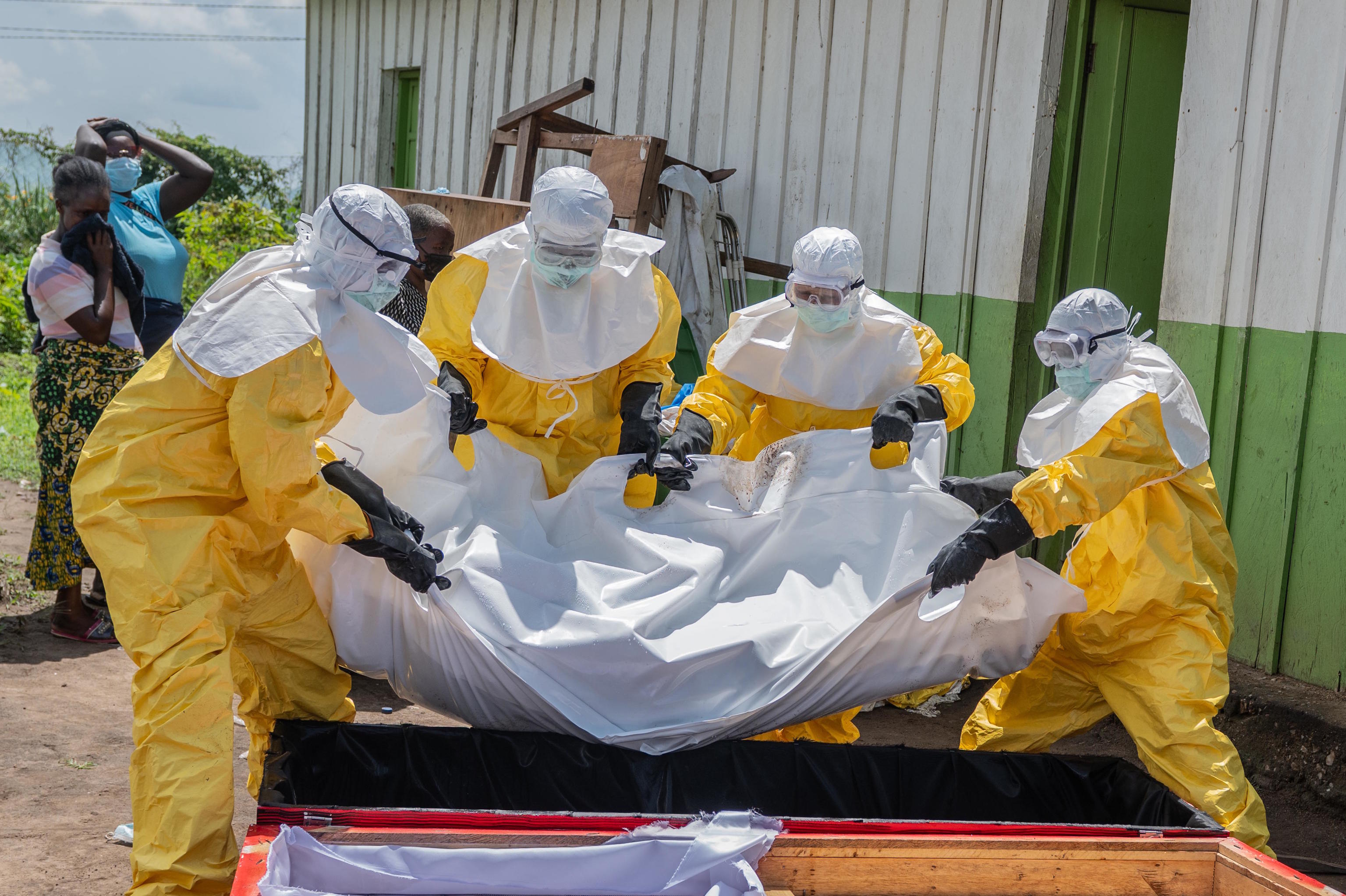
The current virus that caused the latest outbreak of Ebola in the Democratic Republic of Congo (Bundibugyo), detected and declared in May although it had been circulating since January, has already caused 6,757 cases with an extremely high mortality rate (48.3%): 3,267 people have died. "There is no infectious disease with this mortality rate. It is an extraordinary mortality rate that undoubtedly is partly due to having a healthcare system that is probably very precarious to care for these patients who quickly become critical," Cisneros pointed out.
According to the expert, the numbers have remained the same since May, it has not been controlled, something that had not happened in previous outbreaks. The immediate intervention of the WHO had managed to control it much more quickly, but the reduction in funding for the WHO and the CDC has influenced, according to Cisneros, in addition to this new virus not being detected with the initial tests, which caused a significant delay in diagnosing the initial cases.
Crimean-Congo Hemorrhagic Fever
This infection may cause an alarm perhaps not locally, but at the level of Spain. Crimean-Congo hemorrhagic fever, which until a few years ago was unknown in our country, has been here since 2016 when the first case was described and published -a 62-year-old man who was bitten by a Hyalomma tick while walking in the countryside in Ávila-. He died at La Paz, being the first autochthonous case in Western Europe (and the first case of person-to-person transmission in Western Europe was a nurse who attended to him, who managed to recover).
Since then, there have been 23 cases and seven deaths in Spain. "The Hyalomma tick is widespread in our country, so there is a possibility that this could escalate," the expert pointed out, citing the case of Turkey, which in just two decades has become one of the main global hotspots. This would generate a problem, Cisneros indicated: the admission of these patients to the High-Level Isolation and Treatment Units (UATAN) -Spain has seven UATANs with a capacity for 16 beds.
This virus explains the importance of the One Health concept like no other infectious disease, Cisneros explained, using the example of Seville. "We have the presence of the vector, the Culex mosquito; an area with many migratory birds such as Doñana, which are the reservoir; the territory such as wetlands-rice fields and climatic conditions. It is a problem that cannot be addressed solely from Medicine," he stated.
Years ago, there was no presence in Spain until a seroprevalence study was conducted in Seville in 2004, revealing a 0.6% rate. The first two cases were reported in Cadiz in 2010, followed by three more cases in Seville in 2016, and in 2020, 77 cases in Badajoz.
The number of cases has been increasing and spreading to more provinces, potentially extending to the entire country due to the presence of the mosquito. Dengue was once considered exotic, but now there are autochthonous cases in Europe, with 612 cases reported since 2022 in France, Italy, and Spain. The disease known as monkeypox, previously confined to African forests, experienced a significant outbreak that reached Europe, with Spain at the forefront, registering 8,636 cases in 2022. Tuberculosis, closely linked to poverty and malnutrition, poses a threat if strains resistant to current treatments emerge. In 2024, there were 10.7 million cases worldwide.
Avian Influenza (H5N1) is a potential candidate for the next pandemic, present in 12 European countries with cases in domestic and wild birds. Multidrug-resistant bacterial infections were a significant concern in Spain in 2023, with 173,653 cases and 24,582 deaths.
Hantavirus, not a global threat but significant for crisis-related infectious disease information, highlighted the importance of media responsibility in covering such events. The "infodemic," an overload of information - whether true or false - during a public health emergency, can jeopardize progress made in areas such as vaccination.