It is just past nine o'clock on the evening of June 8, and in the depths of the Santiago Bernabéu stadium, one of the most talked-about encounters in the previous days takes place. Pope León XIV and the singer Bad Bunny, who shared the streets of Madrid for four days, meet in private. The Puerto Rican artist arrives with his family and a few others, and they chat for a few moments. The visual documentation has not been made public, but the Vatican itself confirmed the meeting. There was much speculation surrounding one of the images of the year. Such as Benito (the real name of the music star) appearing on a giant screen during the Pontiff's vigil - Robert Prevost -, taking a break during one of his 10 concerts at the Metropolitano stadium. It was a globally impactful image, depicting the encounter between two different yet complementary ways of viewing the world, which, despite not being widely publicized, took place in Madrid.
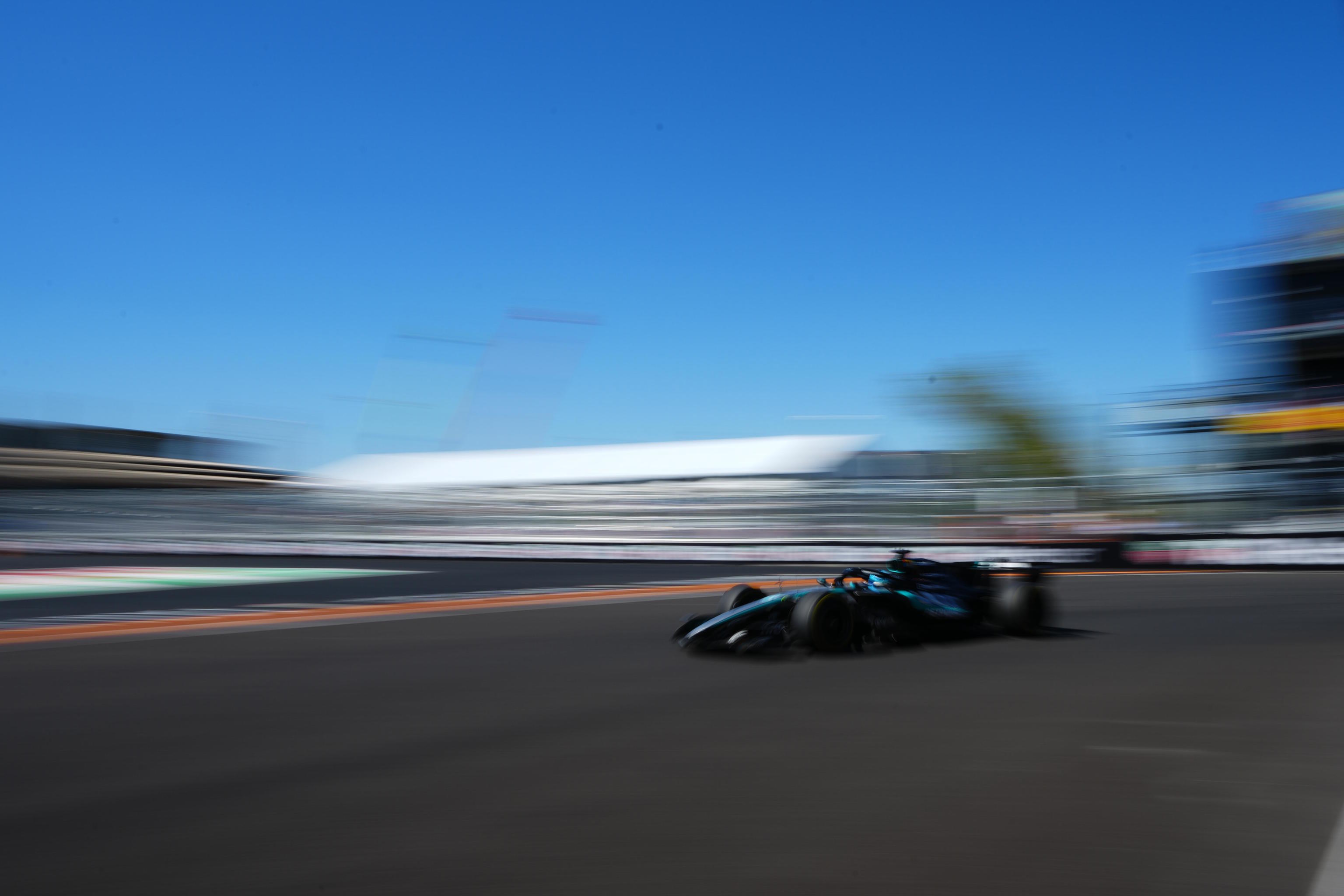
Let that moment serve as an epitome of the shining portrait of a capital where major events have taken root. This is despite not being able to fully utilize the Bernabéu due to its acoustic limitations. The fact is that, just yesterday, the promoters of the Formula 1 Grand Prix - held a month ago at Ifema - boasted numbers that exceeded the initial expectations, despite skepticism from certain quarters. "We initially estimated the impact on Madrid at 450 million euros, and today I can exclusively announce that it is 545 million," declared José Vicente de los Mozos, president of Ifema, during the Expansión Luxury Forum. "Every euro generated at the GP has had a return of four euros in the Madrid economy," he added, referring to figures from a study commissioned by PwC (PricewaterhouseCoopers) after the major motorsport event.
They had been eager to reveal figures to crown a weekend where those who flew to the capital to witness the race were surprised by the transportation and mobility response. The analysis also mentions 11,000 jobs created - surpassing the estimated 8,900 - and an 85% hotel occupancy rate. The crown for a capital that has reached the peak of 2,000 million euros in events during a calendar year was built on those 5,470 meters of asphalt that make up the Madring circuit.
"Madrid has shown that it can host in the same year two musical residencies by Bad Bunny and Shakira, a Formula 1 Grand Prix, a Masters 1000, or an NFL game," boasts the Tourism Councillor of the City Council, Almudena Maíllo. "This is possible because the world of sports and music trust in the city's organizational capacity, mobility, security, air connectivity, hotel infrastructure, and entertainment offerings," she adds in her analysis to this newspaper. The Madrid City Council highlights one of the qualities of this scenario, considering the different venues spread across all parts of the capital: "It is the key to destigmatizing tourism." Another essential point for this reality to continue without headaches: "They have to be and are compatible with the residents' lives, thanks to mobility plans."
Because over these 12 months, these headline events have left their mark. The latest, as a paradigm of the destigmatization that is always sought in the corridors of the City Council and the Community, was Shakira's residency, with 13 concerts held between September and October at the Iberdrola Music venue in Villaverde. Over 700,000 spectators passed through this ephemeral city baptized as Macondo Park by the Colombian singer, with an average of 54,000 per evening. The direct and indirect economic impact, with thousands of visitors from beyond our borders, exceeded 400 million euros.
Three weeks before the second NFL chapter
As mentioned at the beginning, the Pope and Bad Bunny coincided in the early days of the Madrid summer. And although León XIV did not travel to Spain by any means to compete with the Puerto Rican artist, his visit, with over 2,300 accredited journalists, had an impact of over 70 million. There was also a meticulously coordinated mobility and security operation to support the Pontiff's fleeting visits to a handful of locations in the metropolis. Bad Bunny left La Casita and returned home after 10 concerts at the Atlético stadium, with over 630,000 attendees (40% from outside Madrid) and an economic impact of around 212 million.
Thus, music and sports are the main ingredients of this cocktail that has managed to reach the peak of 2,000 million. A panoramic view that until recently only other major European cities contemplated. Hence, Madrid appears among the five most relevant cities in the Ranking of Sports Cities 2026 on the planet, alongside London, Los Angeles, Paris, and New York, which leads the list.
Precisely, more than one person traveled from The Big Apple to witness the NFL game held 11 months ago at the Santiago Bernabéu stadium. The Miami Dolphins and the Washington Commanders faced off, leaving an impact of 70 million euros with the events held throughout the week. Of the 78,610 spectators at the stadium, 42,000 were international tourists. There was a 90% hotel occupancy rate in the Centro, Chamartín, and Chamberí districts. In three weeks, there will be a second American football episode, also at the Bernabéu. Several more are on the horizon.
Thanks to the Mutua Madrid Open, the Masters 1000 that has been one of the highlights of the city's sports calendar for years, with almost 400,000 spectators throughout the tournament, an economic impact of 250 million was estimated at the Caja Mágica facilities in the Usera district, which will be enhanced in 2028 with a new 8,500-seat pavilion.
The capital has also established itself as a gateway between Latin America and Europe, with significant interest from the United States. As evidenced by the aforementioned NFL landing. Over 800,000 (+9%) travelers boarded a plane from across the Atlantic in the last 10 months. Air traffic is one of Madrid's main assets to sustain this ecosystem. The data from January to August can serve as an example: 137,777 flights (+5.96%), 124 airlines (+5.88%), and 561 routes (+28.38%), with direct connections to 232 cities (+14.29%) in 80 countries (+12.68%).
Many things have happened in these 12 months in a Madrid that has become a magnet. Now, the key, looking towards the 2030 World Cup and with hopes of hosting the final, is to sustain this entire ecosystem. And to do so wisely.