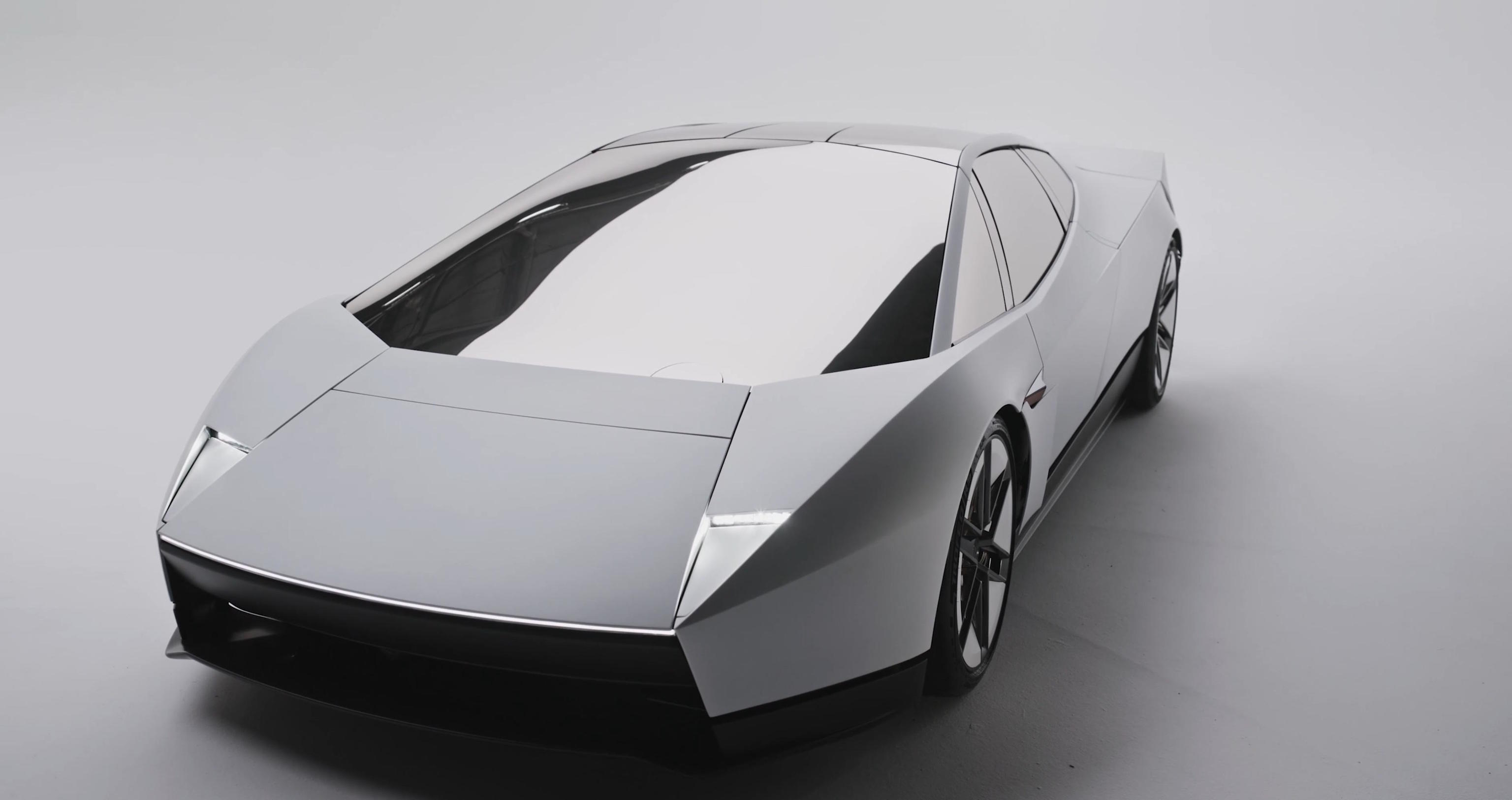
This advancement not only allows it to take off from the ground and perform aerial maneuvers, but also achieve an impressive acceleration from 0 to nearly 100 kilometers per hour in less than a second. The presentation took place at the SpaceX rocket testing facilities in McGregor, Texas, where demonstrations of its capabilities were carried out, despite its development being almost nine years behind schedule.
During one of the tests, the Roadster demonstrated its agility by ascending a curved ramp, flipping over, being propelled into the air, performing a somersault, and landing in a controlled manner thanks to its propellers. Elon Musk, CEO of Tesla, reacted to the successful maneuver with a simple "Well, it worked." The propulsion system, a result of collaboration between Tesla and SpaceX engineers, uses compressed air stored at very high pressure instead of conventional fuel.
Tesla has announced three versions of the Roadster: the Performance version, a two-seater, promises to accelerate from 0 to nearly 100 kilometers per hour in less than 1.6 seconds, and will incorporate a suction system under the body to improve road grip. The Thrust version will further reduce acceleration to less than 0.9 seconds thanks to its rear propellers. And the Rocket version, a single-seater, will be the only one capable of taking off and maneuvering in the air, in addition to reaching nearly 100 kilometers per hour in less than 0.59 seconds.
The company has also stated that the sports car will be able to exceed 370 kilometers per hour and offer a range of over 480 kilometers. Musk highlighted that the Roadster will be the only Tesla car designed for long-term manual driving, as the company focuses on autonomous vehicles and robotics. However, the entrepreneur acknowledged that the sports car is not necessarily "optimized for safety", raising questions about its approval for public road use.
Production of the Roadster is scheduled to begin in 2028, although final prices have not yet been announced. The second generation of the Roadster was originally presented in 2017, with a promise of commercialization in 2020 for around $200,000. Since then, the project has experienced successive delays due to the prioritization of other vehicles such as the Model Y and the Cybertruck, as well as autonomous driving programs and humanoid robots.