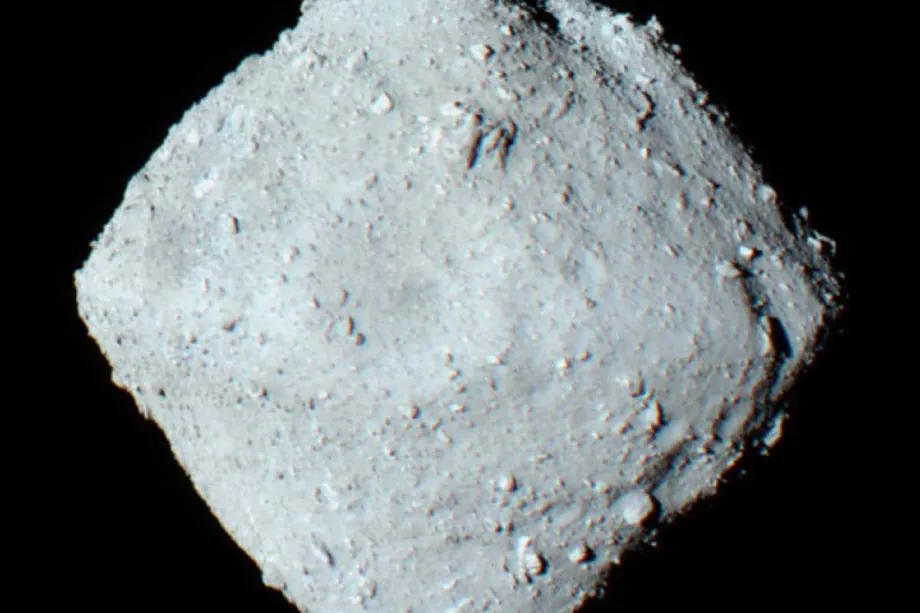
Measuring just 11 meters in diameter, the object 1998 KY26 puzzles scientists with its strange behavior. Among the latest research, a new study rules out that it is a dark comet with ice reserves inside. Meanwhile, Harvard astrophysicist Avi Loeb suggests it could be a Soviet spacecraft that went missing in 1988. However, everything could be resolved thanks to the Japanese probe Hayabusa2, which is scheduled to approach the asteroid in 2031.
First observed in May 1998, 1998 KY26 exhibits an acceleration that cannot be explained solely by gravity and also spins at an extraordinary rate, completing a rotation every 5.35 minutes.
One hypothesis suggested it could be a dark comet, with gas released from internal ice altering its trajectory. However, research by scientists from the Georgia Institute of Technology, published in the journal 'Icarus', questions this explanation. Their models indicate that the surface and interior of the object are too warm to retain ice for long periods. The researchers point to solar radiation pressure and heat emitted by the asteroid itself as possible explanations for its movement.
The most surprising hypothesis comes from Avi Loeb, who has proposed that 1998 KY26 could be related to Phobos 1, a Soviet probe launched in 1988 to study Mars. The spacecraft lost contact with Earth in September of that year after receiving an incorrect command that prevented it from orienting its solar panels toward the Sun, causing it to run out of power. This possible connection remains an unconfirmed theory.
Answers could arrive in July 2031, when the Japanese mission Hayabusa2 is scheduled to encounter the asteroid at its final target. The spacecraft will be able to directly study its composition, surface, and the forces that alter its trajectory. Until then, 1998 KY26 will remain one of the most puzzling small objects in the Earth's vicinity.