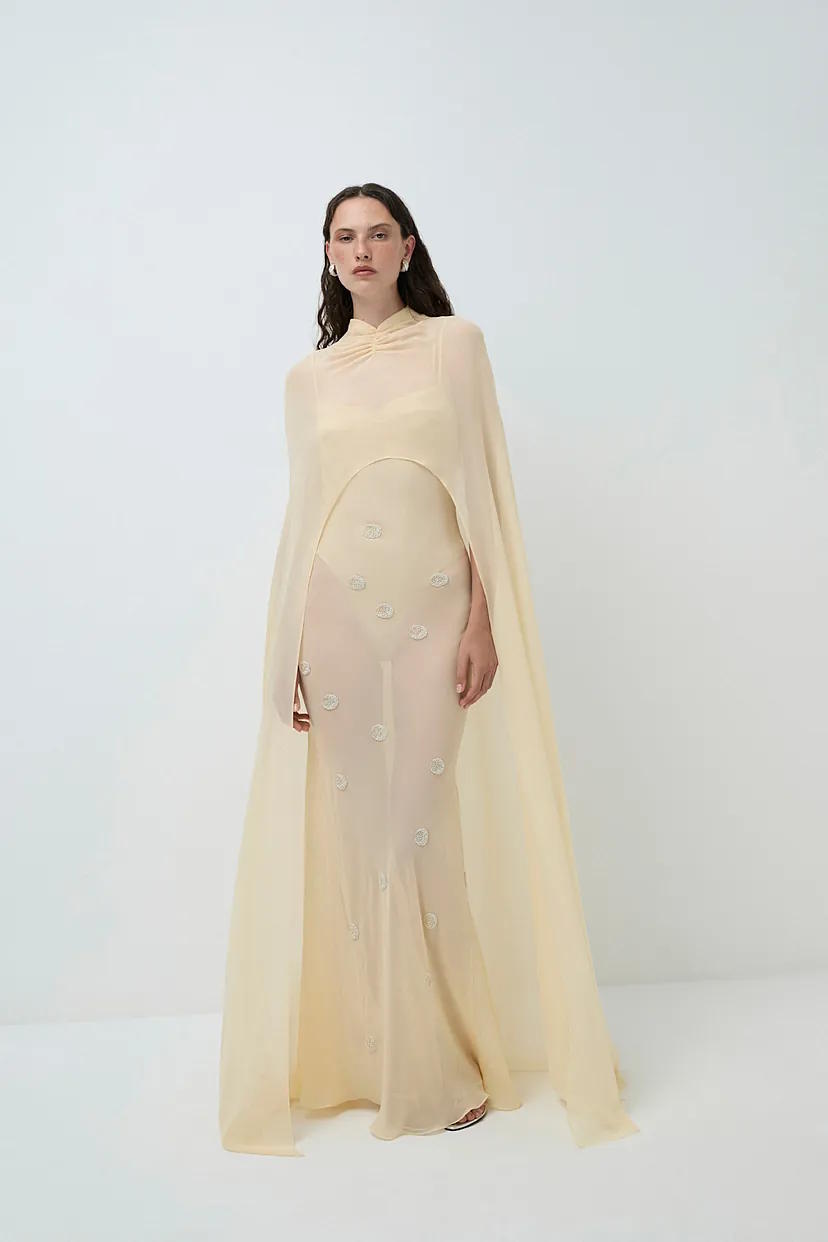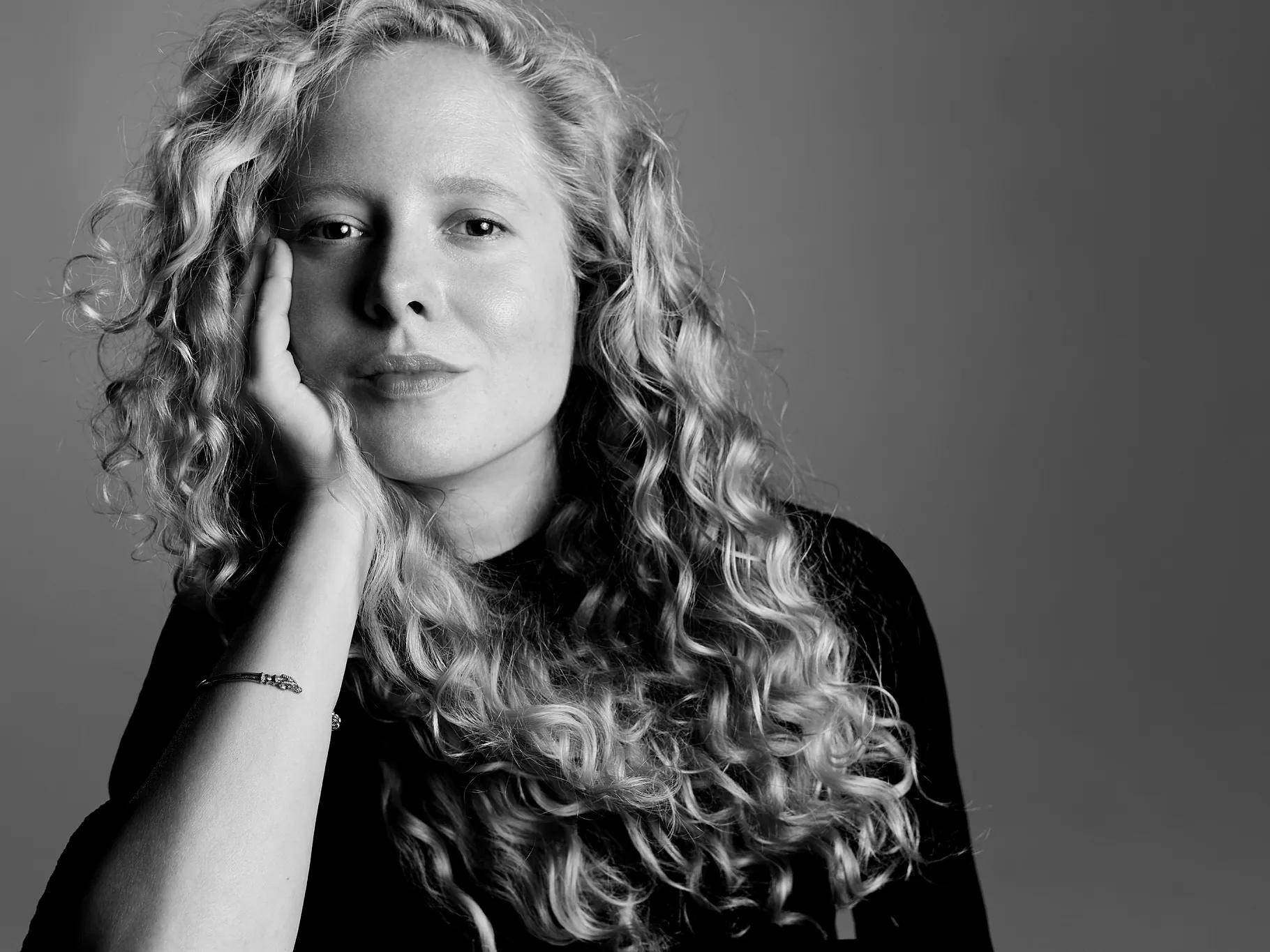
Anna October is a Ukrainian designer who has been building a recognizable brand at first glance for over 15 years: feminine dresses, clean silhouettes, a modern romanticism that avoids excess and opts for precision. From Kiev to the international circuit, her brand has conquered markets like the American one, where she has even collaborated with J.Crew, and has managed to grow without losing her identity. Behind that luminous aesthetic is a creator who believes in cultural diplomacy, in craftsmanship as a living heritage, and in fashion as a refuge, message, and form of daily resistance, something especially important when working in a country plagued by a war that will turn four years old on February 24.
Question. What orbit does your work currently revolve around?
Answer. My work always revolves around my brand, with a clear idea: to develop clothing for the modern, sensual yet empowered woman, and to bring Ukrainian culture and craftsmanship to the world. Apart from the collections (we release four per year), I recently launched a collaboration with the jewelry brand Sova. It has been a very interesting experience as it was my first immersion into the world of diamonds, gold, and other precious materials. Additionally, I have been working on a film about a Ukrainian festival.
Q. Where are you working from? Are you still in Ukraine despite the war?
A. Yes, I work in Ukraine because my team and company are here. Everything we do is made in Ukraine, and I do not want to change that label under any circumstances. My goal is to bring the best quality of our craftsmanship to the world. It has always been my dream to create a Ukrainian brand of international renown, one that is famous and successful.
Q. Before delving into that topic, I would like to ask you about your creative process. What is it based on, how do you work?
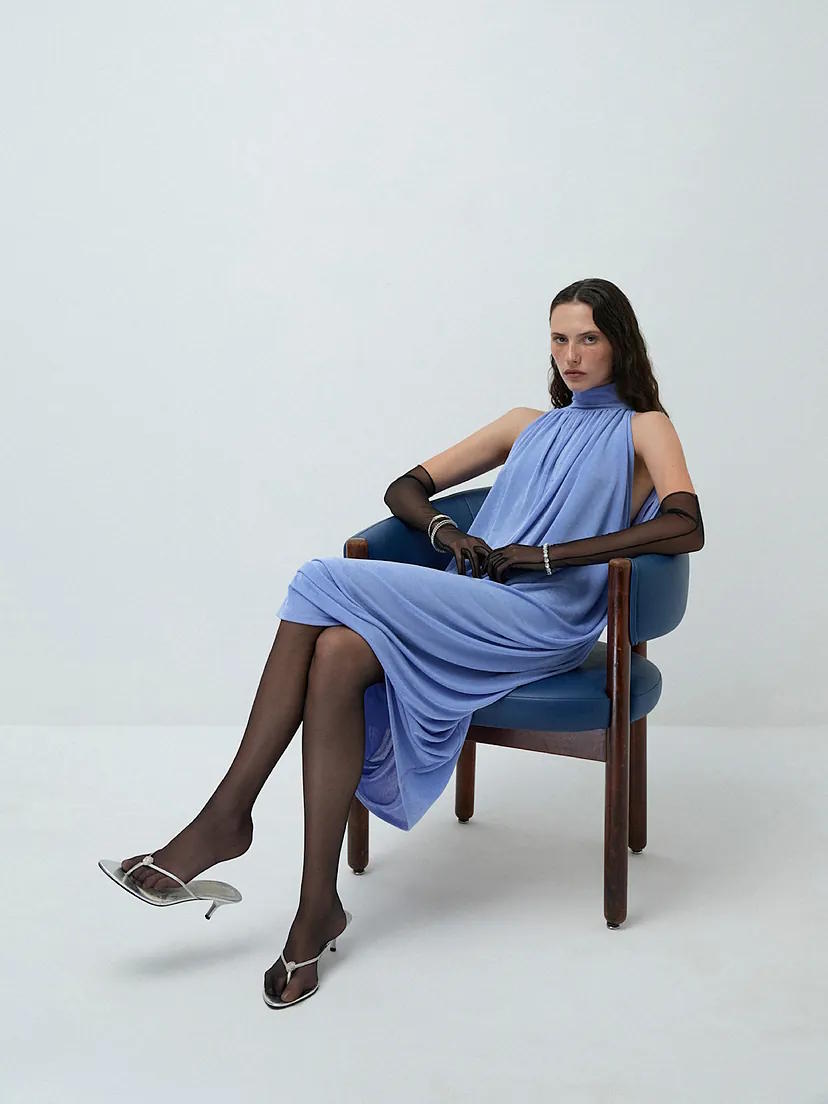
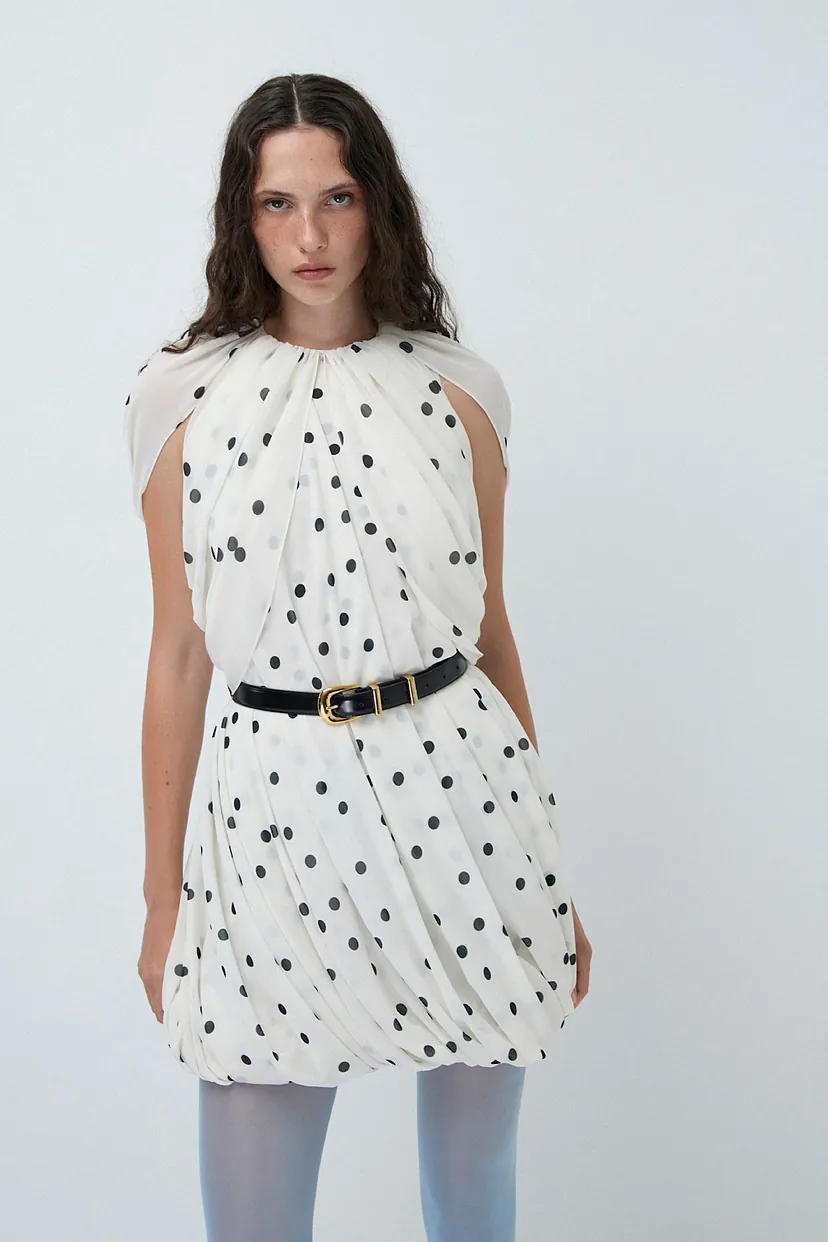
A. My process is always different, but it usually starts from a feeling. Since I do not work as an artist and this is a business, I have to adjust to timelines and be practical. I think about how I want my client, the woman who will wear the next collection, to feel. Perhaps it's about a suit, something new in my style, as I mainly make dresses. For example, in the Spring/Summer 2026 collection, I thought about color. I wanted it to be very diverse, like a rainbow, what I call a "vitamin collection." That was the starting point. I knew I wanted very striking and colorful blocks. Also, to introduce prints, as I had never done them before. We did polka dots. All these concepts, colors, stories... matter, but they are not the most important. The garment and how the woman will feel in it is what matters most. The fabric, how it feels, how it fits, how it makes the body more beautiful and feel confident. That is the purpose of my work. That is what I focus on.
Q. Many brands currently talk about femininity, but you explore it in a non-literal way. What does it mean for you today to be feminine through clothing?
A. In an era like ours where everything is possible and almost everything is acceptable, I would not like to use the concept of femininity in an outdated or stereotyped way, considering the damage that all the clichés and stereotypes that have marked it in the past... For me, femininity is about enjoying your body. For example, I feel like a woman only when I am with a man because if not, I am simply a human being. I don't see the difference. Femininity is reflected in clothing. It defines which parts of your body you like the most, how you enjoy your natural features. I believe that women can be sensual and feminine, but also strong and intelligent. You can wear a slip dress and still be the CEO of a company. That connects with me.
Q. During the last Paris Fashion Week, where you had your showroom, did you see anything that particularly impressed you?
A. I was excited about the first show by Matthieu Blazy for Chanel. With all due respect to the creative directors who have designed for the house... these were the first garments that I really wanted to wear! Because they look truly innovative and I think it's great. Otherwise, I don't know. My focus is always more on relationships and human feelings. I think the industry and business are overloaded with a fast pace and superficial relationships. That's why I think it's important to focus on people you really like and feel close to, as well as on human needs and relationships. No, I'm not following the trend...
Q. Has this changed a lot since you started until now? In fact, is there any aesthetic decision you made in your early days that you would completely reject today?
A. No, because maybe without them, without the bad decisions, I would never have gotten here. I like all my mistakes. There was a moment when I designed a dress that became very, very popular. I had no experience in the industry, so I didn't know I had to keep doing it. When everyone started to copy it, I said to myself, "Well, I don't want to do what others are doing." And that was a mistake because I gave other brands the opportunity to do business with my ideas. Then I had to be smarter, I learned.
Q. Being a Ukrainian designer in recent years inevitably involves a political interpretation. How do you balance your national identity with keeping fashion a space of beauty and creativity?
A. I always balance it because I never use my background or nationality as an argument. But my nationality is deeply rooted in my understanding of beauty and my perception of women and clothing. Instead of seeing it as a loss, I see it as an invitation to reclaim the narrative on our own terms. It is rooted in me, and my perception of beauty is based on my past, which I appreciate. My collections are very joyful. The context of my daily work, my team's work, and what is happening in my country do not influence the mood or colors of the collection. I use my collection as a message of hope and empowerment. I know that many Ukrainian women who buy my clothes, even if they don't know where to go, despite the war, force themselves to dress up, to get ready, to go out. This makes them feel more alive and gives them energy. I am very inspired by that.
Q. Is it a kind of psychological resistance?
A. Yes, absolutely. I even know it from my own experience. When there are bombings at night, I see from the window how my house shakes. My team is in the bomb shelter. In the morning, you are tired, haven't slept, but you comb your hair, put on makeup, dress up, and go to the office. We have a coffee and catch up. Sometimes it's two worlds, but creating ideas and garments gives a lot of energy.
Q. How has the war affected your business?
A. It has affected everything. The biggest challenge is working in a war zone. Every day there are bombings, I see bombs, missiles, drones from the window. Also, since the airspace is closed, transportation to import fabrics and export or take to stores takes more time. It's more expensive. It's very complicated. Everyone is exhausted, from stress and sleepless nights. Additionally, no man can leave the country, and they are all required to serve in the army, so they can be forcibly recruited at any time, as recently happened to a colleague on my team. It's tremendous. We lose friends every day. But, regardless of that, since you asked how it has affected the business, I can say that I have restructured a lot and faced every challenge that has arisen.
Q. Do you feel any pressure to represent something beyond your brand?
A. No. It's my decision. I believe in cultural diplomacy. If I have a community, a network of contacts, and the brand is popular, I have a voice. I can talk about incredible Ukrainian artists and how beautiful their work is.
Q. In fact, what role does local craftsmanship play in your current process?
A. Firstly, to support the local community because I adore these women. The first thing I feel is the warmth of their hands in the garments. It's different when something is hand-embroidered or woven. I love it. I want to support craftsmanship because I don't want them to choose another job. I want them to feel that what they do is important and enjoy spreading it and teaching it to others. I also have a social project in Ukraine about career guidance. I teach orphaned children what professions they can choose in the fashion world: seamstresses, pattern makers, etc., and their value because younger generations sometimes do not understand it. I want this to be sustainable.
Q. Speaking from Ukraine in such a globalized fashion industry as ours, is it important?
A. Very much. For some people who are not interested in politics or do not read the news and buy a dress from my brand, their first contact with the country is the "made in Ukraine" label. The way it is manufactured and the experience the customer has is their way of absorbing Ukrainian culture through the product. That's why it's important to manufacture with quality and be clear in explaining the situation and what we represent.
Q. You live in Ukraine. You export a lot. Is there any country that is a particularly good customer?
A. The United States is currently our largest market. We created a product that became super popular there. We also had an incredible collaboration with J.Crew. Perhaps because I grew up with American cinema and all those gorgeous actresses, it's as if I carry their DNA inside me. The brand has also become very popular in Australia and the United Kingdom. What do you think of the digital noise in current fashion? I think it's excessive. I might be wrong, but I'm a bit old school. I focus on creating a good collection and properly serving the end customer. A lot of hype and marketing events without a product make no sense.
Q. So how do your customers find your brand? Because I think nowadays it's very difficult for a fashion brand to say, "Hello, I'm here. This is what I do," and have people come to you.
A. If I were to start now, I would never start a brand. I think it's the worst time to do it. But it's been 15 years already, and that's a long time. My customers know the brand, that's how they come to me. Someone experienced it or saw it on someone and was interested in what they saw and looked it up online.
Q. Have you ever thought about abandoning the project during these years?
A. To be honest, yes, I did think about it just last summer. It was a very tough year for the fashion industry. If the big brands suffered sales drops, imagine how tough it was for independent ones. And I thought, "Should I close?" Then I realized that no, I have nothing else to do in life. If we accept that a brand has three phases - first: you can develop it; second, you can sell it; and third, you can close it - I decided that at this moment, the most fun and satisfying thing for me would be to keep developing mine. Don't they say the darkest moment is always just before dawn? After these reflections in the summer, and after continuing to work with resilience and reflection on how to manage the situation and what to build, it turned out that the season was a complete success. So yes, I feel like it really has been a dawn.