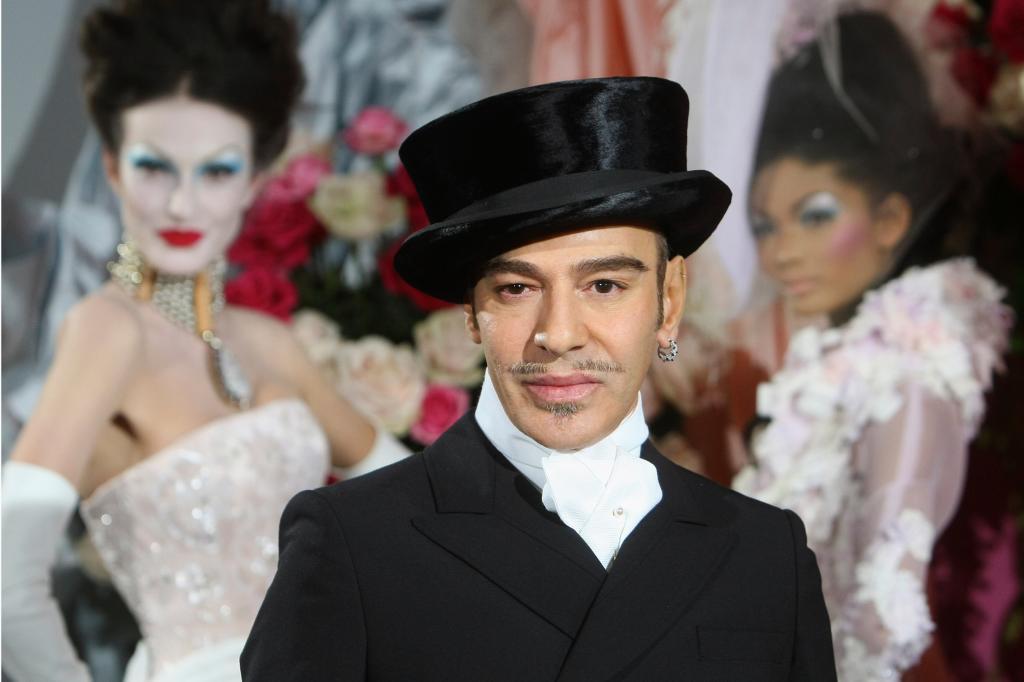
Everything was set for John Galliano to be honored at the Met gala and the accompanying exhibition in early May 2027. However, after much criticism of this choice, the designer himself has chosen to resign from it.
"After much reflection and conversations with all involved parties, I have decided, with great sadness, that it is best for the exhibition not to take place at this time," the creator stated in a release.
He added: "I continue to fully take responsibility for the pain caused by my words in the past, especially for the harm I caused to the Jewish and Asian communities, and I remain deeply remorseful. I understand that genuine remorse cannot be demonstrated through an exhibition, institutional recognition, or a single public gesture. It is an ongoing responsibility, demonstrated through listening, learning, and one's behavior over time."
This decision by the designer is, according to The New York Times, a response to criticism from Met donors, politicians, and Jewish leaders, who did not view the museum honoring Galliano favorably.
This is a longstanding issue. The Gibraltarian designer entered a rehabilitation center in Arizona, United States, in the spring of 2011 after directing antisemitic insults at a group of women dining at a restaurant in Paris. Among the outbursts that night was "I love Hitler!" In June of the same year, as reported by 'The New York Times,' Galliano would repeat in court that he could not remember the insults attributed to him.
However, the incident had been immortalized. Someone had taken care to record the scene on video. At 50 years old, the designer stated in front of three judges that the causes of the hate crime he was accused of were stress and his addiction to alcohol, sleeping pills, and diazepam. Two years later, in his first interview since then, he admitted that it was "the worst thing I have ever said in my life, but it was not my intention. Now I realize that I was angry with myself and said the most evil thing I could say. [...] When my assistant showed me the images, I vomited. I was paralyzed by fear." That conversation with the American edition of 'Vanity Fair,' he confessed, was the first conversation with a media outlet that he had while sober.
This episode cost him a fine of about 6,000 euros and his position as creative director at Dior and at John Galliano, the eponymous brand he had founded.
It also led to his ostracism from the fashion world until he gradually regained his uniqueness at Maison Margiela, where he remained as creative director until 2024.
Last March, Zara made headlines by announcing its partnership with the Gibraltarian designer to delve into its archives for two years. The former creative director of Dior will deconstruct and redesign key pieces of the iconic Inditex brand through "a haute couture process."
"Galliano's figure," reflects Ana Velasco-Molpeceres, historian and author of Ropa vieja: historia de las prendas que vestimos, "comes from the time before the internet as we know it today. His shows for Givenchy, Dior, and his own brand were very recognizable on television and in magazines, where he was labeled as the enfant terrible, which is a marketing strategy where surprise does not surprise."
Although it seemed very likely that Galliano would regain glory, this decision by the designer to withdraw from the Met gala tribute could jeopardize his total social rehabilitation.