If you ask a nutritionist where to start taking care of yourself, the answer is always the same: get rid of ultra-processed foods. It is the only unanimity in a science where everything is debated, especially on social media. Well, the most powerful man in the world, Donald Trump, feeds on them, and his own health chief, Robert F. Kennedy Jr., has confirmed it.
"The interesting thing about the president is that he eats really bad food, which is McDonald's, sweets, and Coca-Colalight, but he drinks diet sodas all the time. He has the constitution of a deity, I don't know how he's alive, but he is," stated the Secretary of Health of the United States on The Katie Miller Podcast, where he addressed questions about his dietary guidelines to eliminate ultra-processed foods, the controversial inverted pyramid that has generated so much debate, and also revealed who in the cabinet had the most "crazy" eating habits.
According to Kennedy, there is a perception that Trump "fills himself with poison all day" when he is traveling, although the president himself claims that he only chooses fast food in those circumstances because he trusts the standards of large corporations and does not want to get sick. On the contrary, when he is at Mar-a-Lago or the White House, he consumes "really good food."
"You don't know how he keeps walking, let alone being the most energetic person any of us have ever known... but I think he actually usually eats pretty good food; I mean, he has incredible health," affirmed Kennedy. He even added that Dr. Oz looked at his medical records and said he "has the highest testosterone level he has ever seen in an individual over 70 years old." But his diet is the opposite of Kennedy's, who relies on "meat and fermented vegetables like sauerkraut," which he brings to parties and dinners at restaurants to maintain his regimen.
We asked nutritionists about this apparent paradox of having iron health while eating like Donald Trump. "We have all seen the President of the United States eating hamburgers at some point. And you don't have to be a nutritionist to know that consuming a large amount, even if not exclusively, of junk food and sodas is far from healthy," says Ismael Galancho, the dietitian-nutritionist of Leo Messi.
The dietitian recalls experiments like the documentary Super Size Me, where director Morgan Spurlock exclusively eats McDonald's food for 30 days. "It shows a rapid deterioration of his health," he continues.
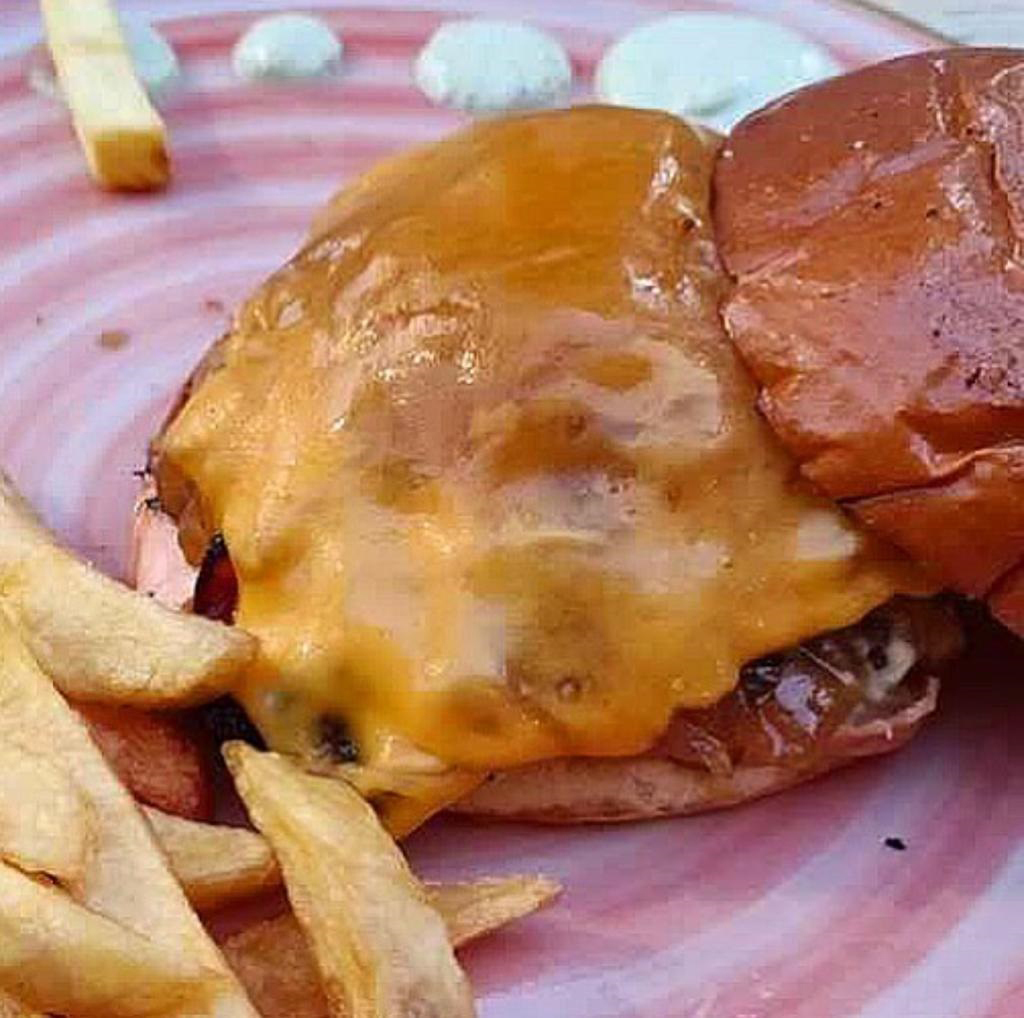
"For every bite you take, the caloric intake is very high, combined with a low nutritional density. This means that you ingest many calories and few essential nutrients and vitamins," he explains. But we should not only worry about the calories. "These types of burgers have a high amount of saturated fat, trans fats, and also sugars."
The importance of other habits
For Galancho, the effect of this poor diet will always be negative. But how negative? "It will depend on the rest of the habits," he responds. One thing that always happens in all sectors is that we forget that we are a 360, Galancho reflects. Nutritionists tend to think that diet is the most important; fitness professionals that exercise is essential; psychologists that stress or anxiety management is crucial, when... everything is important and interconnected.
"If you eat a lot of that type of food, plus you are sedentary, sleep poorly, and suffer from stress, the damage is enormous. Now, if you eat the burger but you are a person who exercises a lot, in fact, there are many athletes who also eat like that, who sleep well and rest, the impact will be much less," he explains.
Looking at Donald Trump, he surely is not an elite athlete and will not exercise much; therefore, that type of diet will be negative. "But, first, he probably doesn't only eat that, and then, he has other empowering habits: he is a narcissistic person, therefore, he has fairly good stress tolerance levels, socializes quite well, and that can cushion the negative impact a bit," Galancho elaborates.
The problem of fast dopamine
The low-quality burgers contain additives and reinforce reward circuits, experts warn.
The nutritionist from Neolife, Adriana Martín Peral, points out another interesting reflection: refreshing drinks, snacks, or fast food are carefully designed to stimulate the brain's reward system and therefore make us want to keep consuming them. Why can a simple bite turn into a craving chain?
"The answer lies in a precise combination of ingredients. These products are not simple foods but formulations subjected to numerous industrial processes. Unlike homemade food, ultra-processed foods often include aromas, additives, and flavor enhancers that artificially amplify the taste experience, making each bite seem more intense and pleasurable."
Although these additives do not provide nutritional value, according to the nutritionist, they do stimulate the senses, generating a feeling of enjoyment that encourages further eating. "In essence, it is a chemical and sensory strategy: small adjustments in the formulation that, combined with other factors, make it difficult to perceive satiety and make stopping much more complicated."
In the short term, they result in the release of dopamine, the pleasure neurotransmitter: "It raises blood glucose levels and causes subsequent drops that generate more cravings. This creates a continuous cycle that causes fatigue and bloating after eating, sudden energy changes, and more hunger shortly after."
Both experts warn: repeated consumption of this type of food will lead to health problems such as obesity, type 2 diabetes, cardiovascular diseases, digestive problems, and a higher risk of certain types of cancer. "Understanding how these mechanisms work allows us to make more conscious decisions and opt for real foods most of the time, reducing the influence of these strategies designed to keep us eating more," concludes Martín Peral. In short, fuel your body with the best gasoline because, unless you have the 'constitution of a deity,' ultra-processed foods are a poison that your metabolism will not forgive in the long run.