Before getting into the subject, it is important to clarify three very important things. First, before starting a training plan, it is advisable to seek the guidance of a qualified professional to design a personalized route. Second, abs are made in the kitchen, not in the gym (without a good diet, exercising is pointless). And third, miracles do not exist: if someone promises a shortcut to achieving a 'six-pack' in record time and with no effort, they are deceiving us.
Under these three premises, it is undeniable that strengthening the abdominal muscleswith the right exercises is one of the best gifts we can give to our body, not just for aesthetic reasons (which also matter, let's be honest), but for health reasons. Because, even though the visual aspect may be what drives us to train, the most important thing about the abdomen is what is not visible: its anatomical functions as a postural guarantor, stabilizer of the spine, protector of the viscera, optimizer of breathing, facilitator of movement (flexion, rotation, etc.), and an undisputed ally in physiological acts such as urination or defecation.
Having said all that, what are the best exercises we can do at home to reduce belly fat and achieve a flat stomach? Well, these would be them, but let's be clear that results will not come unless, in addition to accompanying them with a protein-rich diet, we also include daily cardio sessions, such as 10,000-step walks.
As stated by the experts at the Harvard Medical School in their report 'Core exercises'. In that study, published in mid-2017, it was claimed that planks were the best option because "it works the entire abdomen and back in a more balanced way - even the glutes - with a single exercise instead of isolating it to tone it as done with crunches, which is much more beneficial for our real life".
Despite the challenge of who lasts longer and all that, Dr. McGill, considered one of the best experts in core muscle work, says that sets should last between 10 and 30 seconds, with brief pauses between repetitions of two to three seconds. Why? Because that is the duration that ensures they are performed with the correct posture.
How many days a week can we do them? It would be advisable to do them a minimum of three days and start with three sets.
What is the correct posture?
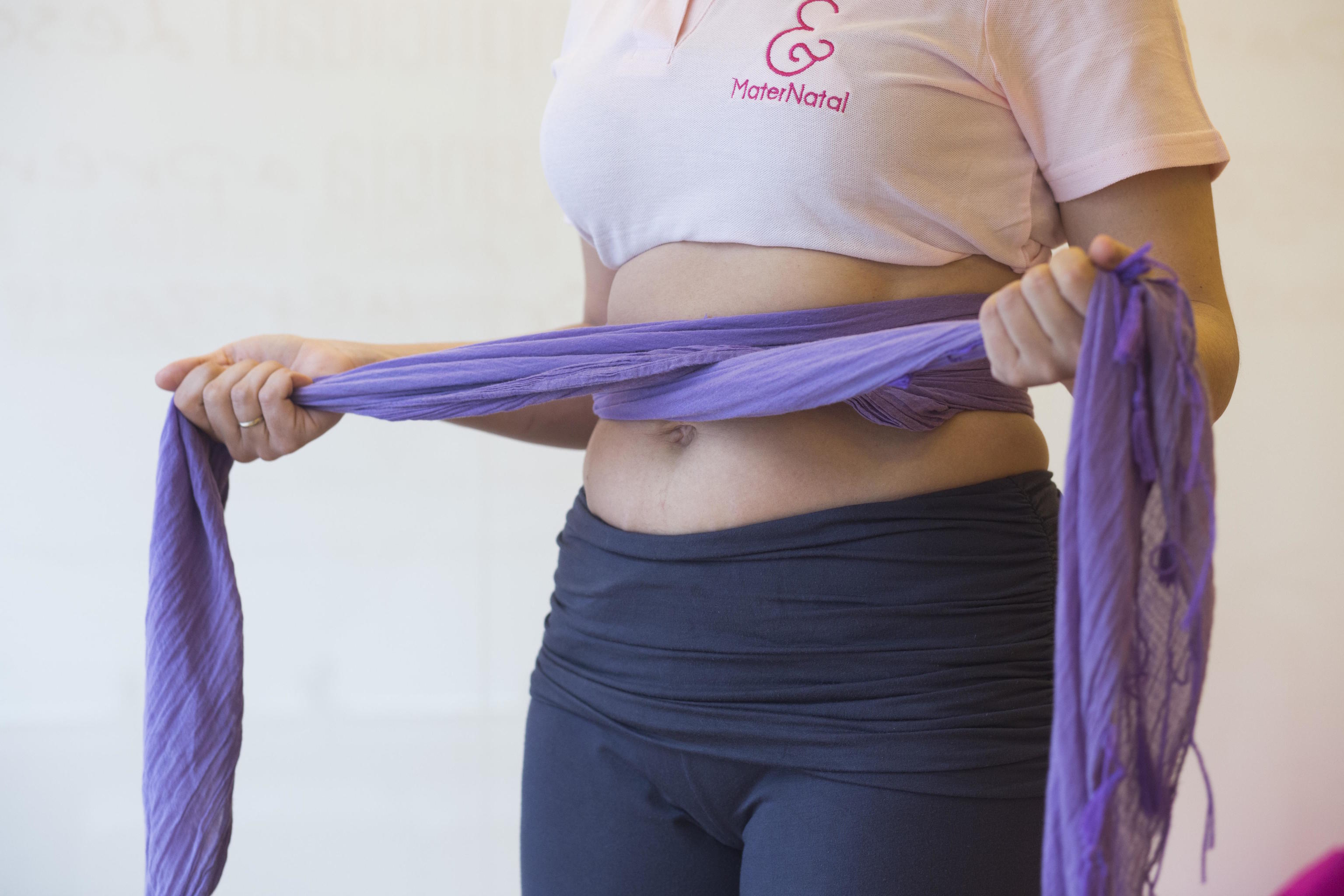
Conceived in the late 80s of the last century for pelvic floor recovery after childbirth and as a way to prevent urinary incontinence, it has been less than a decade since they began to be used primarily to sculpt the abdominal area. The effectiveness of their results served as a springboard for hypopressive exercises to stop being a minority method taught in small groups by physiotherapists and midwives in Northern Europe to become the origin of a series of increasingly popular exercises.
Just by doing these exercises for 15 to 20 minutes, three days a week for two months, we will start to perceive their benefits, both externally and internally: improved posture, strengthening of the deep abdominal and pelvic floor muscles, reduction of waist circumference, etc.
However, it is essential to start with the guidance of a specialist who can teach us the technique.
There is nothing better, and more effective, than strengthening the abdomen with a 10-minute dynamic yoga sequence focused on the 'core' and with breathing as the main tool.
Pallof Press with resistance band
With these two variations of the Pallof Press and a simple boxing move using a resistance band, the 'core' is intensely worked without straining the lower back with crunches or the hips with planks."
The goal? Complete three sets of between eight and 10 repetitions.
- Align head, shoulders, hips, and feet.
- Feel the exercise in the 'core' without experiencing discomfort in shoulders, hips, or neck.
- Imagine having a towel in your hands and pull towards yourself (increasing tension in the abdomen).
- Maintain pelvic neutrality (avoid sticking out or tucking in the buttocks).
- Avoid looking towards the navel (to maintain alignment).
- Avoid hunching. Try to bring the chest towards the ground to align the dorsal spine correctly.
- If any pain occurs, it is advisable to stop the exercise and look for a simpler variation.
Hypopressive Exercises
Originally designed in the late 80s for pelvic floor recovery after childbirth and to prevent urinary incontinence, these exercises have been used for sculpting the abdominal area for almost a decade now. Their effectiveness led to hypopressive exercises transitioning from a niche method taught by physiotherapists and midwives in Northern Europe to becoming the basis of increasingly popular workout routines.
Just 15 to 20 minutes of these exercises, three days a week for two months, can lead to noticeable benefits such as improved posture, strengthened deep abdominal and pelvic floor muscles, and reduced waist circumference.
However, it is crucial to start under the guidance of a specialist to learn the technique.
Vinyasa Yoga Core
There's nothing better and more effective than strengthening the abdomen with a dynamic 10-minute yoga sequence focused on the 'core' and using breath as the primary tool.
Pallof Press with Resistance Band
By performing these two variations of the Pallof press and a simple boxing move using a resistance band, you can intensely work the 'core' without straining the lower back with crunches or the hips with planks.
The goal? Complete three sets of eight to 10 repetitions.