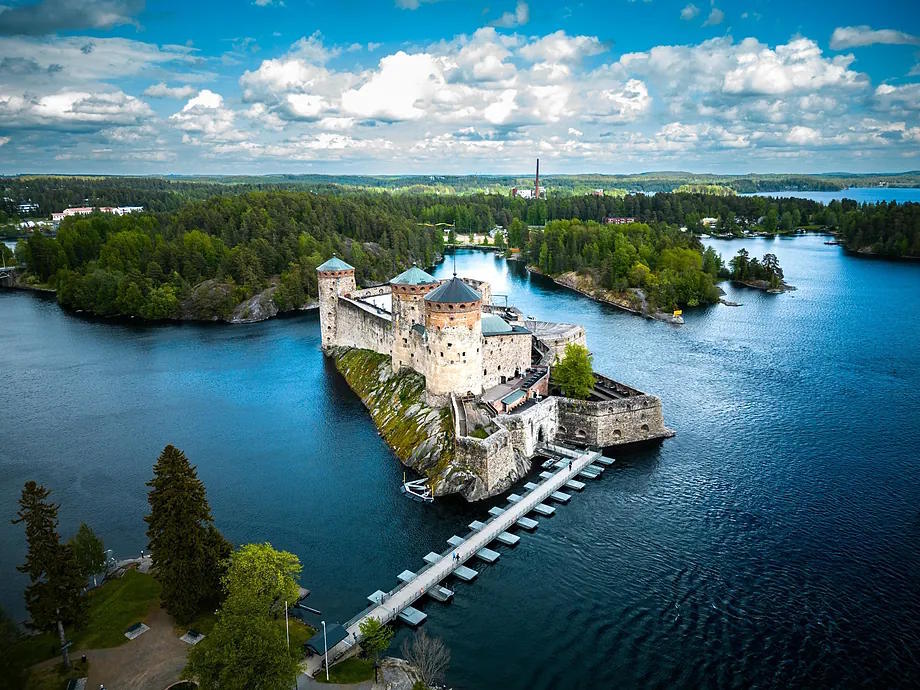
Tired of the stifling heat and the noise of everyday life, this summer we are following Alice into Wonderland — only instead of falling down a rabbit hole, we are flying to Finland. For the past nine years, the World Happiness Report has ranked the Nordic country as the happiest in the world. The aim is to live like a Finn and embrace what the locals call "Chill Like a Finn": a calm, almost minimalist way of life that seems to keep the country smiling year after year.
It's not about photographing happiness from the outside, but about trying to feel it from within, with your feet in the cool water of a lake and your skin still warm from the sauna. So we leave behind the well-known circuit of Helsinki and its orderly hustle and bustle, or Rovaniemi and its Santa Claus, overwhelmed by tourists, to head east, to the less portrayed Finland: the region of the Thousand Lakes. A summer route, without hurry or an instruction manual, to cross, like Alice, to the other side of the mirror and discover why, the further inland you go, the slower — and better — life seems to be lived. In fact, this is where the Finns themselves spend their summers, far from any tourist circuit. Even from the plane, one can appreciate the incredible oasis that serves as the country's lungs.
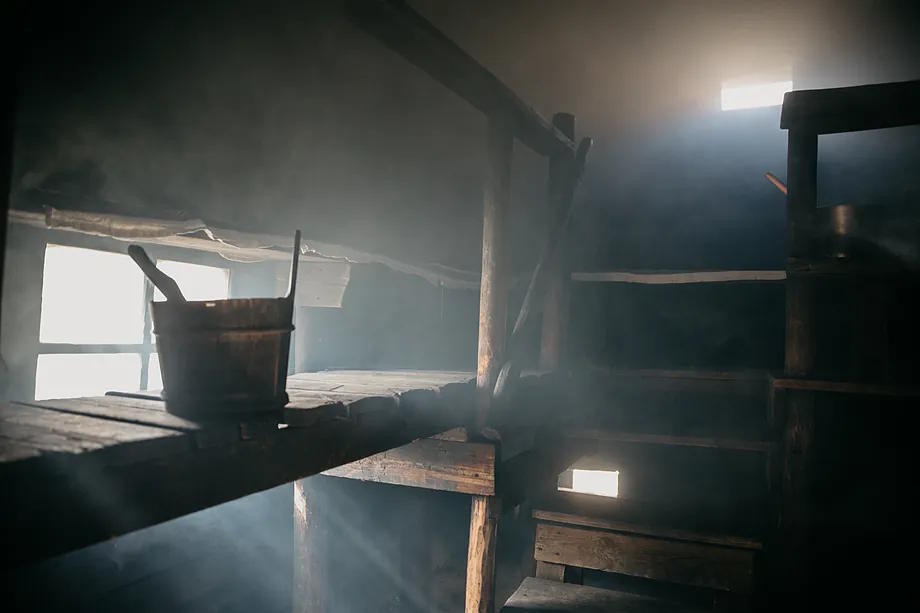
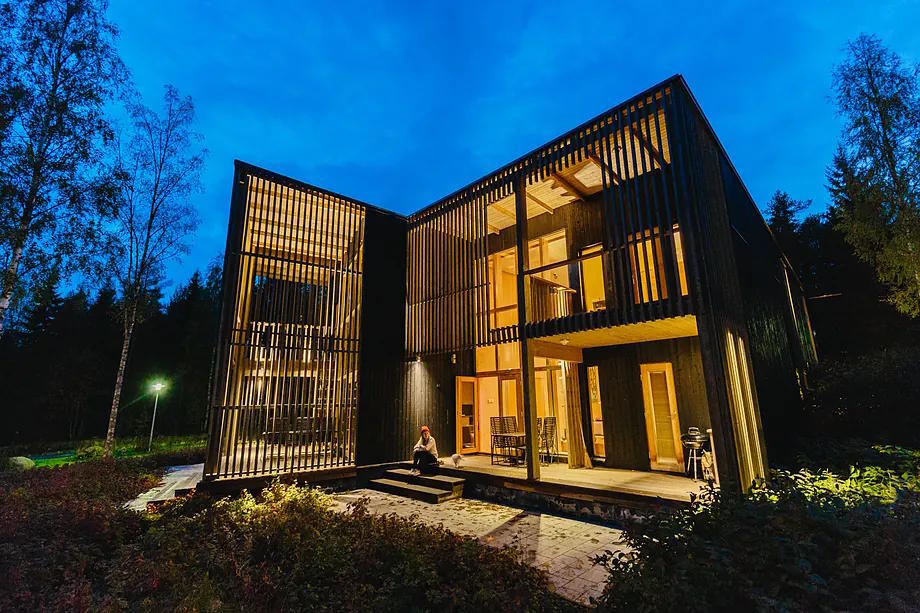
In the city of Kuopio, we slow down by staying at the Spa Hotel Rauhalahti, an evocative refuge inspired by the loggers of the 1950s, on the shores of Lake Kallavesi, which is itself part of the vast Saimaa lake system. Hidden here is Finland's largest smoke sauna, from which guests plunge straight into the cold waters of the lake, while a traditional dinner with karaoke provides the finishing touch to the day (incidentally, thousands of bars across the country follow this tradition). It is not essential to sing well: the atmosphere is relaxed and participatory.
We soon discover one of the keys to Finnish happiness: social life and the quality of relationships. This is supported by the Harvard Study of Adult Development, one of the longest-running studies on well-being, and the Finns put it into practice every day: around the table, singing their favourite songs or in the sauna, the true heart of their culture. So much so that there are 3.3 million saunas across the country, according to the public body Business Finland, for a population of just 5.6 million.
"No one wants a house without a sauna: we use it every night. I even have one in my apartment building. In the 1980s, it was already a buying criterion: an apartment without one was of no interest," says Eeva Grönstrand, a tour guide and active member of the Kuopion Oppaat ry association. She adds something that helps explain the particular intimacy created by the nudity of the sauna: without mobile phones getting in the way, Finns indulge in introspection or use the space, much as Spaniards use the bar, to put the world to rights. "It is a bonding space for many couples, where they discuss things such as raising their children, for example."
Room to Breathe in Nature
The Finnish education system, one of the most admired in the world, also plays its part. "Here, it's common to speak five or six different languages. We used to be shy and didn't use languages as much, but now young people want to socialise, they enjoy meeting international students and are very active abroad. When they come back, they realise how easy life is here," says Tiina Kanninen, a Finn who has worked in business operations for almost 30 years.
She lived in Helsinki, where she also enjoyed an excellent quality of life, but she says that outside the capital there is space for everyone: private homes, summer cottages... "Finns have adapted well to very different situations. Throughout history, we have been under Russian and Swedish rule, so we are prepared to clear snow in the mornings before work," she says with a smile.
She admits that Finns themselves are not entirely sure why they have been crowned the happiest people in the world for so many consecutive years. "We feel fortunate. There is a sense of privilege. There is hardly any corruption, society is calm... It's hard to explain, but at least nature gives us space to breathe, without always being surrounded by people and a hectic pace of life... That helps us live more relaxed lives."
What to See in Kuopio: The Traditional Market
With that same sense of calm, we explore Kuopio Market Square, which is 124 years old and which the Finns call "the navel of the world", as the words written on the ground proclaim. People come here to meet without needing to make plans in advance. Its colourful striped awnings and huge red berries immediately catch the eye, while the famous Annabelle summer potatoes, added to almost everything, awaken the appetite.
We begin with kalakukko, a loaf of bread filled with cooked fish, from the famous Hanna Partanen stall, and continue with a coffee at the charming Salacavala, where the menu naturally includes one called "Happy". "We drink many cups a day and eat very healthily. We produce a lot ourselves. Since most of us live in detached houses, almost everyone has a garden where they grow their own produce, or we go into the forests to pick red berries," Tiina says of her antioxidant-rich daily diet.
Using blueberries and rye dough, we also bake the traditional mustikkakukko with Paula Okkola, owner of the Okkola Holiday Cottages complex on the island of Niinisaari, in Puumala, where she runs 17 cabins, various activities and the Niinipuu restaurant. She is particularly proud to have her son Aapo as her business partner. "Every day, on the way to work, people pick a handful of berries from the forest and freeze them for the winter. They are the perfect snack to eat while watching television instead of chocolate," she says with a smile.
Sustainable Tourism and 'Slow Living'
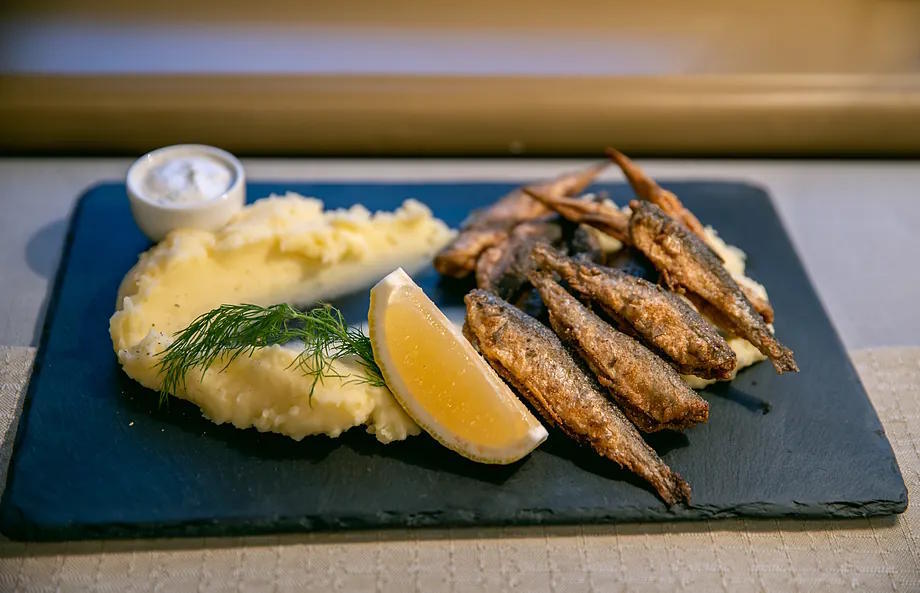
Another place to savour Finnish delicacies and continue embracing slow living is the summer buffet at Tertti Manor, a 200-year-old manor house famous for its farm-to-table philosophy and artisanal pantry. "We sell our own delicatessen products and some very special garments," says the host, recommending the cold- or hot-smoked salmon and the muikku, a small freshwater fish that resembles a sardine and can be eaten in a single bite.
This local gastronomy, along with the idea of having time to live rather than simply work, continues to shape that idyllic sense of happiness. The only time a Finn appears "angry" is when someone opens the sauna door just as water is being poured over the stones, allowing all the steam to escape. Once the incident has been overcome at Saana Sauna & Spa, the ritual continues with a plunge into the cold lake, bathed in the summer light that barely fades in Finland.
The infinity pools and icy plunge pool leave us energised for a hike in Puijo, a 200-hectare protected natural area that forms part of the Natura 2000 network and is perfect for exploring along its forest trails. This may be the region of a Thousand Lakes, but it could just as easily be called the region of a thousand forests, which cover 80% of the area. It is a territory almost as large as the United Kingdom.
There is even a museum dedicated to them. There, visitors learn that Finns have a deep emotional connection with the forest, much of which is privately owned: this "green gold" is passed down from generation to generation.
"Simply put, forests are part of the national identity. Forestry professionals, nature lovers, mushroom and berry pickers... everyone has their own unique relationship with them," explains the guide. On the one hand, forestry is one of the pillars of the economy; on the other, the forest is a place of recreation and tranquillity.
The Emotional Connection
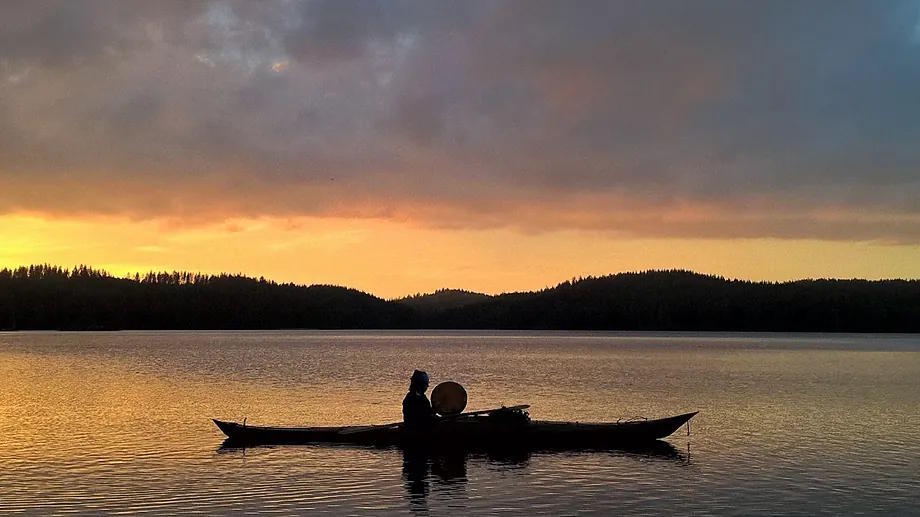
The artistic work created by Sanna Vatanen teaches us that everything, from the smallest insect to the tallest tree, is interconnected. For Finns, the forest is their church or temple, a place where they can breathe in peace and feel free to be themselves. The same is true of the lakes, where they go kayaking, paddleboarding and canoeing, fulfilling another important aspect of well-being: physical activity.
And when they fall off the bike, they get back on. "We are not happy all the time, but we know how to accept the grey areas of life. The sun does not always shine here," says Sari Helin at her restaurant Metsä, run with her partner, chef Ilkka Lääveri, who encourages people to focus on the positive side of the present. Even when the journey comes to an end, the new mantra remains: stay chill.