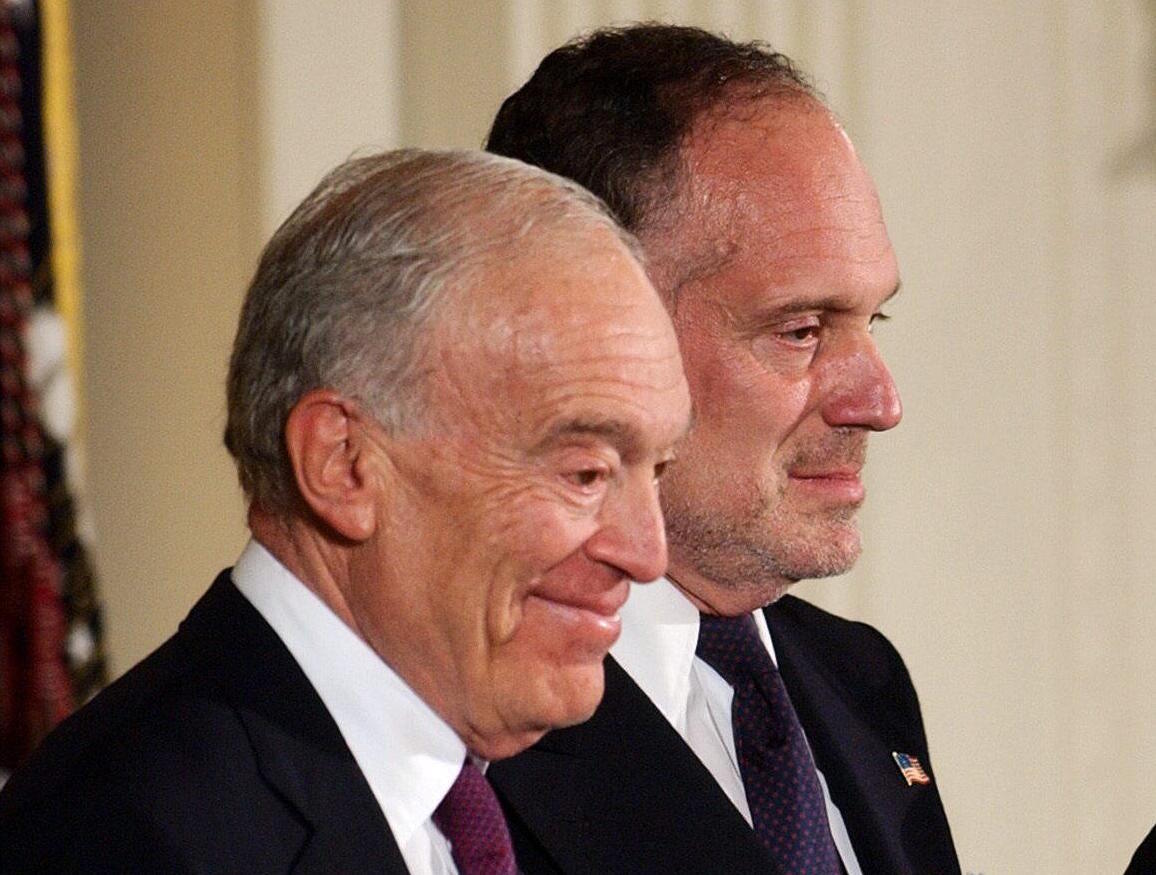
Never underestimate the geopolitics of cosmetics. It's not about the industrial amounts of botox from Vladimir Putin, or the orange hair of Donald Trump. It's about Ronald Lauder, co-owner, along with his brother Leonard, of the cosmetics giant bearing the name of their mother and founder, Estée Lauder. Lauder is the one who convinced Trump in 2022 of the importance of the U.S. taking control of Greenland. In Danish Arctic, there is a large amount of 'rare earths', unlike in Ukraine. As president of the World Jewish Congress, Lauder is playing an important role in resolving the Gaza war, although he has not supported Trump's idea of carrying out ethnic cleansing in that territory. In any case, the next time you buy an Estée Lauder cream, think not only about how it will improve your skin, but also about the geopolitical component of your purchase. What matters in this world is not what you know, but who you know.
The geopolitical romance between the United States and India tightens with Donald Trump
Donald Trump adores strongmen, which explains his poor relationship with most of the European Union (with the logical exception of Viktor Orbán in Hungary) and Canada. And that's where Indian Prime Minister Narendra Modi comes in. The U.S. is negotiating with India a huge military technology transfer. Washington is considering allowing the Asian country and China's rival to manufacture highly successful anti-tank missiles Javelin - as seen in Ukraine - and Stryker armored vehicles. In addition, Trump wants to sell invisible F-35 fighter jets to Delhi. This decision worries U.S. military officials a lot: India has Russian S-400 air defense systems, which, when integrated with U.S. aircraft, can "suck up" their technological secrets and pass them on to Moscow. Turkey's S-400s in 2019 led Trump to prevent that NATO ally from receiving the F-35s. But Trump gets along with Modi, and "laws go where kings want."
China also forgets to invest in Europe
Some experts, like the former chief economist of the IMF and winner of this year's Frontiers of Knowledge award from the BBVA Foundation, Olivier Blanchard, argue that the EU must protect itself from Donald Trump's protectionism by establishing economic and technological alliances with China. The problem, however, is that China is neglecting Europe. Foreign direct investment (FDI) from that country in the EU has been declining for a decade and a half, and although it may stabilize in 2024, it is only a shadow of what it once was. In reality, Beijing has been cutting its investment in industrialized countries for almost ten years in favor of the developing world. According to the IMF, in 2016, 68% of China's direct investment went to the developed world; by 2023, that proportion had dropped to only 23%. The EU will have to work hard if it wants to carry out Blanchard's plans.
The case of the 300 atomic bomb experts fired by Elon Musk
Have you happened to see any atomic bomb maintenance experts that we accidentally fired, right? Essentially, that was the question posed last week by the Donald Trump administration, after in its efforts to "rationalize" - rather "dismember" - the U.S. government, it inadvertently dismissed 300 experts from the Department of Energy who are responsible for maintaining the country's over 5,000 atomic bombs. The dismissal was the work of DOGE, the group of Elon Musk to "reform" the public service, where people like Edward Coristine, a 19-year-old who was an intern at one of his companies and is known on social media as "Big Balls" ("Grandes Pelotas"), are working. It is still unclear whether the government has managed to locate the dismissed experts and convince them to return to their positions.
The double-edged sword in the trade war between Washington and Beijing
The world is waiting to see if Trump dares to launch his promised trade war against China, and Beijing is playing its cards. Many of Trump's donors and advisors - many of whom hold positions in both the public and private sectors - have economic interests in China. Apple has announced a half-trillion-dollar investment in the United States, theoretically to reduce its dependence on the Asian power, but such promises often have more to do with marketing than reality. Meanwhile, Tesla desperately needs Beijing to approve its autonomous driving system to continue growing in the coming months. For now, Elon Musk seems only interested in cutting U.S. public spending, even though what is really being cut is the stock value of the automotive company he leads and of the, who is the largest shareholder.
Vietnam, caught in the economic crossfire between the U.S. and China
Perhaps Vietnam is the only country that can challenge Afghanistan for the title of "graveyard of empires." In just 25 years, three of the five largest empires of the 20th century were defeated in that Southeast Asian country (the French, American, and Chinese). But in this 21st century, Hanoi is caught in a much more complicated economic war between the U.S. and China. 30% of Vietnam's GDP depends on exports to the U.S. But now Trump's protectionism threatens that economic model. The animosity between Vietnam and China, which have had a historically poor relationship, makes it very difficult for Beijing to replace Washington as a key economic partner. It is not just a problem for Vietnam, but for all of Southeast Asia. Trump's obsession with the trade balance threatens to leave these countries in limbo or with no choice but to approach Beijing, something that one of them, Laos, has been doing for decades.