Donald Trump's tariff measures will have a tremendous impact on the European Union: they will affect a total of 370,000 million euros in exports, and will cause a maximum surcharge of 81,000 million. In other words, the US Administration will annually collect that last figure through its tariffs. That is why, and because the President of the United States has "disappointed" the Europeans, as stated in the European Commission, Brussels is already looking for other partners from whom to buy the products it used to import from the US.
"We love soybeans but we can get them from Brazil. We don't need to import them from the United States. We like Harley-Davidson but also Moto Guzzi. Or we can buy Yamaha. There are alternatives," sources from the European Commission pointed out yesterday to exemplify the strategy Brussels will follow after the tycoon's challenge. "We place great importance on partners we can trust and work with. Our efforts continue to be based on what we have done with Mexico, Mercosur, Switzerland, Malaysia, India, Indonesia, and Southeast Asia," they continued from the European Commission.
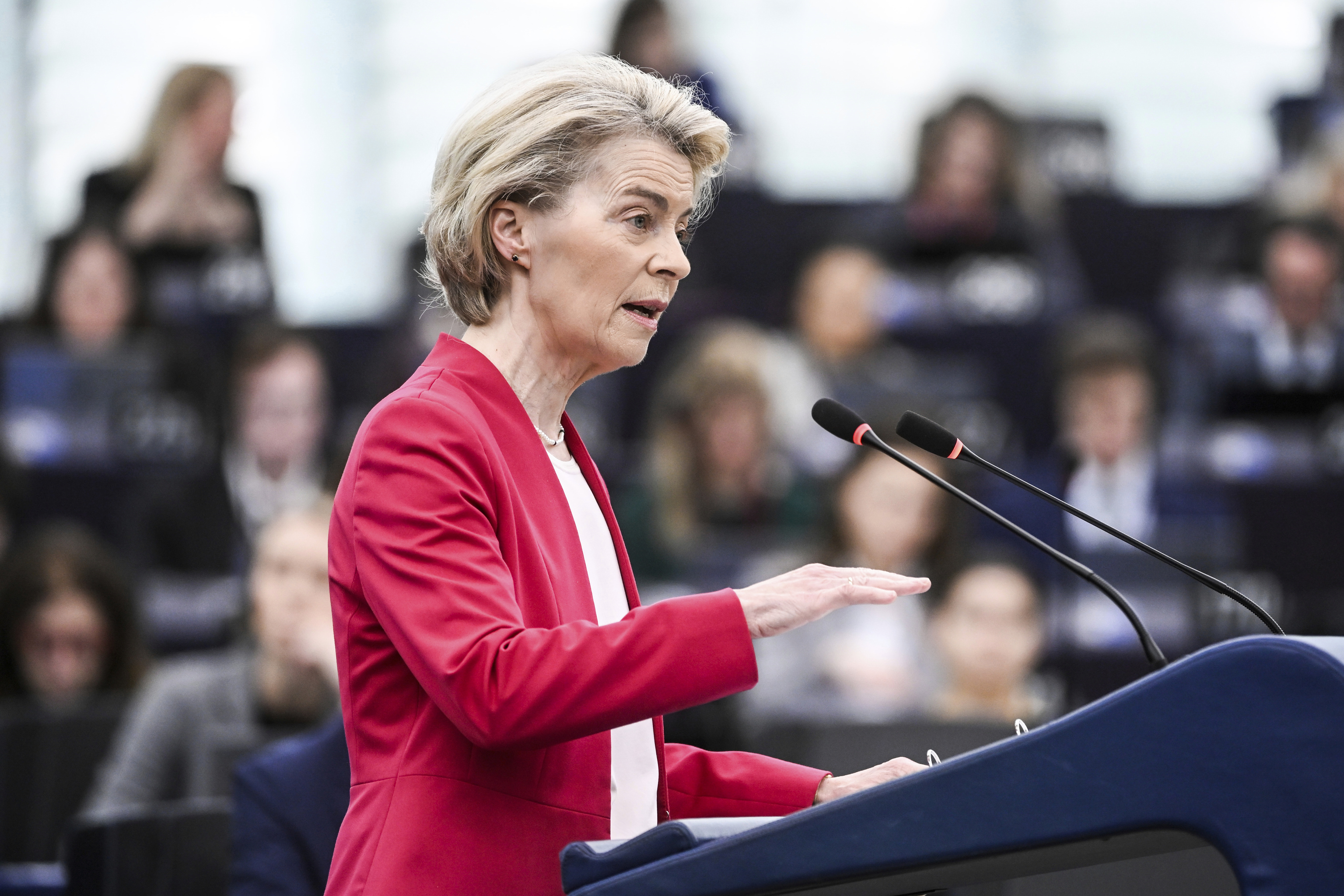
Furthermore, the President of the European Commission, Ursula von der Leyen, reacted to the so-called reciprocal tariffs from Samarkand, a city in Uzbekistan where she went to participate in the first bilateral summit between the European Union and the Central Asia region. Trump had announced well in advance that April 2 would be the day of "liberation" for the United States and that yesterday would be a crucial day in the trade war. However, this did not prevent the high official from attending the meeting in search of new partners.
"The consequences will be disastrous for millions of people worldwide. Also for the most vulnerable countries, which are now subject to some of the highest US tariffs. It will be felt immediately. Millions of citizens will face higher food bills. Medicines will cost more, as well as transportation," Von der Leyen stated in her declaration.
The President also pointed out that, for all these reasons, the EU remains willing to find a negotiated solution. In fact, the Commissioner for Trade, Maros Sefcovic, added shortly after that this Friday he will meet again with his US counterparts. "We will act calmly and in a unified manner, as we assess our response, allowing the necessary time for discussions," he posted on his X social media profile.
"But we will not stand idly by if we do not reach a fair agreement," he added. And this is crucial because it is almost certain to happen. Trump does not seem willing at all to back down, and in Brussels, they fear that even more tariff measures may be imposed around what they have defined as the "Big Five" sectors (the five major ones). In two of them, automotive and metals, specific measures are already known, and they fear that the US will soon apply tariffs to the remaining three: pharmaceuticals, semiconductors, and wood.
This is also taken into account in the response that is still being prepared and which, as European authorities have pointed out on numerous occasions, will be "firm and proportionate." That is, the 370,000 million in exports affected by the tariffs and the surcharge of 81,000 million will be key in the European countermeasures, expected by mid or even late April. Somewhat late, according to some voices in Brussels, but an appropriate strategy according to the Commission.