The trade war unilaterally launched by the United States against the rest of the world has shaken the markets and evaporated trillions of dollars, especially from the wealth of American savers. There is nervousness in the Republican Party, whose bases will feel the consequences on prices like everyone else. There is nervousness among the media more aligned with Donald Trump, who are beginning to admit that the impact will be felt in the short term. And there is also nervousness in the White House, which is risking its reputation and credibility in a highly risky operation, defined as "the boldest economic action in a century," and which starts with declines in stock markets worldwide. With all this pressure, doubts, and criticism, Trump has quickly found someone to target: Federal Reserve President, Jerome Powell.
"This would be a PERFECT time for Fed Chairman Jerome Powell to cut Interest Rates. He is always 'late,' but he could now change his image, and quickly. Energy prices are down, Interest Rates are down, Inflation is down, even Eggs are down 69%, and Jobs are UP, all within two months - A BIG WIN for America. CUT INTEREST RATES, JEROME, AND STOP PLAYING POLITICS!" he directly urged in a message posted on his social network this Friday.
The demand is not new. Trump has been publicly and privately pressuring Powell for many months, at least since winning the elections, to lower the cost of money, which he believes would help boost the economy and job creation. But the Federal Reserve, whose mandate, although formally dual, is focused on controlling inflation, has put on the brakes. Especially after detecting a price increase in January. That is why last week, unlike what the European Central Bank is doing, they decided to keep interest rates at the previous level, which at 4.25-4.50% are still quite high. The Fed's plan remains to lower rates twice in 2025, to around 4%. But that will depend on the behavior of both the economy and inflation. And both are looking very bleak.
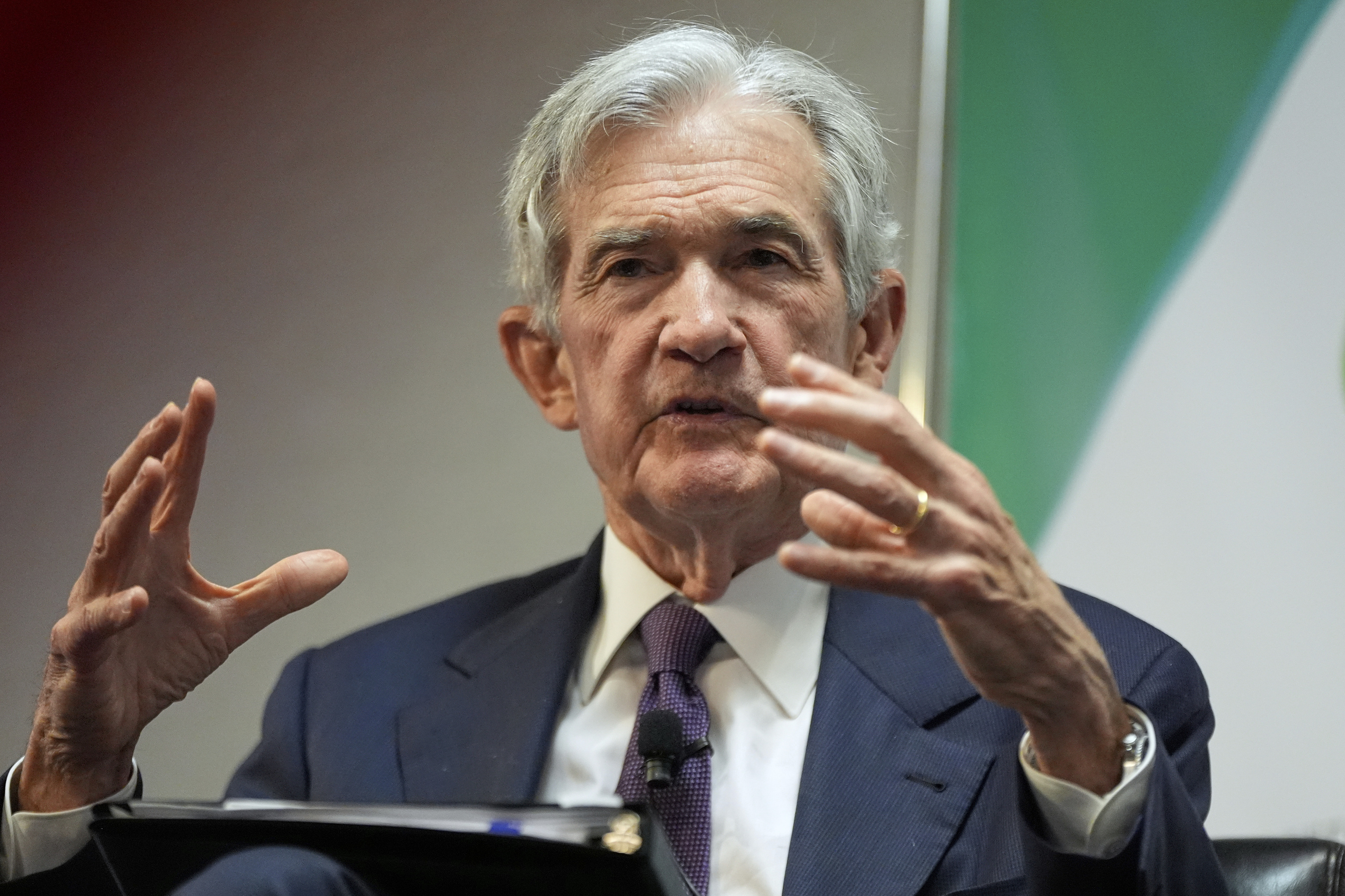
"Higher tariffs will spread throughout our economy and probably increase inflation in the coming quarters," Powell said at a public conference this noon. "While uncertainty remains high, it is becoming clear that tariff increases will be significantly higher than expected. The same is likely to happen with the economic effects, which will include higher inflation and slower growth," said Powell, causing an even greater drop in the markets, which are very sensitive.
The news for investors is bad, and this is reflected in Europe, but especially in Asia and the US. On Thursday, Wall Street had its worst day since March 2020, when the implications of the Covid19 pandemic began to be understood, with nearly $3 trillion destroyed.
The Dow Jones dropped 1,700 points, 4%. The Nasdaq, 5.9% dragged down by the "magnificent seven," the big tech companies, which dropped up to 9%. The S&P 500 lost another 4.8% in a session tinted red, where the dollar depreciated almost 2% while oil had its worst day in three years.
"It is very likely that tariffs will at least temporarily increase inflation and it is also possible that their effects will be more persistent," Powell said just minutes after Trump's tweet. Completely ruling out the reaction that the White House wants. "We are well positioned to wait for greater clarity before considering any adjustment to our policy stance," he said in his speech to economic journalists. "It is too early to say what the appropriate path for monetary policy will be," he responded.
Another Black Day
This Friday Wall Street continues to suffer deep losses despite the positive job data for March, even better than feared. Or that Trump opened the door last night to adjust his protectionist measures based on the actions of his trading partners. For example, Vietnam, with whose president he spoke on Friday to seek solutions that do not destroy its economy.
The Dow Jones loses another 1,500 points and the Nasdaq and the S&P 500 lose more than 3% at noon, after China said it will respond to Trump's trade war by immediately imposing 34% tariffs on all US products. Similarly, airline and travel company stocks plummeted for a second day, as investors assume that a global slowdown will drastically reduce demand for vacations and business trips.
Today, the Japanese video game company Nintendo has announced that it is suspending pre-orders for its new console, the Switch 2, in the United States due to tariffs. The initial price was set at $450, and although the launch date remains on June 5, there may be surprises "to assess the potential impact of tariffs and changing market conditions," and a new date will be announced later.
JP Morgan analysts have raised the probability of a recession in the US to 60%, which should be the great fear of any government, but something that seems to amuse Trump, who also on his social network has shared a video of a supporter claiming that the president "plays chess while others play checkers," and that he would be "provoking himself" the stock market crash as part of his "master plan" to force the Fed to lower interest rates, which would allow very cheap financing of trillions of dollars of debt and lower mortgage rates, while slightly weakening the dollar favoring exports.
The market knew that tariffs and protectionism were coming, Trump has been celebrating "Liberation Day" for weeks, but the torrent of desperate sales shows that investors are assuming the biggest closure in almost a century, since the protectionist laws of 1930 worsened the Great Depression. The announced tariffs, which hide the biggest tax hike in recent history, are much more aggressive than the business world expected.
Hence the closing of positions and the very high volume of operations, including the diversion of funds to Treasury bonds, for now a safe asset, which has lowered yields to 10 years well below 4%. Bonds from other major economies, such as Japan, Germany, and the UK, also felt it. "The Fed's obligation is to ensure that a one-time increase in the price level does not become a problem of persistent inflation," Powell said in his speech.