They call us the TikTok Generation. They say we are self-absorbed, that we measure attention in 60-second videos, and that we are too sensitive. They accuse us of confusing commitment with clicks and rebellion with hashtags or memes. But while the world watches us slide screens, a new form of digital dissent emerges and begins to take shape in the streets. In recent months, a new wave of protests led by Generation Z has emerged, born in social media and fueled by frustration and weariness. They denounce authorities' corruption, demand structural reforms, and fight for a future they can be proud of. Above all, they seek to prove that those born between 1997 and 2012 are not disconnected from the real world. On the contrary: they have turned their mobile phones into their most effective political weapon.
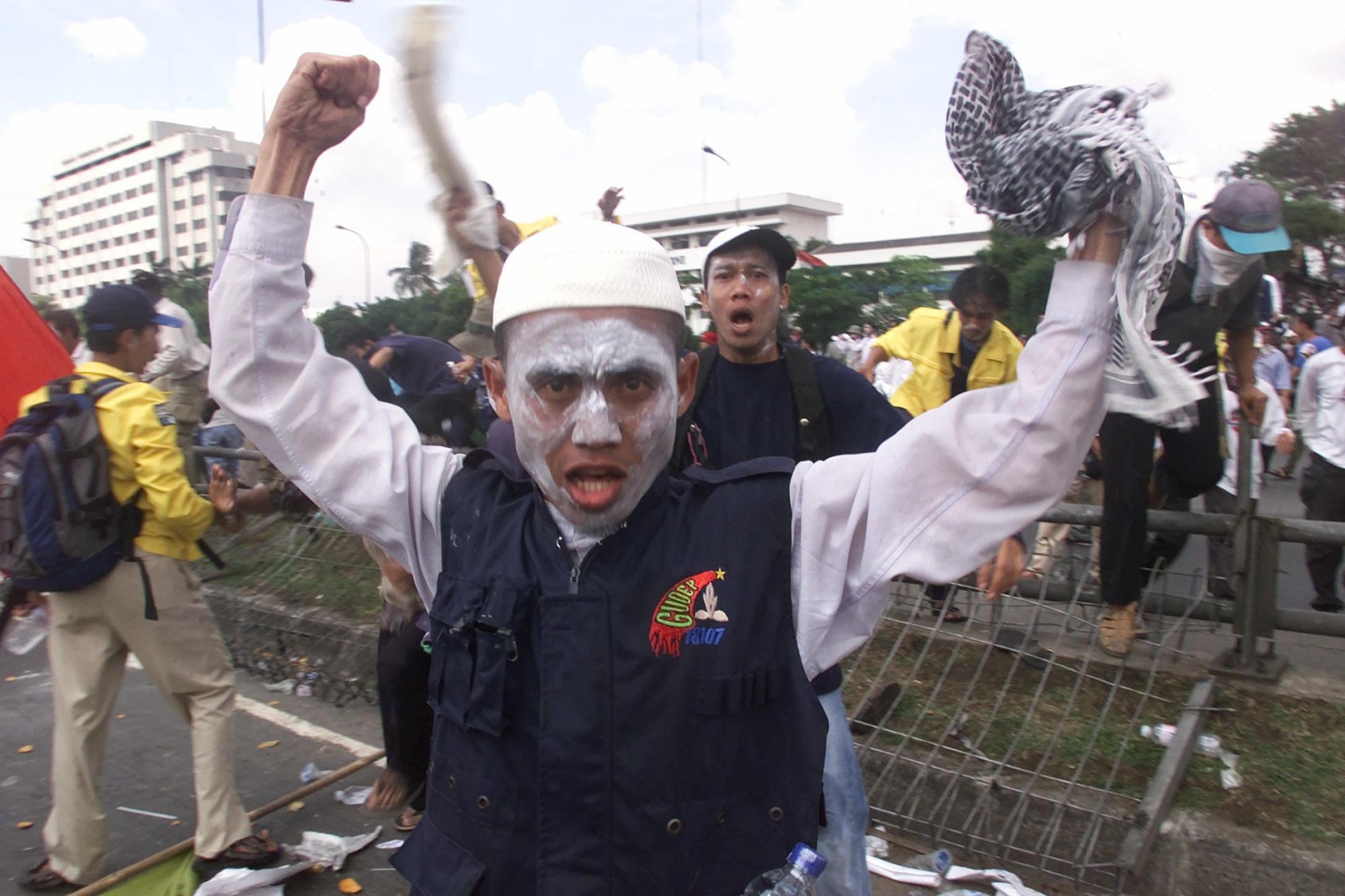
The spark first ignited in Southeast Asia. In Jakarta, thousands of people, led by university groups, protested in late August in front of Parliament against the increase in housing allowances for Indonesian lawmakers - nearly ten times higher than the minimum wage - and to demand the dissolution of the House of Representatives. The protest has spread throughout the country and has added new demands following the death of a 21-year-old protester: the reform of the National Police and the resignation of its chief.
Days later, discontent erupted in Kathmandu, where the revolt of young Nepalis against the "corrupt elites" of the Government, the nepo babies - children of politicians who flaunted their luxurious lives online while the average citizen barely earns $1,100 a year - and the ban on 26 social media platforms (including Facebook, Instagram, and TikTok) left at least 72 dead and thousands injured, according to the Ministry of Health, and forced the four-time Prime Minister KP Sharma Oli to resign.
Paradoxically, those same networks - freed after a week-long blackout imposed to silence criticism of nepotism - served, thanks to the use of Discord and Instagram with VPN, to coordinate marches, share protest routes, and spread videos that brought the Nepali cause to the rest of the world. It is impossible to forget that TikTok video of the Parliament engulfed in flames while ABBA's The Winner Takes it All played in the background.
What began as a local outburst quickly transformed into a regional and later global challenge. Throughout September and October, these mobilizations spread across Asia, from the Philippines to East Timor, before reaching Africa - with protests in Morocco and Madagascar - and subsequently South America, where youth from Peru, Paraguay, and Bolivia also took to the streets. At first glance, the causes may seem disconnected, separated by thousands of kilometers, political systems, and language barriers. But in all of them beats the same energy of solidarity, justice, and challenge, waving under a common flag: that of a skull with a straw hat, the icon born from the Japanese manga One Piece and turned into a symbol of resistance and hope for an entire generation.
"Although we speak different languages and live in different realities, we all speak the same language of repression," says Vincent Liberato, a 23-year-old Filipino who helped organize the protest day in Manila on September 21, to EL MUNDO. "One Piece is very popular in the Philippines, not only among the youth," he explains. "It shows how its characters seek freedom against authoritarian structures. We saw how they used the flag in Indonesia and Nepal and decided to follow their lead," he adds. "It is a symbol of liberation against oppression, a reminder that we must always fight for the future we deserve."
Published in 1997, One Piece was born almost at the same time as the first members of Generation Z, created by the Japanese mangaka Eiichiro Oda. Since then, it has sold over 500 million copies, been translated into 40 languages, and adapted into a live-action series on Netflix. It also holds three Guinness World Records for its editorial success, and its merchandise alone generates around $720 million annually, according to a report published by Bandai Namco last year.
"It is perhaps the most popular franchise in the world right now", explains Andrea Horbinski, an expert in manga and anime and author of the book The First Century of Manga: How Creators and Fans Made Japanese Comics, 1905-1989, to this newspaper. "The story follows the young pirate Monkey D. Luffy and his crew, the Straw Hat Pirates, who confront corrupt officials and an oppressive World Government as they sail the seas in search of a legendary treasure," she summarizes.
The One Piece flag first appeared during the protests in Indonesia, in response to President Prabowo Subianto's call for citizens to raise the national flag on Independence Day. Instead, many chose to hoist the pirate flag - like the manga's protagonists - turning it into a symbol of their discontent with a government they criticized for becoming increasingly centralized.
"Although this country is officially independent, many of us have not experienced that freedom in our daily lives," explained Ali Maulana, a resident of Papua province, to the BBC. "Raising this flag is a symbol that, although we love this country, we do not fully agree with its policies."
An opinion shared by a student from Madagascar in statements to France24: "The anime perfectly reflects the reality we live in today: corruption, the gap between rich and poor, and the lack of transparency from authorities. And we are starting to draw parallels with our own world. Although we are not pirates like the characters in One Piece, we want to show that we will not be deceived by our governments and that we are willing to defend our future. That's why we use this symbol: it is easy to recognize and understand, no matter where you are."
This phenomenon, argues Nuurrianti Jalli, an assistant professor of Communication at Oklahoma State University (USA), in an analysis in The Conversation, demonstrates the formation of a transnational political consciousness that operates through shared codes in the digital ecosystem. Symbols like the One Piece flag work in protests because "they help amplify what people are trying to say without the need to express it word for word" and, thanks to the speed and reach of social media, "mobilize young people who recognize in them the injustices of their own country." It is, according to the expert, "an example of how Generation Z is transforming the cultural vocabulary of dissent".
However, young people taking to the streets to protest is not a new phenomenon. "Youth protests date back centuries," recalls Helen Berents, a professor of International Relations at Griffith University (Australia), in conversation with EL MUNDO. "Even in the last two decades, we have seen how young people have mobilized to demand accountability from their governments. One only needs to look at the Arab Spring or the Sudan revolution in 2019," she adds.
What sets this new wave of protests apart from previous ones, and why is it having such an impact? "The political imagination of this generation is interconnected in a way we have never seen before. They are the first generation of digital natives, and thanks to their mastery of social media, young people learn almost instantly about what is happening in other parts of the world. As a result, they have developed a strong sense of justice - and injustice - and the ability to empathize with foreign causes," explains Berents.
Mobilizing online, however, also carries risks. In Morocco, for example, more than 210,000 young people have joined the Discord server GenZ212 - named after the country's telephone prefix - where they debate and share strategies to protest against public health or the education system. But also "there they teach each other how to protect themselves in the digital sphere to avoid being detected by authorities and facing reprisals," the professor points out. Most use pseudonyms and connect through VPN to make tracking more difficult.
While some analysts argue that the lack of evident leaders is a strength of this new wave of protests, making them harder to suppress, others, like Berents, question whether acting from anonymity will help translate this collective indignation into lasting political action: "Young people manage to capture the world's attention, but then that attention fades. The cameras disappear, the noise on social media quiets down, and many of the advances do not endure, reinforcing the feeling that they remain marginalized from power."
Nevertheless, the mobilizations have not been in vain. Not only was the government overthrown in Nepal, but also in Madagascar, where President Rajoelina fled into exile after three weeks of protests against continuous water and electricity cuts. In the Philippines, meanwhile, young people denouncing government corruption for its handling of flood control projects are preparing in networks to take to the streets again.
"Although some small advances have been made, it is not enough. We will return to the streets at the end of this month. We have no choice but to fight for our future," concludes Vincent, with a conviction that seems undiminished. And when they do, the pirate flag will fly again. Despite what they say, this generation not only swipes screens: they also know how to ignite squares.