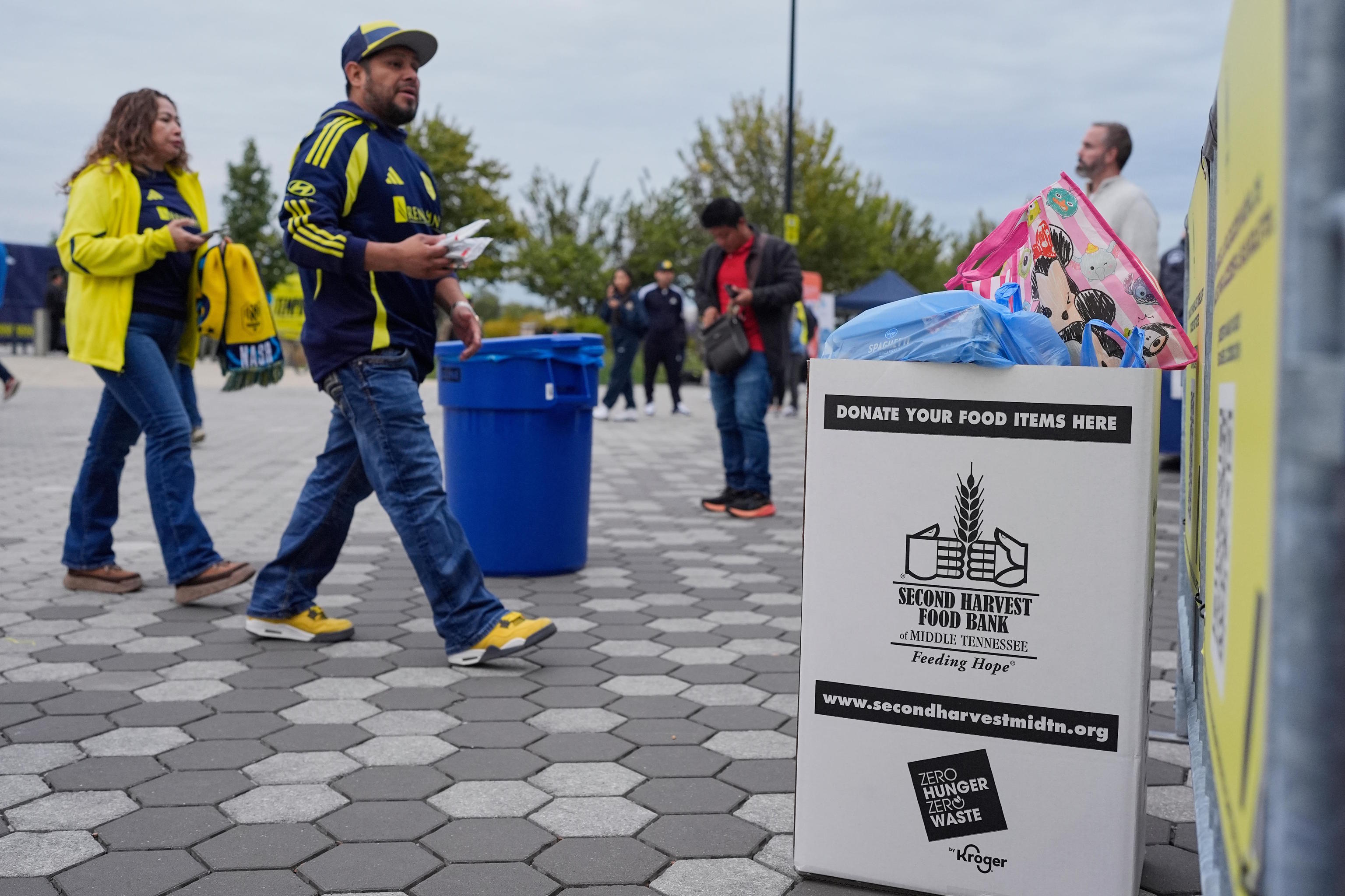
Around 42 million people in the United States — including 10 million Latinos — are anxiously facing this first day of November. They rely on the Supplemental Nutrition Assistance Program (SNAP), and they are facing the possibility of this federal aid running out of funds due to the budget shortfall caused by the government shutdown.
Efe reports that despite two federal judges issuing a ruling on Friday afternoon ordering the Republican Administration to use emergency funds to maintain the subsidies, it is still unclear if this aid will be distributed. In a message on the Truth platform, President Donald Trump indicated that the subsidies will only be delivered if he receives the appropriate "legal guidance" from the judiciary, and warned that delays are likely.
This Saturday, the beginning of a new month, the poorest Americans — who receive an average assistance of $332 per family — are facing the possibility of that essential money not reaching their pockets. The Department of Agriculture has instructed states not to use federal funds for SNAP starting today due to the shutdown.
California, Texas, and Florida are the states with the highest number of beneficiaries, with 62% of them being families with children. Yesterday afternoon, low-income families and elderly individuals went quietly to food banks in Miami, the second most populous city in Florida, amidst uncertainty about the future of SNAP.
"People are very down, depressed, and feeling low," shares Paco Vélez with Efe, president of the food bank Feeding South Florida (FSF). "From early October until today, the number of people coming to the pantry has doubled," stated the executive director of FSF. Since the federal government shutdown, FSF has seen a higher influx of people. "We are serving about 150 people a day, compared to the usual 80 in recent months," he explains. They are already expanding the dimensions of the food bank's "supermarket" to accommodate the expected wave of people in the coming weeks.
Beatriz, a Spanish woman who has been living in Florida for many years, explains to the agency that the news was "a very hard blow to people's wallets" because "food is essential and prices are quite high."
For Emilia Ruiz, who has been coming to FSF with her husband periodically for a year and a half, "it is very unpleasant news because the country is in great need. All food prices have gone up, but salaries have not."
In Texas, the organization Hill Country Community Services has also seen an increase in the number of people seeking food. Kandy Chimento, director of services, attributes this increase to the impact of inflation and concerns about the suspension of SNAP. In recent days, she says, calls and walk-in visits have increased by 50%. She is worried that the loss of this subsidy will have a domino effect: "If people do not receive SNAP, they will have to use their money to feed their families, which means they may no longer be able to pay rent and may be evicted. Most live paycheck to paycheck," she emphasizes.
Their organization is already making larger purchases than usual to prepare for the possible loss of federal subsidies. However, she fears that community donations may also decrease because "people are having to tighten their belts" due to the rising cost of living in the US.
In California, the outlook for SNAP beneficiaries is even more concerning: 5.5 million people in that state rely on this food assistance and may not receive it in November due to the government shutdown.
"I don't know what we are going to do," laments Ana Lilia García to Efe. She is a single mother of two children living with her elderly mother. Her family receives around $600 monthly for food purchases, which has allowed her to sustain their home in a small one-bedroom apartment. "The money is not enough; I have two jobs, but they do not cover our expenses," explained García, listing the payments that, she says, "have increased significantly" in recent years.