Nicolas Sarkozy was released in the early afternoon "under judicial supervision" after spending 20 days in the La Santé prison in Paris, where he entered on October 21 after being sentenced to five years in prison for "illicit association" in the "Libyan connection" case (money allegedly received from Muammar Gaddafi's regime for his presidential campaign).
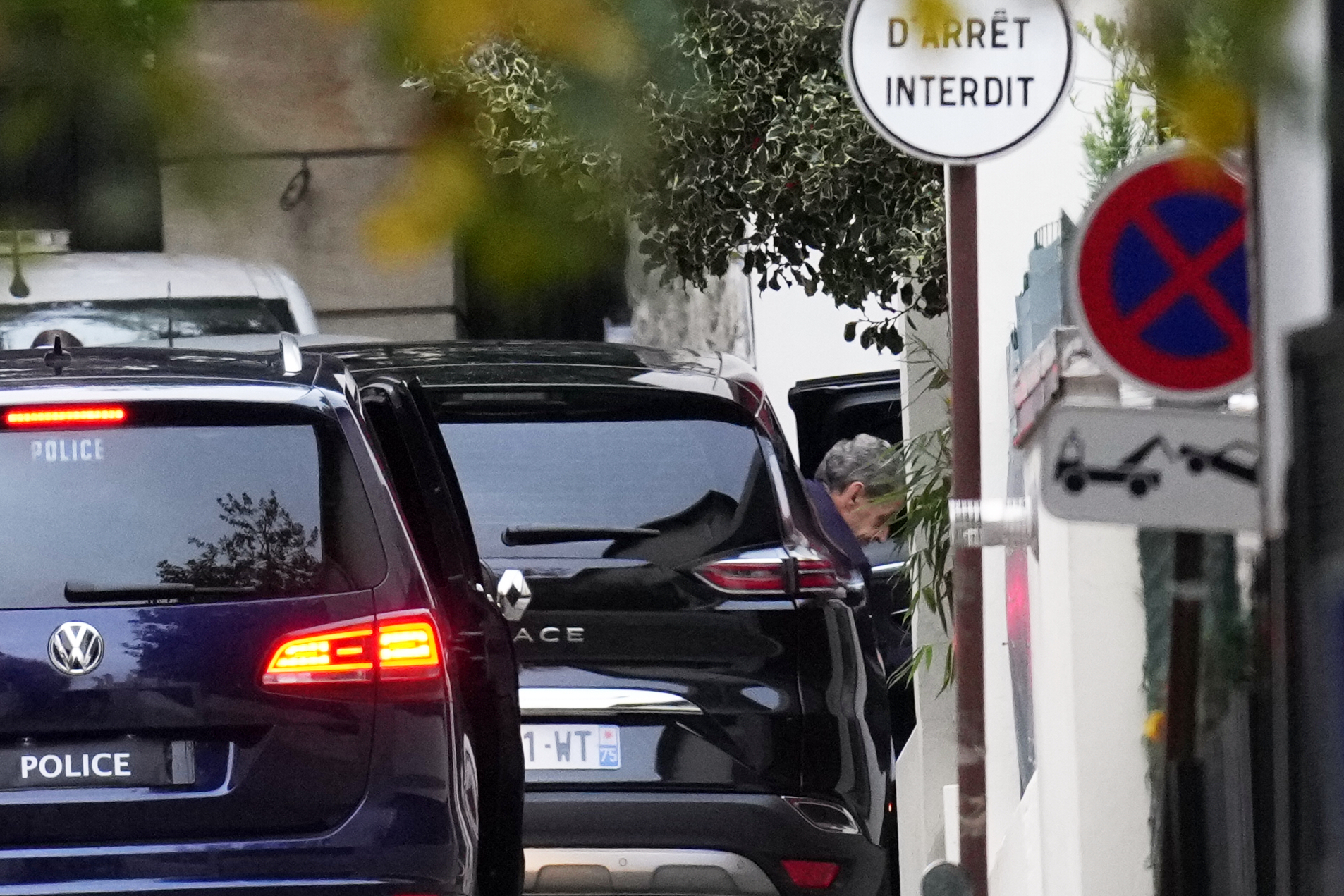
Just over an hour after the judicial decision, Nicolas Sarkozy left La Santé prison. His car appeared at the prison gates around three in the afternoon, with his wife Carla Bruni waiting for him inside. "Long live freedom!" proclaimed his son Louis Sarkozy on social media.
The Court of Appeal accepted Sarkozy's lawyers' arguments, stating that his imprisonment was equivalent to "pretrial detention" due to the "provisional execution" of the sentence without waiting for the appeal resolution. The court deemed that there was no risk of the former president fleeing, who is not allowed to leave France.
The prosecution supported the request, and Sarkozy will now serve the sentence under house arrest with an electronic bracelet, as was the case with a previous sentence. The prosecution could restrict him from going beyond a set perimeter and limit visits to his family home in the 16th district of Paris. They could also prohibit him from driving.
The ruling also limits Nicolas Sarkozy's contacts with relevant individuals in his case, specifically prohibiting him from speaking with the Minister of Justice, Gérald Darmanin, who visited him in prison at the end of October, a meeting heavily criticized by politicians and magistrates.
Sarkozy's lawyer, Christophe Ingrain, denied that his illustrious client received preferential treatment and described the Court of Appeal's ruling as "a normal application of the penal code." "The next step is the judicial review of the appeal filed against the sentence, and we will be prepared for that as well," Ingrain stated.
"I have always responded to all judicial summons," Sarkozy himself argued in his defense before the Court of Appeal. "I could not imagine reaching 70 years old and knowing prison. It is difficult, very difficult. This leaves marks on any inmate because it is exhausting (...). I am French, my family is in France, and I will respect all obligations imposed on me."
"I want to pay tribute to the prison staff, who have shown exceptional humanity and made this nightmare bearable," stated Sarkozy, who spent the last three weeks in isolation, confined to a nine-square-meter cell.
Sarkozy's wife, Carla Bruni, and one of Sarkozy's sons, Jean, at the Paris Court on Monday.Emma Da SilvaAP
Last week, Sarkozy received a visit in prison from the Minister of Justice and his old collaborator, Gérard Darmanin, who publicly expressed his "sadness" at seeing the former president incarcerated. Days before his imprisonment, Sarkozy met with President Emmanuel Macron, who had to intervene to demand respect for the judiciary's independence after a wave of threats against the magistrates involved in the case.
The decision to "protect" Sarkozy with a bodyguard installed in an adjacent cell in prison also sparked protests over the preferential treatment of the former president, who brought the novel The Count of Monte Cristo by Alexandre Dumas to prison and had planned to write his memoirs during his confinement.