Christopher Marlowe was born in England at one of the worst times in history to be born English. In the late 16th century, the country was a cesspool in almost every sense. Society was divided into castes. It was at war to consolidate the Protestant regime. Any little man could be publicly dismembered if his opinion was bothersome. People were born and died in their homes. In the streets, animal entrails mixed with human excrement, and human entrails mixed with animal excrement. Diseases cut short life's hope in an instant. And culture was an unventilated attic, a pond that had been still for too long.
On February 6, 1564, from a family supported by an illiterate cobbler and a gossipy mother who saw a handful of children die, Christopher Marlowe was born, the boy destined to change English literature. Like a Neanderthal designing a spaceship. Marlowe survived long enough to be considered, centuries later, a miracle. Until he was stabbed at the age of 29.
It's not a spoiler. The interesting part is in the middle. "They were dangerous times. It was the closest thing to living in North Korea or Iran today. It was a complicated time for the arts or freedom of expression. Marlowe was born into that world of dangers and was a wildly uncommon character," recounts Stephen Greenblatt, an expert in the History of Literature at Harvard University and winner of the Pulitzer Prize in 2012 for The Swerve (Critique).
Now, the same publisher releases The Dark Renaissance. The Turbulent Life of Shakespeare's Great Rival, his research on the biography of the man who, in reality, did not rival Shakespeare: he served as a pace-setter.
Let's start at the beginning. Why does talent emerge in the most unexpected place, as a jury on a reality show would call it? Greenblatt tries to place the appearance of a chosen one in the society of that time, like a geyser. Marlowe pushed the birth of the English Renaissance, a late cultural flourishing. Greenblatt's research identifies the possible stimuli that intermittently reached the boy. "From his class, he was already someone uncommon. He had very uncommon talents. In addition to those talents and skills, he had no limits. He always walked very close to them. That's why he lived a very short life. He didn't protect himself at all. For better or for worse, we are very grateful for what he produced. But it was a completely irresponsible life that he lived."
"Marlowe invents a powerful way of writing. Suitable for mass entertainment. It attracts the highest and lowest spheres of society"
Marlowe's tightrope walk on the limits allowed the English language to evolve. But it was only known after his death. In life, he wrote at least seven plays and poems considered extraordinary that were not published under his name. Marlowe, however, was "the thread that guides us and leads us towards the light", writes Greenblatt. "It's hard to say exactly where he was in his provocations. When he hadn't even graduated from the University, he decided to translate Amores by Ovid."
He had learned Latin at King's School, where he passed the selection tests to access the scholarship and the well-read sons of the rich. His mother died leaving him a Bible as her only literary legacy. That Latin allowed him to know the classics. "The poems of Amores are about adultery, afternoon sex, or the possible non-existence of the gods. They had not yet been translated into English. It shows a certain risk-taking. Marlowe was not careful. His career has to do, in part, with this clandestine or semi-secret world of people who were already having thoughts considered dangerous."
With one word, Marlowe can be explained: spontaneity. He was sudden. Spontaneous. What was considered vulgar at the time turned out to be sophisticated in contrast to the prevailing state of things. Marlowe's vulgarity was an antidote. "It's a good point of view," Greenblatt says. "After escaping his historical context, delving into Latin, into the culture of classical Greek, going through University, he decided not to write like his academic peers. He dove headfirst into the newly invented mass entertainment industry. He chose to write in a vulgar manner. And he brought vernacular language to England."
Marlowe helped to put the language on the map in Europe. Until then, few works had managed to draw attention to English. "In France and Spain, there were powerful vernacular literatures. Thomas More wrote Utopia, but in Latin, not in English. Marlowe invents a powerful way of writing. Suitable for mass entertainment. It attracts the highest and lowest spheres of society with theater, which had started to function in 1570, as The Godfather or Breaking Bad do now."
Perhaps inspired by the Greek classics they studied obsessively or by being surrounded only by men, students at Corpus Christi and the Blessed Virgin Mary College in Cambridge engaged in sex with each other. "Men held hands," writes Greenblatt. "They hugged and kissed without fear. Obviously, sharing a bed in these exclusively male communities facilitated sexual pleasure. Sexual acts between people of the same sex were vehemently condemned by the law. It is likely that the threat of such extreme punishment inhibited the reporting of incidents that may have occurred. It was better for everyone to keep it a secret." Marlowe subtly included homosexuality in some of his works. "He violated the prevailing code of silence on male homosexuality and challenged the hypocrisy", the author confirms.
It was not the only clandestine burrow where he had fallen. Marlowe was recruited by the State to carry out secret operations in hot spots. Greenblatt finds evidence in the contacts that facilitated his entry and exit from university life. His entry and exit from artistic life.
Marlowe was a spy. "At the end of his sixth year of study at Cambridge, he applied for his degree. The University authorities denied it to him. He had not met the residency requirements. He had been absent for long periods of time. They suspected he had gone to France, where exiled Catholics were preparing to attack the throne. Since he did not receive the degree, at the end of the month, a letter signed by all the important men of the Elizabethan Government arrived at the University explaining the Queen's displeasure at such an important person not receiving the degree. There are no such letters for a nobody. This intervention greatly influenced what happened later with his work. For example, it influences The Tragical History of Doctor Faustus, who makes a pact with the devil."
"He had very uncommon talents. And he had no limits. He always walked very close to them. That's why he lived a very short life"
There was another passage in his biography that excites Greenblatt. "For some reason, a year before his assassination, Marlowe was in Flanders". The English were fighting the Spanish there. Marlowe tried his luck in counterfeiting coins with a couple of underworld friends. They weren't very smart either: someone discovered the fake shilling they used to test the business. "They suspected he was counterfeiting because he was going to defect to the Catholic side and help the Spanish. Anyone else would have been hanged. However, the military governor wrote a message to London with the recommendation of two of the most important nobles in the country. Marlowe was returned with his guard. It's amazing. These two very important characters in England at that time offered protection to the son of a cobbler who was counterfeiting money. And they released him. It's amazing," the author repeats. "He was involved in something clandestine and complicated."
Well. In the midst of spending lives fleeing his origins, Marlowe coincided with Shakespeare. He didn't work alone. For many plays, he collaborated with other creators. And one of them was the Cervantes of English letters. The author cites the scientific study that in 2017 distributed the authorship of Henry VI, the historical trilogy, among Marlowe and Shakespeare with another unknown author.
Was Marlowe better? "If Shakespeare had died at Marlowe's age, we wouldn't know him," Greenblatt replies. "Scholars would know him for Two Gentlemen of Verona, a bad comedy. Everything that came to explode with power and beauty happened after Marlowe's death. In part, because of everything learned from him. Marlowe is the evangelist who paved the way."
"The fact that Shakespeare and he knew each other, that they were exact contemporaries and fought intensified and elevated each other's production."
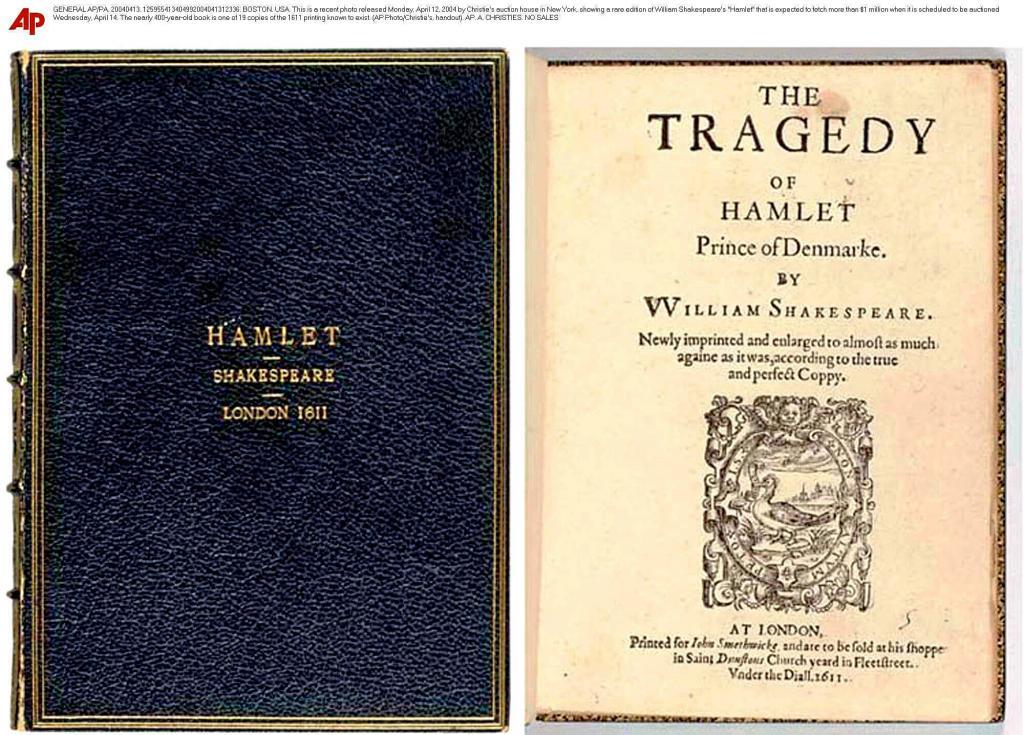
One of the differences with Shakespeare is that the author of Hamlet did not take as many risks. He was more cynical. "He used his characters as armor. I don't think he would have existed without Marlowe's presence, although he was a genius and geniuses eventually find their way. But his career closely follows Marlowe's course. In Tamerlane, his first success, Marlowe discovers the technique of blank verse, without rhyme.
This drove the English public wild. The sequel to Tamerlane squeezed syntactic structures. It was the discovery of a new rhythm. "Shakespeare develops this technique," says the professor. "They write parallel plays. Macbeth comes from Tamerlane. The Merchant of Venice comes from The Jew of Malta. Hamlet comes directly from The Tragical History of Doctor Faustus. Shakespeare was called a raven embellished with our feathers. A plagiarist. He was an extraordinary genius and it is unfair to treat him that way, but there is still some truth to it. It was dangerous for him to imitate you because he did it better. The fact that they knew each other, that they were exact contemporaries and fought each other intensified and elevated the production of both."
Marlowe was aware of the success of his texts, but not of their significance. He could earn up to six pounds for a new work. Half the annual income of a skilled worker. His creation has its destiny marked. Was he bitter? "Everything he wrote speaks of the dream of coming from nothing and achieving power, extraordinary access to sex or wealth. Is that an indication of what you call bitterness? I don't know. I'm not sure. I think it's a way of breaking out of your shell, of talking about the fantasy of breaking out of that shell and exploring beyond your limits. His work had an impressive sense of vitality. He wanted to get out. Marlowe lived in a world where everything was held down by a kind of weight. He wanted to lift that weight. Get rid of it. Bitter? I'd say he was violent. And often cruel."