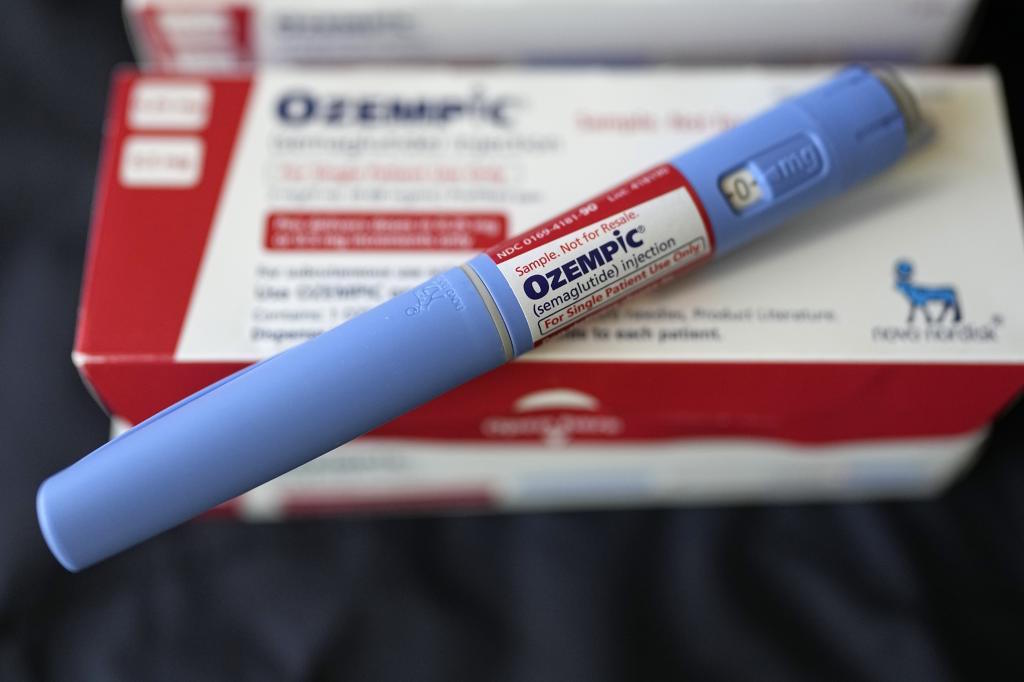
From the family of drugsOzempic, it is already said that they serve for "almost everything". Medicine is experiencing a revolution after finding a target that acts on the hormone glucagon-like peptide 1 -better known as GLP-1- present in a large part of our body and involved in its daily functions. Its arrival has been hopeful not only for diabetes, the initial purpose for which these molecules were formulated, but it has opened up a possibility previously considered remote: a drug that does act against obesity.
However, in addition to the dazzling effects on size reduction, these drugs have their drawbacks and unanswered questions. Among the most common are gastrointestinal side effects, such as nausea, vomiting, diarrhea, or constipation, which often lead to treatment abandonment. If used in chronic diseases, is their long-term use safe? Why do people abandon it within a year? Will there be availability for everyone? How long will price be a barrier to access?
The potential patient numbers are high: 2.5 billion people worldwide are overweight and 890 million are obese, according to WHO estimates. Therefore, controlling their side effects and ensuring equitable access to those who need it most is more important than ever. "There is no magic formula for weight loss and maintenance solely through the use of medications, no matter how efficient they may seem in the short term, unless there is substantial support to allow it."
Juan Franco and Eva Madrid endorse these words. Both are authors of a recent Cochrane review - a non-profit organization made up of an independent network of researchers - on the use of three drugs from the Ozempic family: liraglutide, semaglutide, and tirzepatide. In other words: Saxenda, Wegovy, and Mounjaro, their respective trade names.
All the diseases that the 'Ozempic family' aims to cure: "It is a 'miraculous' drug"
The 'Ozempic effect', the silent revolution of the global economy
The request comes from the WHO, which seeks to develop a clinical guide that clarifies details about its use. Madrid, lead author of the reviews and researcher at the Cochrane Iberoamerican Center and the University of Valparaíso in Chile, justifies the request: "While we have many years of experience with these medicines for diabetes treatment, their use in the obesity field is more limited, and clinical trials have few years of follow-up."
The challenge of access and the arrival of generics
It is true that the boom of GLP drugs has barely reached five years, although the patents of two of them - liraglutide and semaglutide - are close to expiration. The first has already lost protection in some countries, such as Brazil; the second will lose it next year in countries like China and India, and in 2031 worldwide. "This will lead to the emergence of more economical bioequivalent generic forms," says Franco, lead author of one of the reviews and researcher, linked to the Cochrane Iberoamerican Network, at the Heinrich Heine University in Düsseldorf (Germany). "Governments, regulators, and insurers also have the power to regulate prices with pharmaceutical companies, among other resources," he emphasizes.
Access hurdles are an important issue in countries with fewer resources. Meanwhile, in the first world, the U.S. Administration is also doing its part. This week, an agreement was announced to expand access to popular obesity medications manufactured by Novo Nordisk and Eli Lilly. This ensures greater coverage for beneficiaries of Medicare and Medicaid programs by negotiating a general price reduction.
The U.S. Administration argued that providing access to these drugs to millions of people represents a great victory in the fight against chronic diseases. Currently, the exact timeline for the expansion of this service and the scope of who will have access to it are not known, but it aims to target over 40% of the country's population with these therapies.
One of the fathers of the miraculous molecule, endocrinologist Daniel J. Drucker, professor at the University of Toronto and researcher at Mount Sinai Hospital in the same city, also expresses concern about this issue. "If you calculate the cost of these medications, in many countries, they are seen as too expensive and would need to decrease in price by 30% to 50%," he states.
Off-label use, new indications, and the debate on its scope
While economic plans are being designed to cover the access part, science continues to monitor its use (and abuse) and the consequences of this. One of the "key" issues for many is the duration of use. Juan Franco and Eva Madrid argue in their review that "this must be addressed to manage patient expectations." They also argue, as mentioned before, that "while we have many years of experience in diabetes treatment, its use in the obesity field is more limited and clinical trials have few years of follow-up."
This "massive use" has been exacerbated not only by new medical indications but also by the growing popularity of these weight-loss drugs for aesthetic reasons or in cases of mild overweight (off-label use). This unregulated demand has strained supply chains, contributing to product scarcity and increased costs for patients with approved chronic conditions, such as diabetes and severe obesity.