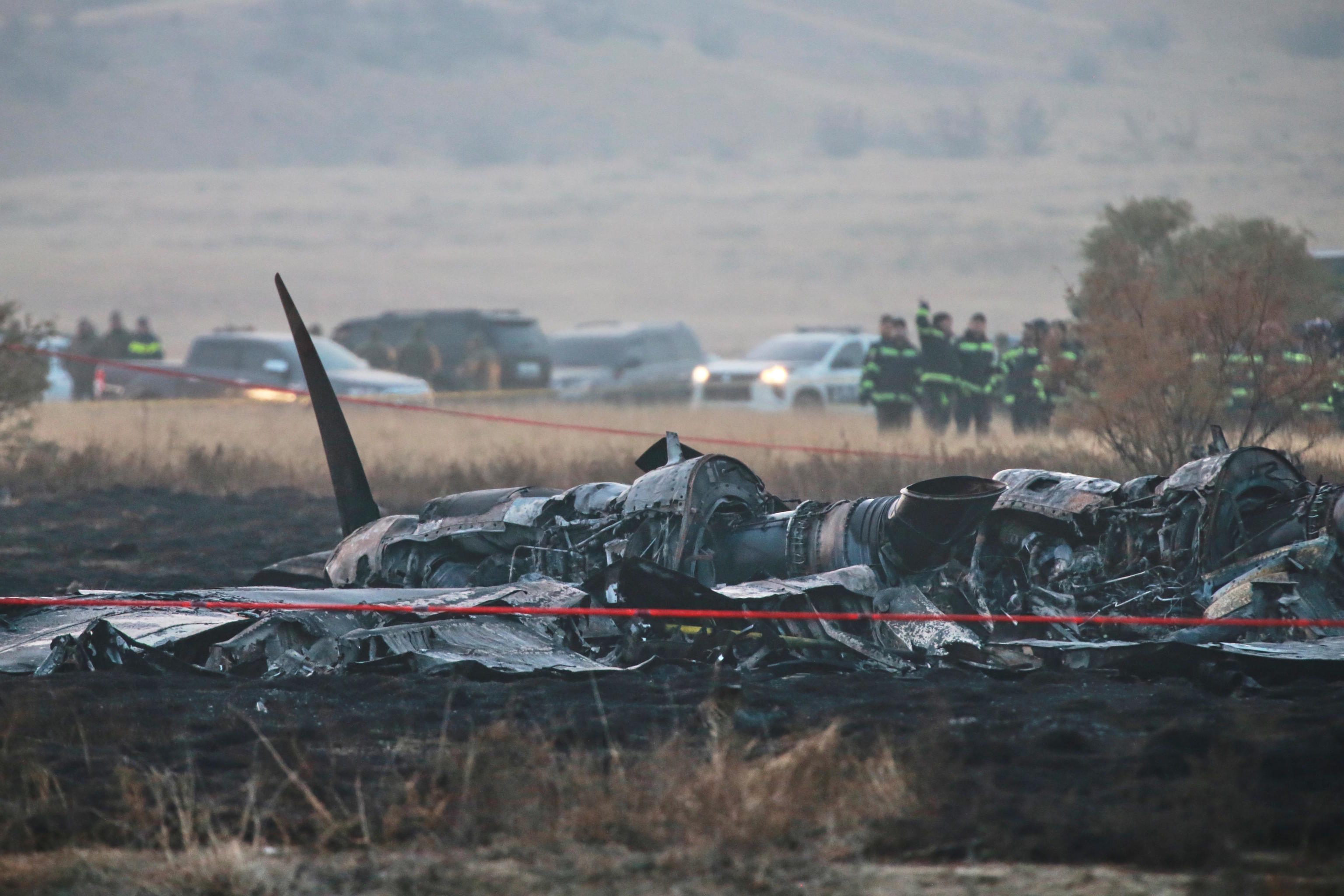
The Ministry of Defense in Ankara confirmed the deaths.
The crashed aircraft, a C-130 Hercules, had taken off from Azerbaijan and was heading back to Turkey when it crashed on Tuesday in the municipality of Sighnaghi, Georgia. The Turkish Minister of Defense, Yasar Guler, referred to the deceased as "heroic comrades-in-arms."
Among the 20 victims are high-ranking personnel, including a lieutenant colonel pilot from the Air Force, two major pilots, and two first lieutenants, as well as several non-commissioned officers and sergeants.
INVESTIGATION UNDERWAY AND POSSIBLE CAUSES
The cause of the accident is under investigation. Turkish search, rescue, and accident investigation teams, in coordination with Georgian authorities, began their work on Wednesday morning at the crash site.
According to the Turkish state agency Anadolu, contact with the plane was lost shortly after it entered Georgian airspace. The aircraft did not send any distress signal before the impact.
A retired military aeronautical technician consulted in Ankara noted that the tail of the plane appeared to have detached before the impact, suggesting that the aircraft broke in two mid-flight. The expert added that the tail detachment could be due to an internal explosion or an "external intervention." However, the Ministry of Defense has not yet communicated the possible causes.
MILITARY COOPERATION AND REACTIONS
The C-130 Hercules is a four-engine turboprop military transport aircraft, designed and manufactured by Lockheed Martin. It has been in service in the Turkish Air Forces since 1963 and has the capacity to transport up to 74 soldiers or up to 20 tons of cargo, depending on the version. Turkey and Azerbaijan maintain close military cooperation.
The President of Azerbaijan, Ilham Aliyev, and the Georgian Minister of Foreign Affairs, Maka Botchorishvili, extended their condolences to their Turkish counterparts. Aliyev expressed being "deeply shocked" by the news of the loss of lives on Georgian soil.