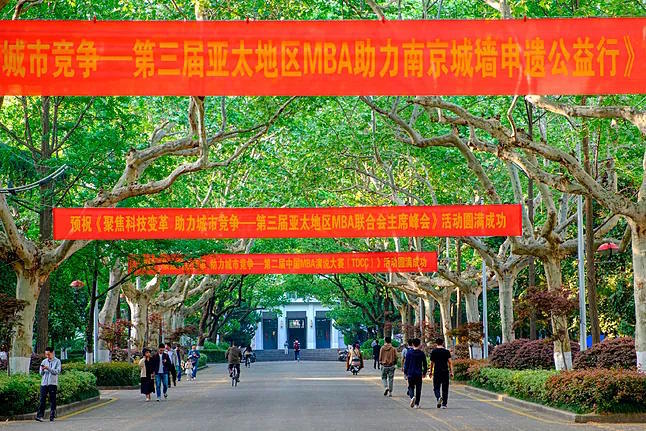
Du Dogdong, a 35-year-old scientist, collapsed while walking on the campus of the Food Science and Engineering Faculty at Zhejiang University in eastern China, where he worked as a researcher and supervised doctoral theses. It was a sudden death. The news was recently reported in state media, although no further details were disclosed, except that the incident occurred in August, the same month that 41-year-old chemist Huang Kai also died suddenly while working at a technological institute in the southern province of Guangdong.
Last summer also saw the death of a promising 33-year-old scientist and professor at Nanjing University. Her name was Dong Sijia. A week ago, Xiangtan University in the central province of Hunan paid tribute to scientist and professor Liu Haolin, who died suddenly at 37.
In recent months, the Chinese public has focused on the mysterious premature deaths of several (relatively) young and prominent scientists and researchers from some of the country's top universities and academic centers.
"These premature deaths have highlighted great concern for the conditions and stress experienced by the scientific and academic community amid ambitious development goals in many technical fields and the ruthless academic system," read an editorial in Caixin, one of China's most reputable media outlets.
While debates in the media and online often questioned whether these deaths in the academic community followed a disturbing pattern, a database became popular that documented many of these cases over the past decade, citing at least 76 researchers under 60 who have died so far this year, compared to 44 in the entire previous year.
Many users criticized that families had not given consent for the names to be made public and that the database could have a copycat effect, as some of the cases included are suicides in academic environments, where pressure is increasing.
Last May, a study published in the peer-reviewed journal Preventive Medicine Reports found that, in stark contrast to the overall decrease in suicide rates in China over the past decades, "academic environments experienced a worrying increase in suicides."
The research analyzed suicides reported in the controversial database of Chinese graduate students and academics, revealing that most were young male students from elite programs at the country's top research institutions. In 2022, another study published in the journal Science and Technology Talents of China highlighted that marathon workdays were one of the main causes of physical and mental health problems among researchers.
Mid-year, Liu Yongfeng (47), a researcher at Zhejiang University, one of the country's most prestigious, died from a cerebral hemorrhage. His wife later posted a letter on an internet forum complaining that Liu had an excessive workload.
"Since joining Zhejiang University in 2007 for teaching and research, he worked at a breakneck pace for 18 years," the letter stated, noting that between March 2024 and January 20, 2025, Liu had worked a total of 319 days, when the legal number of workdays for that period should not exceed 183 days.
In April, Li Haibo, a professor at Ningxia University specializing in nanomaterials, especially in improving the performance of lithium-ion battery storage, died suddenly at the age of 41. Local media highlighted that Li had published over a hundred articles in international journals and held 16 patents in China and one in the United States. "While filling her days with classes and meetings, she dedicated her nights to research," said her colleagues.
Li Zhiming (50), an Architecture professor at Nanjing Forestry University, also passed away in March, the same month as Yang Bingyou (54), vice president of Heilongjiang University of Traditional Chinese Medicine. At 46, Zhang Jinlei (46), a professor at Zhengzhou Aeronautical University, also died earlier this year.
Last year, the death of materials scientist Li Haizeng from Shandong University, who suffered a heart attack at 34, garnered much attention. Other cases reported in the media included biologist Song Kai from Nanjing University, who took his own life at 38, and Huang Fei (41), an academic psychologist from Wuhan.
The Hong Kong newspaper South China Morning Post (SCMP) focused this year on the premature deaths of prominent Chinese scientists specializing in artificial intelligence, compiling a list since 2022 that includes Sun Jian, former Microsoft researcher and chief scientist at AI company Megvii Technology, who died of a sudden illness at 45. In 2023, Feng Yanghe, an AI expert in China's Defense sector and a key driver of the software used in military simulations, died in Beijing at 38. That same year, Tang Xiaoou (55), founder of tech giant SenseTime, also passed away.
In 2024, at 41, engineer He Zhi died from cardiopulmonary arrest due to altitude sickness. He was a co-founder of Yidu Tech, a company dedicated to AI-driven medical consultation. Earlier this year, South China University of Technology in Guangdong province published an obituary for 39-year-old professor Quan Yu Hui.
Following the compilation by SCMP, several experts consulted pointed out that these premature deaths - of individuals in the prime of their scientific careers - were causing great alarm due to the demanding research environment faced by those working in the cutting-edge industry of artificial intelligence, crucial for China's technological self-sufficiency goals.