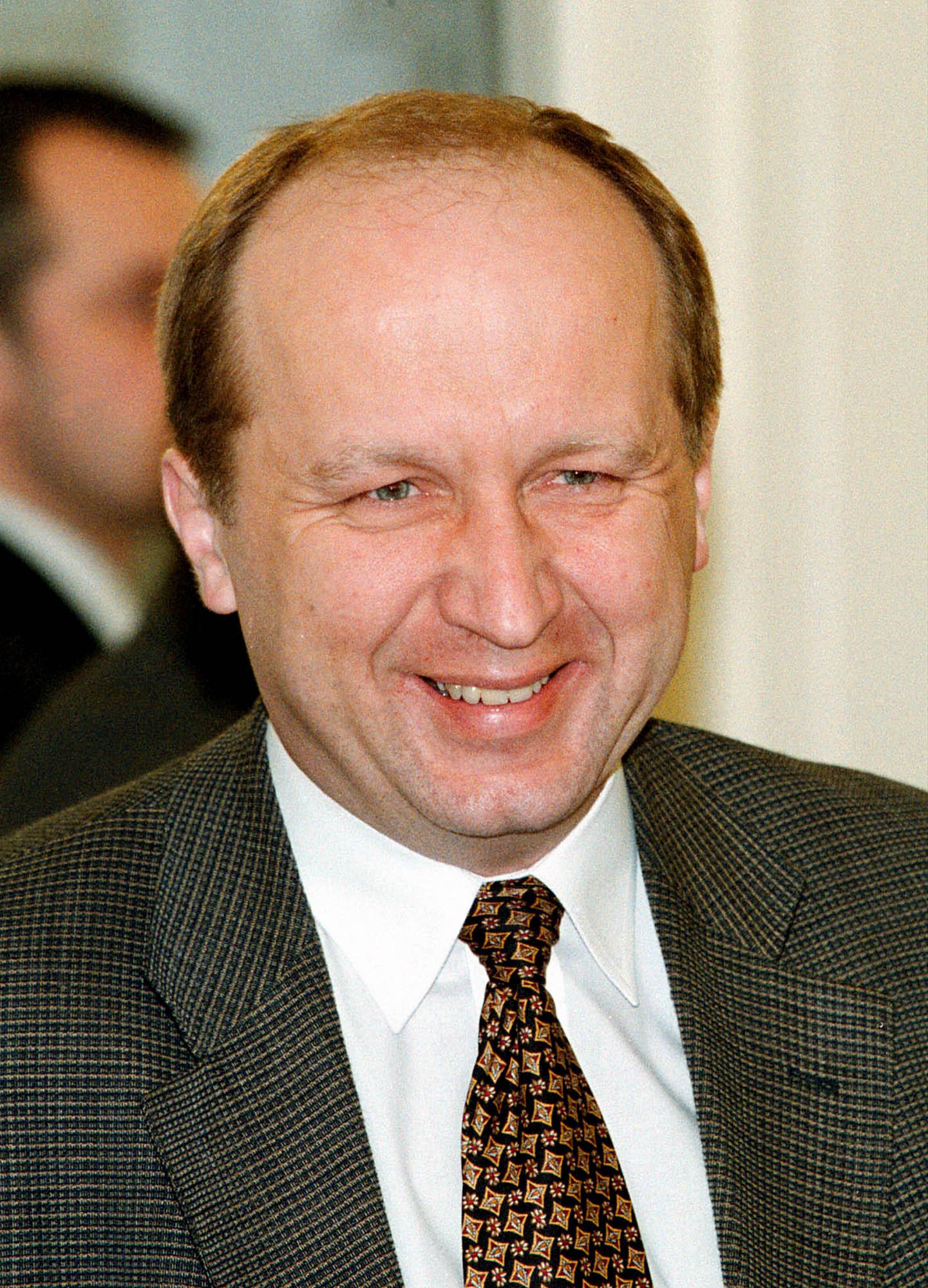
Andrius Kubilius is clear that Russia's ability to attack a country in the European Union is not limited to the Eastern flank. Spain could also be a target for Putin, according to the European Commissioner for Defense and Space. He already warned about it in a recent interview with this newspaper, and yesterday, in a meeting with a small number of European media outlets including EL MUNDO, he went even further: Russian drones can easily reach Spanish airports, as they have already done with the Danes or Belgians, and directly affect an industry as important for the country as tourism.
"I always mention Intelligence services: from Germany, Netherlands, Denmark... And they all say the same thing, that in two or three years Russia will be able to attack a NATO country. We must be prepared. Should we think about a traditional military aggression in two to three years, with a battle-hardened Russian army entering neighboring countries of the European Union and NATO? Or will we see hybrid attacks, like the recent drones flying over airports? And in this sense, speaking with Spanish MEPs in the European Parliament, there is a real concern about hybrid attacks in Spain. Because Russia can easily launch drones, from ships or from the coast, that disrupt airport services and thus damage the tourism industry. We must keep that in mind," Kubilius explains in response to this newspaper's question.
The meeting with the Lithuanian Commissioner also took place to explain the new mobility plan presented by the European Commission yesterday. A "substantial step forward," in his opinion, harmonizing and streamlining military transport rules. "We simplify the lives of the military by moving from 27 national permit procedures to a single Union procedure defined by the regulation," he continues. "The importance of the action can be best described by quoting one of our famous names, John Pershing, the American general who led American forces in Europe during World War I. And the phrase he said was very simple: 'Infantry wins battles. Logistics wins wars,'" he emphasizes.
The measure includes specific actions that must be implemented by 2027. For example, it will establish a "clear process for cross-border movements in a maximum of three working days." It will also "simplify customs procedures and military transport rules" and, as Kubilius points out, effectively create a "single authorization procedure" for all countries.
Currently, there are situations as described by the Defense Commissioner to explain why this military Schengen is so necessary, as the European Commission has named it. "When France tried to move troops to Romania, it took months. And some countries require a 45-day prior notification when someone wants to cross their territory with military equipment. We could make a long list of cases. Other countries do not allow tanks to use roads because they weigh too much according to their regulations. And that is what we are changing here."
An investment of 17.650 million will also be made in 500 critical points from Poland to Portugal considered bottlenecks. For example, bridges, ports, or tunnels that could not handle military mobility. There will also be a pool of resources that member countries can make available for common defense. "Let's say theoretically that Lithuania has ten trucks: it registers them in the pool. And all other Member States, if interested, register their assets there. And when there is an emergency or when another State needs to move certain capabilities, they can turn to the pool and say, 'This is what we need.' They are dual-use assets, not military," the EU Defense official elaborates on this point.
During the press conference where two vice-presidents and two commissioners, including Kubilius himself, presented the mobility plan, the EU High Representative for Foreign Affairs, Kaja Kallas, wanted to give another very illustrative and current example to understand how essential the plan is. "Monday's attack on Polish railway lines is evidence of the existing risk. Russian attacks are increasing, and critical infrastructures need more protection. It is necessary to ensure that our armed forces are in the right place at the right time. The faster our armed forces move, the greater deterrent capacity we will have. It is necessary to move troops in days," she explained.