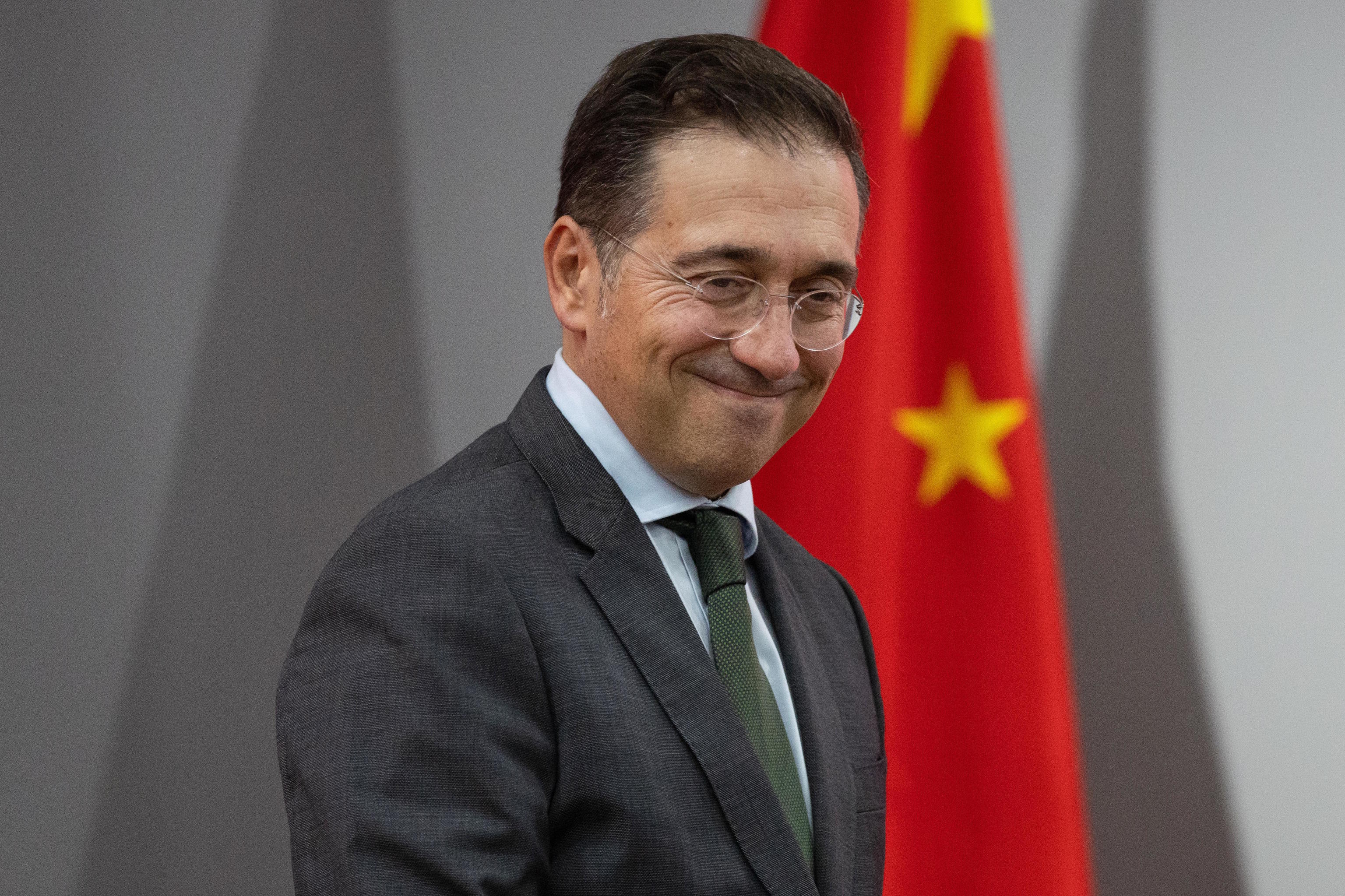
Albares reiterated that the European Union must participate in any negotiation affecting its security and was clear in stating that the plan cannot be made "behind the back" of Ukrainian President Volodymyr Zelensky.
Upon arriving at the Foreign Ministers' meeting, Albares acknowledged the "total lack of knowledge" on the part of the EU regarding this proposal. The Spanish Foreign Minister only knows some details from what has been reported in the press, indicating that Washington and Moscow are working on a 28-point plan that would include concessions from Ukraine, such as the cession of territory and the reduction of its Army's size.
Albares criticized that, based on what has been revealed, the US and Russia's approach does not represent a "credible and lasting" peace. "The EU will support any credible, fair, and lasting peace proposal, but it must start with an unconditional ceasefire." He also emphasized that any initiative must "respect Ukraine's territorial integrity and sovereignty." The Spanish minister insisted that Ukrainian sovereignty is represented by Zelensky, who must be "at the absolute center of any decision."
Albares' tone was dismissive towards the proposal, suggesting it could be just a brainstorming and stating that "Spain has nothing to do with that alleged peace plan, and the EU has not been involved either."
The discontent over the exclusion was shared by other ministers. The EU's High Representative for Foreign Affairs, Kaja Kallas, pointed out that "for a plan to work, it is necessary for Ukrainians and Europeans to be involved." Meanwhile, Poland's Minister of Foreign Affairs, Radosaw Sikorski, noted that since "Europe's security" is at stake, they expect to be consulted. French Minister Jean-Noël Barrot agreed, warning that "peace cannot be capitulation."
The plan, which aims to limit the Ukrainian Army and force territorial concessions, has landed in a Foreign Affairs Council where measures to tighten the noose on the Russian phantom fleet and maintain continued support for Ukraine are also being discussed.