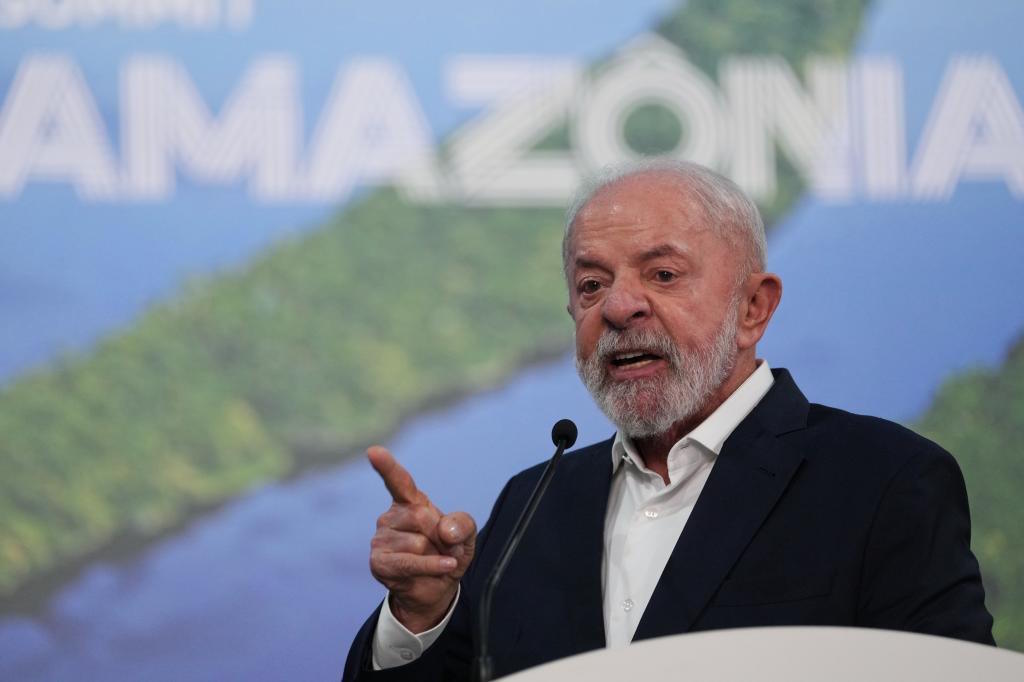
Luiz Inácio Lula da Silva has decided to personally push forward the final stages of the negotiations at the Belém Climate Summit (COP30) to pave the way for a roadmap to end the use of fossil fuels. "We are not going to impose anything on anyone, nor set deadlines to stop burning oil," warned the Brazilian president. "But if we have to reduce CO2 emissions, and if fossil fuels emit a large amount, we have to start building a way to live without them."
Brazil, the eighth largest oil producer globally with plans to rise to the fifth position by 2030 and start explorations in the Amazon estuary, has been forced to raise the bar in recent days due to pressure from a coalition of over 80 countries (including Spain) aiming to incorporate the mention of the roadmap for the end of fossil fuels in the final COP30 agreement.
The controversial issue was not initially among the four pillars of the official agenda - climate change financing, trade, transparency, and national emission reduction plans - but pressure has been mounting during the conference held in Belém until November 21 (although it could be extended for at least one more day).
The Beyond Oil and Gas Alliance (BOGA), created by Denmark and Costa Rica at COP26 in Glasgow, has served as a catalyst. European countries like France, Germany, and the United Kingdom have become the main drivers, with British Energy Secretary Ed Miliband being one of its most fervent supporters: "This is a coalition of the global north and south, with countries speaking with one voice and warning that this issue cannot be swept under the rug. This issue must be at the heart of our discussions."
Tina Stege, special envoy from the Marshall Islands, has been another prominent voice: "We will unite around the idea of the roadmap and work together to turn it into a plan." Colombian Minister of Environment Irene Vélez Torres has also expressed support with the backdrop of the Dont Gas Latin American campaign, launched during COP30 in response to oil companies' plans to turn South America into the next oil Eldorado.
Advocates of the "roadmap" for the end of fossil fuels are confident of surpassing the hundred mark, but they face at least 40 countries on the opposing side, led by petrostates like Saudi Arabia who are not willing to go beyond the vague commitment reached at COP28 in Dubai of "a transition away from fossil fuels."
"We are facing an issue that creates great divisions and leaves no country indifferent," acknowledged COP30 President André Corrêa do Lago, who aims to bridge gaps between the two fronts due to Brazil's special status as an oil producer. Corrêa do Lago has called for respecting "the way each country interprets its transition to zero emissions, to which we have all committed."
Tensions over the roadmap for the end of fossil fuels have overshadowed the other major issue at COP30: the increase in climate financing set at $300 billion annually from 2035, agreed upon at COP29 in Baku, and deemed insufficient by global south countries increasingly affected by extreme weather events.