"I thought it was just something crazy and out of control. But now I see how important it is. We are going to start working in Sudan." This is how, returning to his usual casualness, Donald Trump referred to the war that has been bleeding the African country since April 2023, causing at least 150,000 deaths, after his recent meeting at the White House with the Saudi Crown Prince, Mohammed bin Salman.
The atrocious conflict in Sudan had not been a priority on the Republican's agenda until that meeting with the de facto leader of the Desert Kingdom, who traveled to Washington with many objectives, including changing that. It is the biggest humanitarian crisis on the planet right now, as repeatedly emphasized by the United Nations. Specifically, Riyadh is deeply concerned about the evolution of events in the vast country of Black Africa, rich in natural and strategic resources but plagued by a devastating famine causing as many deaths as weapons. The Saudi Monarchy is not only worried about the destabilization of its sphere of influence around the Red Sea. It is alarmed by the extent to which its usual regional partner, United Arab Emirates, is acting independently in this conflict, disregarding Riyadh's traditional foreign policy guidance and opening the biggest gap in the security strategy of the Gulf countries.
Abu Dhabi is singled out by the international community as the main supplier of weapons, money, and mercenaries to one of the two warring parties in Sudan, the insurgent Rapid Support Forces (RSF) that are challenging the Regular Army. Although the UAE denies the accusation, various reports from non-governmental organizations operating on the ground, independent UN investigations, and even documents handled by US lawmakers affirm it. The weight of the Emirati Monarchy in the African country is such that the war likely could not have lasted this long without its funding. This goes against the interests of Saudi Arabia, whose patience seems to have run out. Thus, Bin Salman would be redoubling his efforts for Trump to force the Emirati president, Mohamed bin Zayed, to capitulate, who, it must be said, also has a privileged dialogue with the White House and is a key ally of Washington in the powder keg of the Middle East.
The President of the UAE, Mohamed bin Zayed, and the Saudi Crown Prince, Bin Salman.Reuters
Bin Salman's pressures on the US president must have had some effect. Because a few days later, the so-called Quad for Sudan (Quad Group) - composed of the US, Egypt, Saudi Arabia, and the United Arab Emirates - promoted a ceasefire plan that represented a first glimmer of hope after two and a half years of fierce conflict, although last Tuesday the Sudanese Army general, Abdel Fattah al-Burhan, now in charge of the country's fragile institutions, rejected the terms, insisting on his harsh criticism of Abu Dhabi for sponsoring the RSF. Washington demands that both warring parties cease attacks without delay.
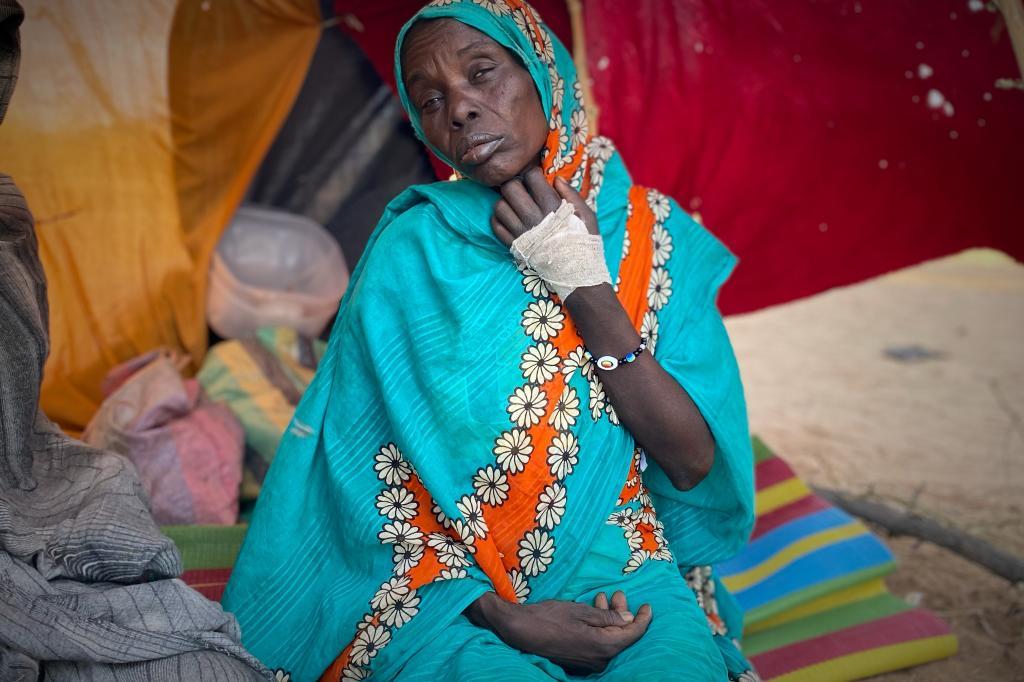
The war in Sudan erupted on April 15, 2023, on the eve of the conclusion of an ongoing transition process that was supposed to end with a civilian government in Khartoum. It is not a civil war in the strict sense. Nor can we speak of good and bad among the belligerents. On the contrary, the United Nations denounces war crimes by both sides, in a brutal struggle that, in addition to causing 150,000 casualties, has forced up to 13 million Sudanese into forced displacement. Meanwhile, the food crisis has reached levels of inhumanity.
Two men of war at odds
The two strongmen who had shared power in Sudan after the fall of Omar al-Bashir's dictatorship in 2019 are the visible heads of this war, each determined to seize absolute control, with their own militarized networks and divergent international support: General Abdel Fattah al-Burhan, leading the Sudanese Armed Forces (SAF), and Mohamed Hamdan Dagalo Hemedti, who commands the so-called Rapid Support Forces (RSF). Their disagreement at the moment when these forces were supposed to integrate into the regular army was the spark that ignited everything. The fighting and advances on the ground to each take control of a now fractured country have been marked by episodes of ferocity against the civilian population as horrifying as those experienced after the RSF's capture of El Fasher (capital of North Darfur) in early November after a 16-month siege, or the ethnic cleansing of the Masalit people in Western Darfur.
Barbarities from both sides are documented, for example, in a September report by Human Rights Watch accusing the army of using its air force to bomb markets full of civilians in El Fasher and Nyala, causing hundreds of deaths. Amnesty International also pointed out "credible evidence of the use of chemical weapons in areas of Al Jazirah state," leading the United States to impose new sanctions against senior Sudanese officials in October 2025.
Riyadh has played a prominent role from the beginning in mediating and attempting to stabilize the situation. International powers applauded its efforts to evacuate tens of thousands of people through Port Sudan in the early stages of the war. Both Saudi Arabia and Egypt, the two major Arab powers, support the legitimacy of the Sudanese military institution, considering it -according to a diplomat quoted by Foreign Policy- as "the easiest way to gain influence and compete for regional control." In contrast, the United Arab Emirates seems to have chosen to support the RSF. The aforementioned reports detail how they support the rebels through supply corridors crossing southeastern Libya, Chad, and even the port of Bosaso in Puntland (Somalia).
Earlier this year, the de facto military government of Sudan, led by the aforementioned Abdel Fattah al-Burhan, filed a lawsuit against the United Arab Emirates for alleged support to the Rapid Support Forces in their "genocidal campaign" before the International Court of Justice. The ICJ dismissed it in May for "lack of jurisdiction" to analyze the case, although the process brought to light some of the investigations pointing to Abu Dhabi as a sponsor of this warring faction. Shortly before, Burhan had traveled to Mecca to pray alongside the Saudi Crown Prince at the end of Ramadan -just after his troops achieved a major victory by recapturing the capital, Khartoum-, a meeting in which the former once again implored Bin Salman to pressure the Emirati president to cease his interference in the Sudanese conflict.
Regional divergence
The divergence between Riyadh and Abu Dhabi is profound. Traditionally, Sunni countries in the Middle East have aligned themselves with the regional guidelines set by Saudi Arabia and Egypt—the so-called Arab consensus. Their great common enemy is Iran. In fact, analysts emphasize that the weakness of the Ayatollahs' regime, which has lost much of its ability to pose a real threat after the war with Israel and the US attacks, as well as the Arab world's tentative overtures to Iran just before that 12-day war, may have emboldened the Emirates to go it alone.
Following the failed military intervention in Yemen sponsored by a coalition of countries led by Saudi Arabia and the Emirates—in which it is often forgotten that members of the Sudanese Rapid Support Forces also fought—the Saudi monarchy is now interested in reaffirming its regional leadership and leveraging stability that will allow it to develop its Vision 2030, the ambitious economic, technological, and social transformation plan promoted by Bin Salman. On the other hand, the Emirates aspire to access strategic resources such as those provided by the Sudanese Rapid Support Forces, which control, for example, the country's main gold deposits. That is why some NGOs are campaigning against the lucrative trade in the most precious metal in the capitals of the Emirates, which they claim is stained with blood.
Mohamed bin Zayed and Bin Salman have long been close collaborators. In recent years alone, in addition to joining forces for the intervention in Yemen in 2015 in support of the ousted government in Sana'a and against the Houthi insurgency—Iran's extended arm in the Arabian Peninsula—which ended in embarrassing failure for Riyadh, they acted seamlessly in the crisis that led to the blockade of Qatar by several Arab countries for its support of the Muslim Brotherhood, which represented a serious challenge to the regional status quo.
But the interests of Bin Zayed and Bin Salman now seem to be diverging on many issues. In Yemen, each is taking a stance on the Houthis, whom the bombings failed to remove from power. In Sudan, as has been said, the failure of strategy is almost absolute. Nor are they seeing eye to eye on other crucial areas, such as the strategy of saturating the market with barrels of oil.
Meanwhile, the international community is wondering whether Trump will insist on ending the war in what is currently the most violent place in the world, Sudan, as he is doing with other countries. It would undoubtedly be a great help if two such important players as Riyadh and Abu Dhabi were to act in unison.