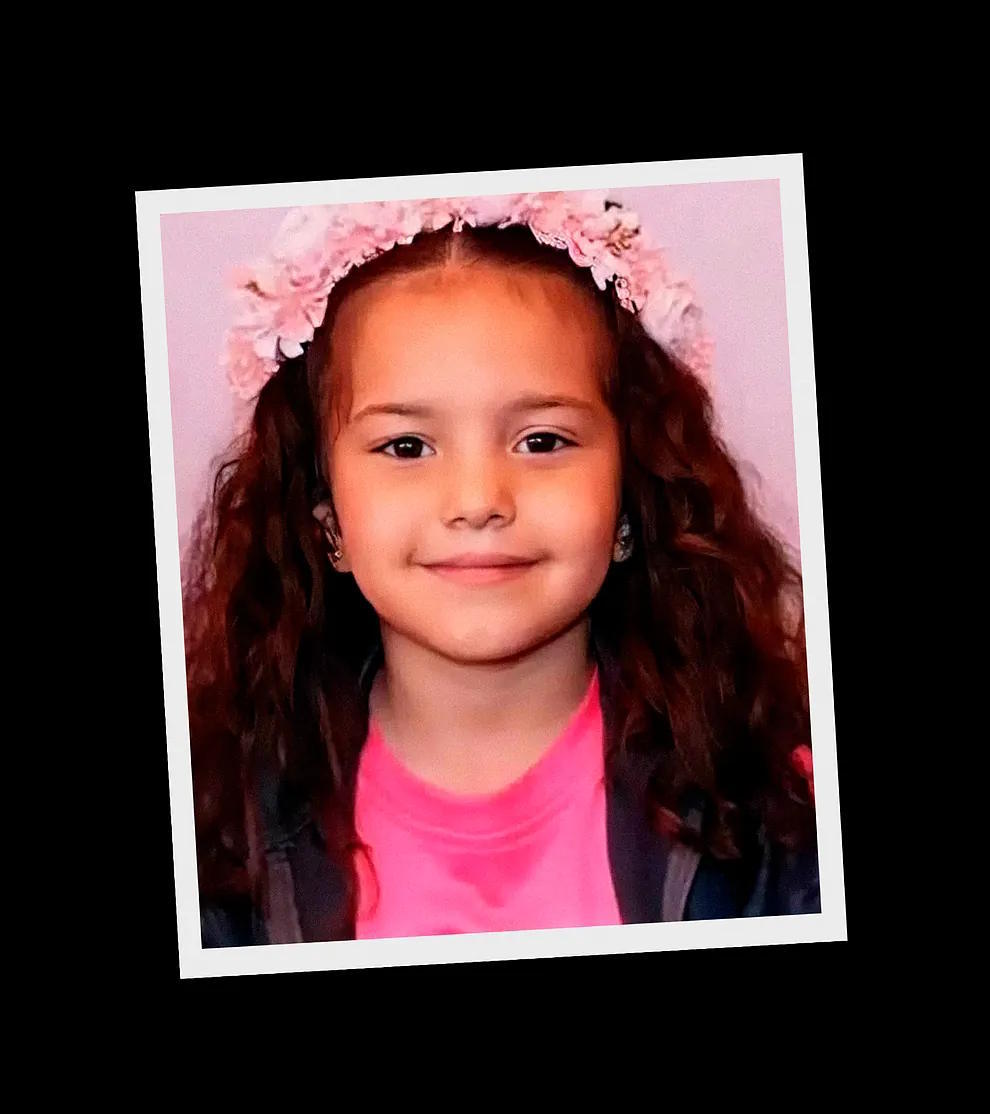
The film won the Grand Jury Prize at the Venice Film Festival and will be in the running for the Oscars.
Kaouther Ben Hania (Sidi Bouzid, Tunisia, 1977) speaks, but cautiously. She understands and explains to those who want to listen that every gesture, statement, or work of art is necessarily political, but she does not want politics — the everyday, the one on all news broadcasts — to consume everything. Politics is voracious and, when disguised as a proclamation, it hides everything, covers everything, distorts everything. The Voice of Hind, the film that, due to its clarity, audacity, and mastery, divides the year in two, is essentially a political film, but in the broadest, truest, and most honest sense. It is not only for reconstructing one of the most brutal events that happened in front of all of us in recent years, but also for matters such as emotion, rigor, and the perfect construction of a drama that unfolds entirely behind the screen and the eyes of a viewer who suddenly finds himself alone facing all that is bad, all that is unjust, all that is, indeed, political.
"Honestly," says the director, "I believe that, as I once heard, every film is the propaganda of its director. My job is to choose a point of view, and that simple act, deciding from where to tell a story, is a political decision. Films cannot be made any other way." Pause. "The question is: Can one be neutral? But what does it mean to be neutral? You need a character from which to tell a story, a voice, a sense... When I am accused of propaganda, what is really intended is to silence The Voice of Hind. I will not talk about politics because I know that anything we say is political. It cannot be otherwise." Cautious.
The Voice of Hind is the story of the six-year-old girl Hind Rahab. On January 29, 2024, she was murdered along with her two uncles and four cousins by the Israeli army in the Gaza neighborhood of Tel al-Hawa. Also massacred was the ambulance with its two occupants who were coming to their aid. The car carrying the Rajab family was hit by 355 bullets. The film, entirely shot in the emergency center of the Red Crescent, does not show rubble, destruction, blood, or soldiers with threatening gestures. It simply shows — because it is seen, not just heard — a voice, the sustained cry for help from Hind Rajab, and the silent desperation of everyone. Including each of the viewers. Nothing more. The film won the Grand Jury Prize at the Venice Film Festival, where the interview took place, and will most likely, like the director's two previous films (The Man Who Sold His Skin and The Four Daughters), be in the running for the Oscars.
It all started exactly where the title announces: with a simple voice, a voice asking for help. "When I first heard Hind Rajab on the internet, I felt sadness, immense sorrow, but also helplessness. I think it was a feeling shared by the world. Her voice is not just her voice, it is the very voice of famine in Gaza, of genocide, of helplessness, precisely, in the face of injustice. It took me time to come up with the idea from which to tell the story. If I have felt what I have felt, what must have gone through the minds of the Red Crescent workers who could do nothing in the face of the simple call for help from a girl. For any of us, waiting for an ambulance does not take more than a few minutes. But that was not the case in Gaza when what happened, happened. Occupation means that something so simple becomes impossible because of Kafkaesque rules imposed by the occupying army," says the director to explain, as has been said, the beginning of everything.
She recounts that the first thing she did, true to her spirit as a documentarian, was to contact the Red Crescent employees to gather firsthand information about what happened. When the casting was completed, the actors were invited to do the same with the real person they portray. "It was very inspiring to be able to talk to Rana [Hassan Faqih] and at the same time very intimidating," comments actress Saja Kilani, who plays the coordinator of the emergency room where the events of the film unfold. And she continues: "She and all the others are the real heroes. When we talked to them, we all felt the responsibility to turn a well-known fact into a work that transcended, that did not just reproduce what happened."
By her side, Motaz Malhees, the other protagonist, agrees and as a Palestinian exile in London, he cannot help but be moved. "I remember that as soon as I was chosen, I couldn't contain myself and, despite being warned not to, I looked for Omar A. Alqam on Instagram and contacted him. I was about to ruin everything, but I couldn't do anything else. Now we are friends," he says.
"The fact that the entire cast is Palestinian," the director speaks again, "helped a lot during filming. Everyone knew what had happened, everyone felt the death of Hind Rajab as a personal matter, everyone was involved to the point that they were even more afraid than I was that the film would simply become a docudrama or be interpreted opportunistically. The commitment was maximum and exhausting." And she adds: "I am not political. I am not an activist. I am simply a filmmaker, and all I can do is make a film".
"Showing what happens in Gaza is no longer effective. We have become insensitive to a reality served daily on TV and social media"
In its own way, although now in a more linear fashion if you will, the film reproduces part of what was rehearsed in Four Daughters, the director's previous film. Back then, the story of Olfa Hamrouni, the woman who gained fame in a very painful way when in 2016 she lashed out against her government in Tunisia for not preventing two of her four daughters from joining the Islamic State, was narrated. The director proposed to two actresses (Nour Karoui and Ichraq Matar) to portray the missing women. And they did so alongside the other sisters who at that time took on the role of sisters in reality and in fiction at the same time. And with the mother, the same. She played herself, but, in certain particularly compromising moments, actress Hen Sabry borrowed her life. Now, everything follows orthodoxy, everyone is an actor, but reality, or the visceral involvement with it, is still there, in Hind Rajab's intact voice. The actors replace their characters, but they do so almost tiptoeing and making it clear at all times that they are what they are: interpreters of lives that are not theirs. In fact, at times, the screen of a mobile phone that shows images of the real protagonists superimposed on the actors makes the narrator's gaze (that is, the director's own) enter the scene until the fabulation turns into something much harder, until reality becomes all of it pure and true politics.
"For 30 seconds, I thought about the possibility of changing the real voice for a child actress's voice. I quickly dismissed it. In any case, the final decision came after talking to the mother. She wanted her daughter's voice, without any manipulation, to be heard. She doesn't want revenge, she wants justice," recalls the director. And continues:
"Showing what happens is no longer effective. We have become insensitive to a reality served daily on TV and social media. That's why the film allows the viewer's imagination to reconstruct the events, doing so from the perfectly civilized and recognizable space of an office, the emergency room that looks so similar to any other emergency room anywhere. The contrast is definitive to me, and above all, the fact that the space is so ordinary, so recognizable, turns the drama into something global, because it is close, common."
And continues: "I like movies that take place in a single location, a single set... But if we pay attention, and despite the evidence, 'The Voice of Hind' does not unfold in the office I mentioned earlier, it takes place in the unseen car. That is the beauty of cinema. It is sound and, as I said, imagination. 'Cinema goes beyond what we see, cinema is what we feel.' It is clear." "For Motaz Malhees, a film like this suspends all the rhetoric that politicians usually use to refer to what happens in Gaza.
'Everything that is talked about regarding the future or possible solutions is nothing but distractions to avoid naming the obvious: genocide. It cannot be that those who are shocked by what they see on TV are the same ones financing the weapons used to commit what shocks them so much,' he says, and then thanks the Spanish government for its stance: 'Without a doubt, it is an example for all of Europe, and those who speak of genocide without taboos have helped the rest of the countries become truly aware of what is happening.' Saja Kilani, by his side, simply confesses that she ended up deciding to make films because of all this. 'You dedicate yourself to a profession you love until, thanks to a film like this, you give meaning to your life,' she says."
"And back to the director." -"In the Netherlands, there have been those who equated Hind Rajab's suffering with that of Anne Frank during the Holocaust. Do you find the comparison appropriate?"
-"Without getting into controversies or the absurdity of measuring the pain of two girls, the truth is that like Anne Frank, the girl Hind Rajab is the symbol of a tragedy that surpasses all of us as humanity."
-"Are you afraid of facing the same persecution that the directors of the documentary that won the Oscar last year, 'No Other Land,' have endured?" -"I know I will be threatened, but if you give in to fear, you accomplish nothing."
"Kaouther Ben Hania insists she does not want to engage in politics, which is, as she later acknowledges, the most sensible way to indeed engage in it. 'I would like the film to be seen everywhere. In Gaza, obviously as well. But I have not wanted it to be shown in Israel for now. I believe that if it is screened there, it is a way of legitimizing the occupation,' she says cautiously. With political and diplomatic caution."