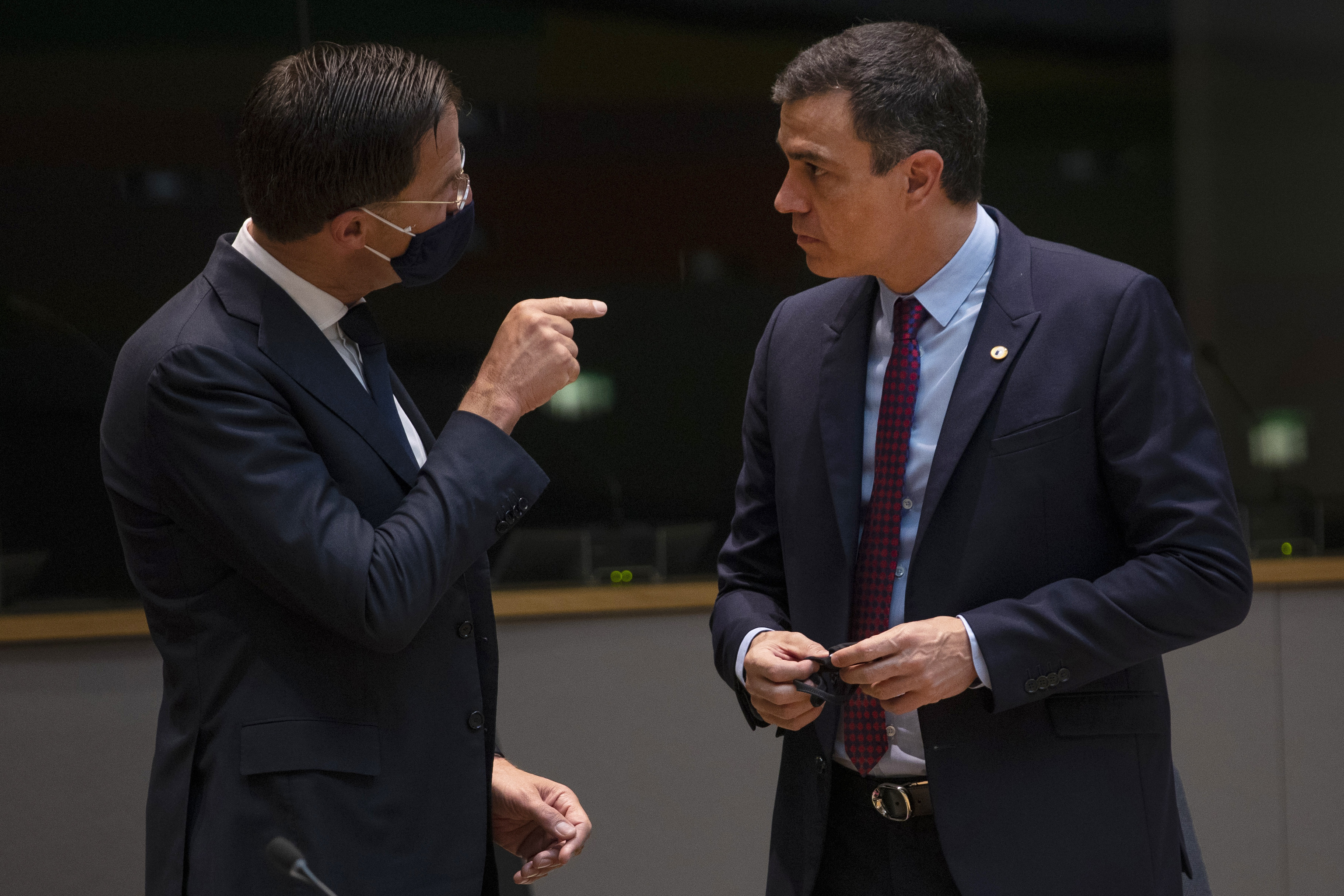
The NATO will examine Spain in the first semester of 2026, that is, imminently, to verify compliance with the military obligations assigned as an ally. Sources from the North Atlantic Treaty Organization familiar with the process confirm this and add that the process includes two evaluations: one conducted by the Alliance's technicians and a second peer review, where countries analyze each other.
Therefore, this process will determine "soon" whether Spain needs to increase its Defense spending, as NATO Secretary General Mark Rutte has often pointed out. The analysis will initially be internal and confidential, but given the significant pressure on Spain to increase spending, it seems unlikely that the results will not be known. The Spanish government under Pedro Sánchez insists that by spending 2.1% of the Gross Domestic Product (GDP), it will be able to meet all its assigned obligations, known as capabilities. However, NATO asserts the opposite and emphasizes that the government must increase spending to 3.5%+1.5% of GDP, thus reaching the 5% commitment made by other countries at the summit in The Hague last June.
Sánchez's refusal has drawn criticism from U.S. President Donald Trump, who even suggested that Spain might be expelled from NATO for lack of solidarity. Spain's membership in the Alliance is not in question, mainly because it requires the ally itself to request to leave the Organization. However, Rutte's criticisms and warnings highlight Spain's challenging situation.
Furthermore, other allies like Italy have also reacted negatively to Spain's stance. Prime Minister Giorgia Meloni was very direct in pointing out that Sánchez had agreed to the same terms as her in the previous summer meeting, and if her government is obligated to increase spending to 5%, so is the Spanish government.
It remains to be seen if all partners will actually reach that level of investment. When the agreement was signed, many in NATO saw it as a way for financially strained countries to buy time. For instance, Italy or even France, which has already announced an increase in military spending, but reaching 5% will require a significant outlay given the size of its economy and a ballooning 5% GDP deficit.
In any case, Spain remains steadfast, believing it will fully meet its obligations and expecting no issues in passing the upcoming semester's examination, given the increase decreed this year. NATO sources also share this view, suggesting that the country will pass the initial examination, with potential challenges arising later. These assessments will be conducted regularly until 2029, when a more in-depth analysis will determine if the assigned obligations are suitable for the context. If, for example, Russia's hybrid attacks increase, higher capabilities will be necessary, or vice versa.
The government also highlights the growth of the Spanish economy, which, despite an upcoming slowdown, is the fastest-growing among major European economies. This, they argue, allows for a constant investment of 2.1% of GDP to result in an absolute increase in millions of euros, enhancing the country's ability to meet its obligations. They point out the perverse effect of tying spending to a percentage of GDP rather than the obligations that must be met.
Prior to these events, today Rutte will meet with the Foreign Ministers of allied countries in Brussels during the visit of Trump's envoy, Steve Witkoff, to Russia. "I am confident that these ongoing efforts will ultimately restore peace in Europe. I think it's very positive that the United States is making proposals. You have to start somewhere, you have to have proposals on the table," stated the NATO chief in the pre-meeting press conference. He once again praised the magnate's work, a move that has been criticized by some within the Organization while others see it as essential to maintaining the transatlantic bond.
However, despite these efforts, the growing distance from Washington is apparent. For instance, the likely absence of U.S. Secretary of State Marco Rubio at the ministerial meeting. "He is working very hard, not only dealing with the situation in Ukraine but also many other matters under his purview. I fully understand that he cannot be here tomorrow [today, Wednesday], and I don't see it as an issue," Rutte assured.