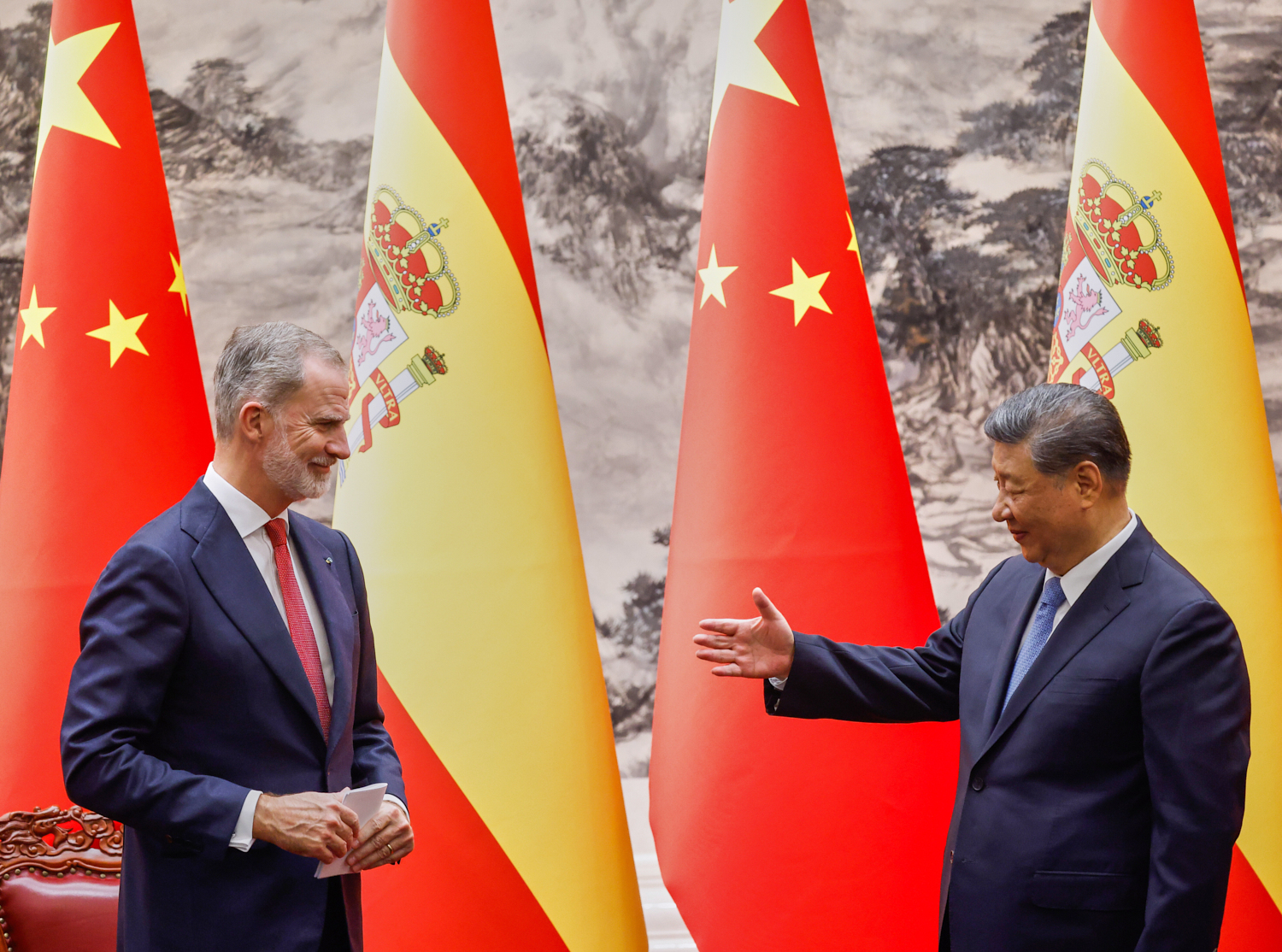
On November 12, during the State visit of the King and Queen to Beijing, Felipe VI and President Xi Jinping supported the signing of several bilateral trade agreements, including a regionalization protocol for pork exports. This protocol establishes that, in the event of a health crisis such as an outbreak of swine fever, China would only suspend imports from areas officially declared as "infected," allowing the rest of Spanish territory to continue exporting normally.
This is why Spain has so far avoided a broader suspension of pork imports from its largest buyer after cases of African swine fever in wild boars near Barcelona. The General Administration of Customs of China confirmed on Monday to the Spanish Government that the suspension has been limited to companies from the Catalan province.
For at least a decade, Spanish pork has played a central role in providing pork to the global market; and within that framework, China has become the top buyer outside the European Union. A relationship that includes the sale of fresh meat, hams, and shoulders. But it is the offal that is most appreciated by Chinese consumers.
Pieces less sought after in the West - offal, feet, ears, stomachs - are in high demand in traditional Chinese cuisine: stewed pork feet in soy and spices, pork ears in cold salad, hot pot dishes using intestines and other organs.
Restaurants in the giant Asian country need large quantities of these cuts because many Chinese consumers consider them tastier and more nutritious than regular meat. While in Spain there is an abundance of offal, in China these pieces fetch high prices due to the consistently high demand and limited local supply in certain seasons.
Last year, Spain sold 540,000 tons of pork to the Asian country, with an approximate value of 1 billion euros. This amount represented 20.33% of the total volume of pork exports, with Spain contributing around 20.95% of all pork imports to China, far ahead of other powers such as the United States, Brazil, the Netherlands, or Canada.
This sector has firmly established itself in Beijing. So much so that the result leaves a significant commercial dependency: for many Spanish pork sector companies, China is no longer an alternative but a structural pillar of their international sales. These would suffer a tremendous blow if a total suspension of imports were to take place with the resurgence of African swine fever.
Pork sector exports in Spain generated over 8 billion euros in 2024, with China being the main destination, representing 42% of Spanish pork exports outside the EU. Just over 200 million euros in exports come from the province of Barcelona to China.
The health protocol, promoted by the Minister of Agriculture, Fisheries and Food, Luis Planas, who has traveled to China a couple of times in the last two years, has been key in avoiding a temporary closure of the entire Chinese market for Spanish pork.
"China, Korea, and the United Kingdom have already accepted the regionalization of blocking measures, limiting it only to affected areas, so they will only prohibit the purchase of products coming from Barcelona," explained Ignasi Pons, general secretary of the Catalan pork sector association. In contrast, other relevant Asian markets, such as Japan or Taiwan, have completely suspended Spanish pork imports.
"The outbreak of African swine fever in Spain has had a significant impact on the potential shortage of Iberian pork for some time. Iberian pork is a staple in stews and barbecues thanks to its tender, juicy, and delicious meat. Stew restaurant owners revealed that while other countries sell Iberian pork, its taste is far inferior to that of Spain," stated an article from the United Daily News, one of Taiwan's leading newspapers, which buys around 3,000 tons of pork from Spain, 24.5% of the total volume of its pork imports.
In this island of 25 million inhabitants, some restaurants have said they have had to urgently contact suppliers from other countries. "Gastronomy lovers who enjoy Iberian pork may be forced to opt for other flavors in the short term," the Taiwanese conclude.