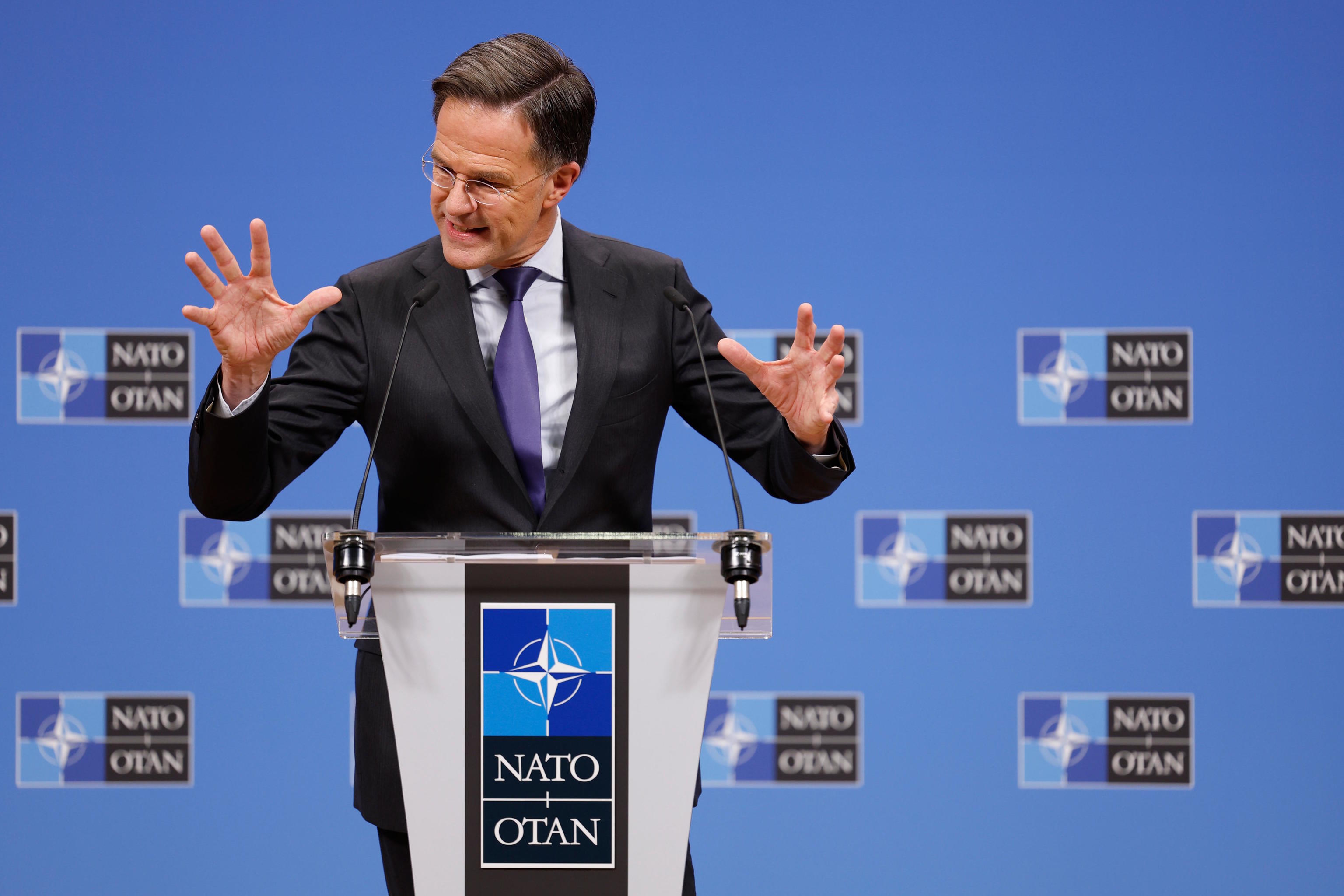
NATO is a defensive alliance. This is something that is emphasized at all times within the North Atlantic Treaty Organization. However, the discourse is changing in recent months. While the main objective remains the same, the threat from Russia is forcing this modification. Following the latest threat from Vladimir Putin, who yesterday went as far as to state that if Europe wants war, it will have it, the Secretary-General of the Alliance, Mark Rutte, has been the one to toughen the tone.
"NATO is a defensive Alliance. We will remain a defensive Alliance. But let there be no doubt: we are ready and willing to do what is necessary to protect our one billion citizens and secure our territory," affirmed the head of the Organization at the press conference that concluded the meeting of Foreign Ministers held in Brussels on Wednesday.
Rutte's clear warning adds to another significant one that fits into the mentioned change in tone: the one issued by Admiral Cavo Dragone in EL MUNDO last week: "Perhaps we may have to launch a preventive action where drones are ready against NATO."
The pre-war atmosphere in Europe is becoming increasingly evident and tangible. Until recently, intelligence services pointed out that Russia could attack before 2030, but reports from the Netherlands and Germany suggest that this could happen within two years. On the other hand, the President of the Commission, Ursula von der Leyen, stated last October in Parliament that Europe is already in a "hybrid war" situation.
Therefore, returning to Rutte's speech, NATO continues to insist on the need to progress in rearmament. "European allies and Canada are significantly increasing their contributions, a welcome development that demonstrates our shared commitment. But we must do more, and all allies must do their part to ensure that we are prepared and that responsibility is shared fairly. Ministers discussed the ongoing planning to chart a credible path towards the commitment made in The Hague: to invest 5% of annual GDP in Defense. This will ensure that we can develop and acquire the essential capabilities for our collective defense, including advanced air defense systems," he emphasized.
This time there was no message for Spain, but NATO's position is clear: the Government will have to invest more than the 2.1% it claims will be able to cope with the assigned capabilities. And "soon" it will be known. As soon as the first semester of 2026, when the first examinations will be conducted on the allied countries.
Rutte has also once again praised the figure of the President of the United States, Donald Trump, as "the only person in the world" who can unlock the "stalemate" in the war in Ukraine. And although the US Secretary of State, Marco Rubio, did not travel to Brussels to attend the meeting, the Secretary-General downplayed this significant absence and reiterated that the US commitment to NATO is total.
Also on Wednesday, following yesterday's "Russia has no intention of fighting against Europe, but if Europe starts, we will be ready," Moscow has avoided commitments with Trump's peace proposal. However, at the same time, they do not want to lose the narrative battle and appear as obstructing the solution for peace.
The Kremlin has indicated that President Putin has accepted some US proposals to end the war in Ukraine and rejected others, stating that Russia is willing to meet with US negotiators as many times as necessary to reach an agreement.
Presidential spokesperson Dmitry Peskov assured journalists the day after the meeting that it would be wrong to say that Putin had rejected US proposals, although once again he did not specify which ones. He pointed out that the meeting - the seventh in this format - was a first face-to-face exchange of views on these matters. Putin accepted some proposals and rejected others in what was a normal negotiation process, Peskov stated.