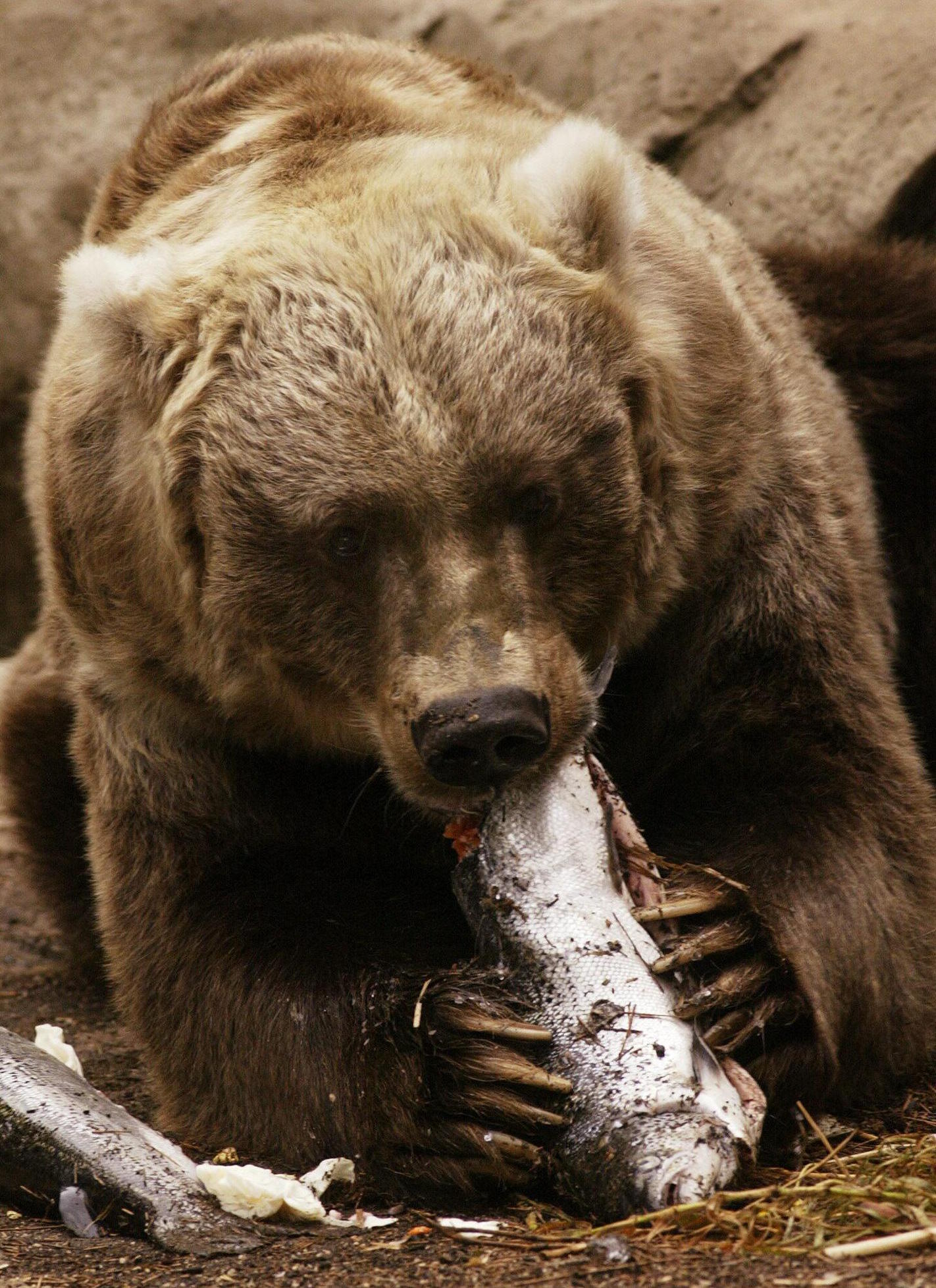
A Asian black bear weighing over 150 kilograms bit Hiroshi Takahashi's leg after breaking into his house through the kitchen door. That same day, the animal had entered a hotel and attacked the receptionist, then causing chaos at a fire station.
This happened in October in Yukazawa, a town in the mountains of northern Japan. Fortunately, in the mentioned attacks, there were only injuries. The neighboring town of Higashi-Naruse cannot say the same, where another huge bear killed a 38-year-old man named Yoshiyuki Sasaki last month.
In these cold days, patrols of soldiers from the Japan Self-Defense Forces take turns to monitor the streets and surroundings of Higashi-Naruse, home to just over 2,000 people. On the roofs of some houses, there are hunters stationed with their rifles and telescopic sights firing shots into the air to try to ward off any approach by aggressive bears that are unleashing a wave of panic in many corners of the northern part of the country.
Never before in Japan have there been so many bear attacks as this year. And never before has it been necessary to deploy the military, massive groups of hunters, and fleets of drones to protect the locals. This week, the Ministry of the Environment reported that the attacks had left a record number of 196 injured and 13 dead between April and October. In October alone, there were 88 incidents, the highest number recorded since these cases began to be counted in the 2000s.
Last year, in Higashi-Narus, 14 bears were sighted very close to or within the town. So far this year, there have been more than 133 sightings, with over thirty captures or killings of the animals between October and mid-November. In this place, local firefighters also take turns with the soldiers for periodic patrols. Authorities have urged residents to cut down persimmon trees growing on the town's outskirts and hills. Their fruit, with an intense and smoky flavor, attracts the Asian black bears native to this region, weighing between 80 and 200 kilograms.
Many Japanese have recently pinpointed Higashi-Narus on the map because several of the country's main television and media outlets have traveled there to document the daily lives of the frightened residents. The town is located in Akita Prefecture, where its capital, with 300,000 inhabitants, has reported up to four deaths from bear attacks. Sightings in Akita have multiplied by six so far this year. It was the governor of this region who requested the troops' assistance, which were deployed in early autumn to another small town, Kazuno, the center of several attacks.
Authorities clarified that the soldiers were not there to kill bears but to inspect and place traps with steel bars used for their capture, with professional hunters being responsible for killing the animals. "Our neighbors feel the danger every day," said Kazuno's mayor, Shinji Sasamoto, after meeting with the first group of soldiers who arrived in jeeps and were equipped with bulletproof vests.
After Kazuno, the troops have been gradually withdrawn to other locations, such as Higashi-Naruse, under an agreement for bear population control approved by the central government and initially scheduled to last until after November. The soldiers have been monitoring the city of Gojome in recent days, also in Akita, where a bear attacked a 78-year-old woman days ago, causing her serious injuries.
Hunters point out that the main cause of the increase in attacks, as is often the case in these situations, is hunger. In the high forest areas, the harvest of beech nuts and acorns, their main food for winter hibernation, has decreased as a result, according to experts, of climate change. Therefore, bears descend to the outskirts of towns and cities in search of fruit trees and cereal fields. According to official figures, the total bear population has been increasing in recent years, currently exceeding 54,000 individuals.
Some even venture into urban areas, as shown in several videos that have gone viral on social media for months. There have been bears breaking into supermarkets and schools, and attacking residents going about their daily activities. Although there is also an increasing flow of AI-generated videos showing not very friendly encounters between bears and residents of mountainous towns. Authorities have requested the cessation of these montages to prevent public anxiety from escalating.
Among the recent fatal victims of the attacks is a 60-year-old man who was delivering newspapers on Hokkaido Island, in the far north of Japan. Here are the brown bears, the most aggressive, which can weigh over 450 kilograms. In Iwate, also in the north, another 67-year-old man was found dead in his garden. In the central part of the country, in Nagano Prefecture, bear attacks have been reported in recent months, including the death of a worker, Yasuhiro Kobayashi, who was found dead with severe head and back injuries.
In Numata, north of Tokyo, an adult bear over a meter and a half tall entered a supermarket and seriously injured two men. In early October, further south, in the mountainous Gifu Prefecture, a Spanish tourist was attacked by a bear while waiting at a bus stop. In his case, he suffered an arm injury from the bear's swipe. Authorities in this region said it was the first reported bear attack in over 10 years.