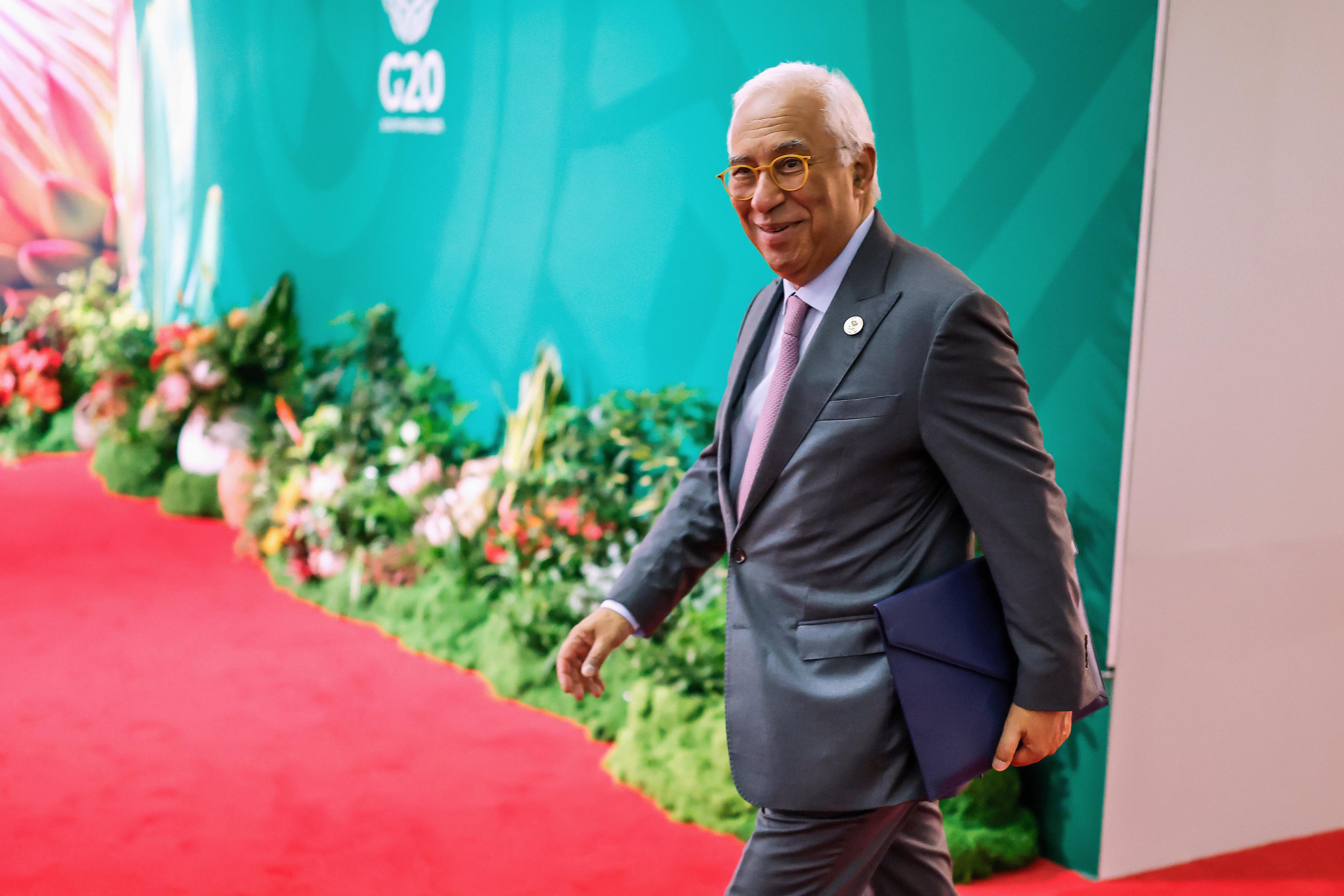
The European Union has finally responded with some forcefulness to the direct attack posed by the new US National Security Strategy made public last Friday. In that document, the Trump Administration states that Europe "will not have economies and armies strong enough" in 20 years to make it a reliable partner; it claims that there is "censorship of freedom of expression and suppression of political opposition"; and asserts that it applies "regulatory suffocation" in the economic sphere.
And this Monday, the President of the European Council, Antonio Costa, has counterattacked, at least in part, against these harsh attacks. "The United States no longer believes in multilateralism, in the rules-based international order, or in climate change. We have differences in our worldview. Certainly, this strategy continues to refer to Europe as an ally. That is positive. But if we are allies, we must act as allies. Allies do not threaten to interfere in democratic life or in the internal political decisions of those allies," stated the head of the body that brings together the 27 EU heads of state.
Furthermore, "What we cannot accept is this threat of interference in European political life. The United States cannot replace European citizens when deciding which parties are right and which are wrong," Costa continued during a conference at the Jacques Delors Institute in Paris.
The former Prime Minister of Portugal also pointed out that "The United States cannot replace Europe in its vision of freedom of expression," and also suggested that "in 2027, Europeans must take over from the US in leading NATO." Because Trump is determined to significantly reduce its presence in European territory, and the mentioned year 2027 is likely to be crucial in the US withdrawal.
"The speech by Vice President JD Vance in Munich and the various tweets by President Trump are now officially the doctrine of the United States. We must take note and act accordingly," emphasized Costa. Doctrine through social media.
Letter from seven countries regarding Russian assets
Costa's intervention occurred after seven countries sent a letter to the President of the Council and the President of the Commission, Ursula von der Leyen, expressing their "full support" for "the Commission's proposal for a reparations loan financed with cash balances from frozen Russian assets in the EU."
The document is signed by Ireland, Estonia, Latvia, Lithuania, Poland, Finland, and Sweden, mostly countries directly threatened by Russia. "In addition to being the most viable solution from a financial and political perspective, it responds to the fundamental principle of Ukraine's right to receive compensation for the damages caused by the aggression," they stress in the letter.
"Time is a crucial factor. If we reach a decision on the reparations loan at the December European Council, we will have the opportunity to place Ukraine in a stronger position to defend itself and in a better position to negotiate a just and lasting peace," they add.
It is expected that the issue will indeed be discussed and approved at the mid-month Council. However, the Prime Minister of Belgium, Bart de Wever, is totally against it due to the problems the measure could cause his country since the headquarters of Euroclear, the company where the assets are held, is in Brussels.
Therefore, these seven countries have sent this letter, as a clear sign of pressure towards the Flemish ultranationalist leader. This is also why the German Chancellor, Friedrich Merz, traveled to the Belgian capital last Friday to have dinner with De Wever and Von der Leyen.