It has been almost a year since the first contacts between Russians and Americans just days after the inauguration of Donald Trump. Since then, the US and Russia have launched the most chaotic and incomprehensible negotiation in recent history of armed conflicts, especially because one of the contenders (Ukraine) has been excluded from the main meetings as a country to be divided, also leaving Europe as a disregarded element.
The 28-point plan, drafted in Russian and in Russia last November, was clearly unbalanced in favor of Russia. Moreover, it was suspicious the appropriation of part of the Russian assets frozen by Europe for "reconstruction in Ukraine" but in the hands of US companies, as explicitly stated in point 14 that Washington "will receive 50% of the profits from this operation." Ukraine refused to sign it, as it handed over the entire Donetsk region, even those territories not conquered by Russia, limited its army, and closed the doors to NATO. The US promised to renegotiate it with Russia.
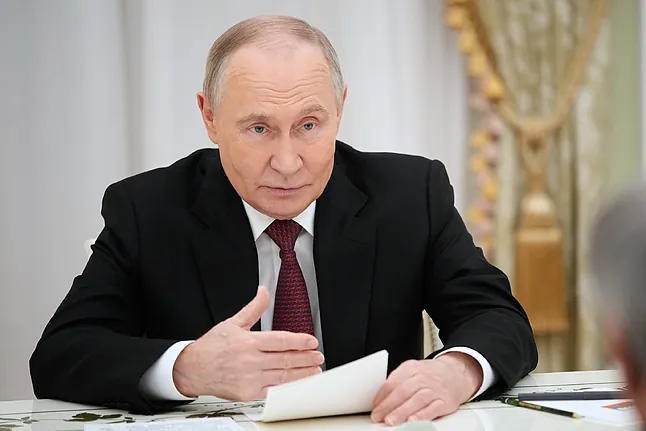
In a classic Putin move, the Russian autocrat took more than five hours to receive the US delegation in the Kremlin, composed of Jared Kushner, Trump's son-in-law, and Steve Witkoff, two businessmen with no diplomatic experience. Additionally, during those five hours, the Russians had them wandering around Moscow. When Putin finally received Putin, he had them listen to Slavic history lessons for another five hours, always consensually filtered through the Russian imperial lens. After another five hours of harangue, witnesses claim that the Americans were willing to sign anything put in front of them, and they did. The deal worsened even more for Ukraine and Europe because Russia rejected key points of the text. "It seemed like the US is trying to sell us in different ways the Russian desire to take over all of Donbás," said a member of the Ukrainian delegation dispatched to the US to hear how the negotiations in Moscow had gone.
How many times has Russia rejected US proposals?
This makes it four times. Last March, Putin refused to accept the 30-day ceasefire proposed by Trump. On May 25, the Russian autocrat once again disregarded another ceasefire. On July 25, the Kremlin again rejected a 50-day ceasefire at the request of Trump himself. Now we are restarting the promise-hope-rejection cycle again. In all cases, for Trump, the culprit has been Zelenski.
Why does the Trump Administration seem clearly aligned with Russia?
According to the The Wall Street Journal, the peace plan promoted by Trump largely responds to economic reasons: the Kremlin already offered business opportunities to American investors - especially some close to Trump - in the Alaska meeting, access to energy contracts, exploitation of Russian natural resources, and reconstruction projects. The agreement would involve the use of frozen Russian assets in the West as part of the mechanism for reconstructing Ukraine, with US participation in the management of the reconstruction fund and the possibility of capturing a portion of the profits. For Putin, all of this is cheap if it allows him to achieve something he can call a "victory" in Ukraine. The WSJ also points out that many of the interlocutors behind the plan - not professional diplomats, but businessmen and personal envoys with interests in business - lack basic diplomatic training, raising suspicions that the plan responds more to private interests than to a serious strategic design.
Does this plan have a chance of succeeding?
Slim. Especially because, attention, it's not that Ukraine will say no, but probably Putin will not accept it either. How is it possible that Russia does not want to sign a text that benefits it? Because from the beginning, Moscow has wanted to prolong the negotiating theater to continue gaining ground on the battlefield, something it has achieved, very partially, at the cost of huge losses of its soldiers. Putin wants to appear to Trump as a peacemaker while escalating his attacks every day. That's why he now insists that he cannot sign anything with Zelenski, a leader he calls "illegitimate."
No, because Europe does not have one voice, but several, and each defends something different. Brussels could thwart the 28-point plan if it used frozen Russian funds to give Ukraine more capabilities while continuing to impose high costs on the battered Russian economy, but there is not even agreement on that. Paris, for example, demands that Belgium use the Russian funds but is not willing to hand over the frozen Russian funds in Paris.