A column of smoke rose above the ruins of Ta Krabey, a small 11th-century Khmer temple nestled in the Dangrek mountains, right on the border between Cambodia and Thailand. A Thai missile hit its structure on Tuesday. "Its destruction shows a blatant disregard for the culture, civilization, and sacred heritage that is part of the shared legacy of humanity," denounced the Cambodian Ministry of Culture in a statement.
The significance of Ta Krabey lies not so much in its architecture but in its strategic position. The temple stands in an area where the border was never precisely delimited by French colonial maps, allowing both countries to traditionally claim sovereignty over it. The place has been a recurring point of military tension. For decades, it has served as a military outpost, changing hands on different occasions.
The case of Ta Krabey - and many other temples along an 817-kilometer border, stretching from the hills bordering Laos to the Thai coastal province of Trat - encapsulates the core of a conflict that has resurfaced this week: millennia-old ruins trapped in an old war. Thai state media cite that the Cambodian forces occupied the temple last summer, turning it into a military post and surrounding it with landmines, to justify the attacks.
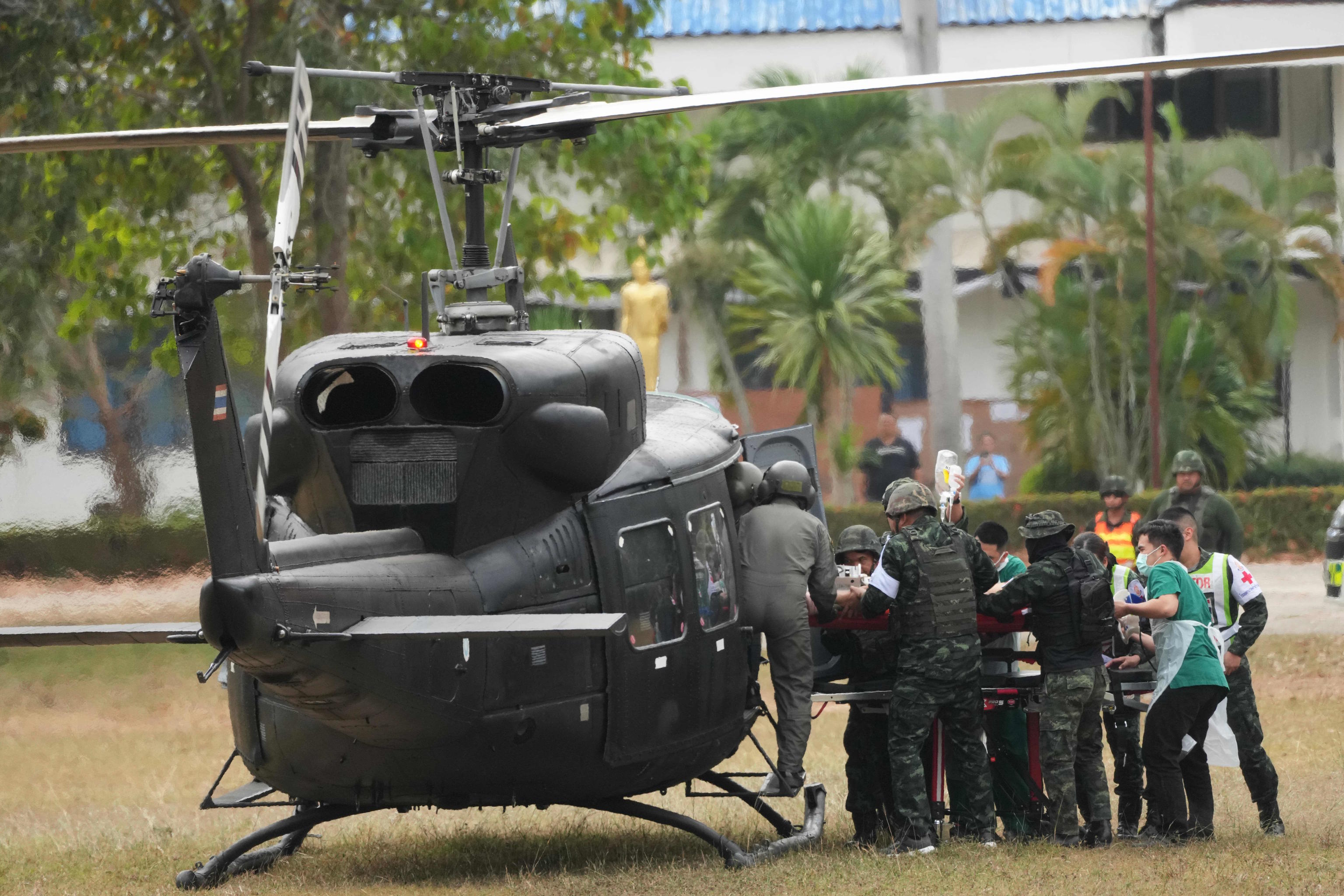
The fighting between Thailand and Cambodia entered its fourth day on Wednesday, defying international pressures to stop the confrontation and adhere to the peace agreement backed by U.S. President Donald Trump at the end of October. Military sources from both sides indicate that troops are increasingly concentrating along the border, which could lead to a larger-scale war.
The clashes have spread to nine points along the dividing line. The Thai army has continued to launch airstrikes while the Cambodian side attacks with artillery, rocket launchers, and drones.
Phnom Penh reported that nine civilians had died since Monday, while Bangkok stated that five soldiers were among the casualties. On Wednesday morning, Thai authorities reported that Cambodia fired a BM-12 rocket that landed very close to a hospital in Surin province, prompting the relocation of patients and medical staff to a bunker.
The Thai army explained that their tanks have been firing projectiles at several casinos on the border in recent days because they were being used by Cambodian military as military bases, from sniper hideouts to weapon depots. Additionally, Thailand has long linked many of these gambling centers to scam networks. Numerous international investigations have documented that workers, sometimes deceived migrants or forcibly retained, are victims of trafficking in these centers.
Speaking at a rally on Tuesday in Pennsylvania, Donald Trump referred to the renewed conflict, stating that he will make a call to "stop the war between two very powerful countries." These clashes are the most intense since the missile and artillery exchange last July, where 48 people lost their lives and around 300,000 were forced to flee their homes. At that time, Trump intervened in the conflict by calling the leaders of both countries to enforce a ceasefire under the threat of imposing new tariffs.
From Washington, Secretary of State Marco Rubio has also called for an immediate end to the fighting, reminding Bangkok and Phnom Penh that they must "return to the de-escalation measures outlined in the Kuala Lumpur Peace Agreements," referring to the fragile truce mediated by Trump. In contrast, Thai Prime Minister Anutin Charnvirakul has ruled out dialogue for the time being. "We cannot stop now. We have already committed to the military so they can fully carry out planned operations. The government is providing all possible support," he declared.
The Thai army is significantly superior to its Southeast Asian neighbor in terms of military personnel, budget, and weaponry. According to official figures from 2024, Thailand had over 360,000 personnel in its active armed forces and a defense budget of $5.73 billion. Cambodia, on the other hand, had a budget of $1.3 billion and 124,300 personnel.
Both countries have accused each other of initiating hostilities on Sunday night. The conflict escalated on Monday after the first Thai airstrike against military targets in Cambodian territory. Since the military clash resumed, hundreds of thousands have been displaced by the fighting: over 500,000 in both countries, as reported by local media.
The Thai army reported that nearly 500 temporary shelters have been set up in four border provinces. One of the most crowded is located at the university in the city of Surin, in the northeast, accommodating around 4,000 people who have spent the last nights sleeping in small tents or on mats spread on the ground. International humanitarian organizations warn of the risk of a health crisis and shortages of food, water, and medical care.
As violence escalates in the border areas, the Southeast Asian Games began in Bangkok this week, with thousands of athletes from the 11 countries in the region participating. On Wednesday, Cambodia announced the withdrawal of its entire sports delegation citing security reasons.