Until January 17th, Dutch Admiral Rob Bauer was the highest-ranking military officer in NATO. In that position, he had to face the Russian invasion of Ukraine and, as revealed in this interview, a critical moment in the fall of 2022 when Moscow threatened to use atomic bombs against that country if Kiev did not allow the withdrawal of 20,000 Russian soldiers surrounded in the Kherson region.
Bauer, who is now in the private sector, believes that there is a real risk that NATO and Russia will be forced into a war soon, and points out that Moscow's military doctrine includes the use of atomic bombs in conflicts. He also rules out the idea that Donald Trump will abandon Europe and argues that the EU should invest more in Defense and achieving economic independence from China.
Question. Is Donald Trump pro-Russian?
Answer. I don't think so. He is pro-American. He acts with the idea of "America first" always in mind. Don't get me wrong, I'm not saying that's good, but I believe that is his motivation, much more than a pro-Russian sentiment. His attitude is transactional. And his focus is on the wealth, independence, and future of the US.
Q. Do you believe there is a real risk of war between Russia and NATO in 2029 or 2030?
Q. So, we cannot rule out a nuclear war.
A. Russia's military doctrine includes the use of tactical nuclear weapons in a conventional conflict. The Russian Armed Forces - especially the Ground Forces - are rapidly reconstituting because their economy is moving at full speed. We know their ambitions. They do not have the capacity to do that [a war with Europe] while they are at war with Ukraine. The war in Ukraine must end to free up forces to fight elsewhere. There is a danger [of war] between the next three and five years.
Q.Between February 24, 2022, when Russia launched the large-scale invasion of Ukraine, and January 17th, your last day in office, was there a moment when you thought, on a personal level, that the war had spiraled out of control?
A. Not completely out of control, but the most concerning moment, I believe, was in the fall of 2022 when about 20,000 Russians with all their equipment were trapped on the West bank of the Dnipro River [in Kherson]. The Russians wanted to retreat to the East, but there was only a small bridge to cross the river, making it very difficult to pass their equipment.
Then, the Russian Defense Minister [who was then Sergei Soighu] called London, Paris, and Washington to inform them of the possible use of a tactical atomic bomb. I'm not exactly sure what they responded. But the message from those capitals was such that the Russians stopped considering the option of the atomic bomb. I believe, although I'm not entirely sure, that the US asked Ukraine to let the Russians pass through that bridge.
Q. That year, at the UN General Assembly in New York, at the end of September, there was a lot of fear of Russia using nuclear weapons against Ukraine. Then, in November and December, the Russian withdrawal from Kherson, on the western bank of the Dnipro, was very orderly. The Ukrainians did not attack them.
A. From a formal point of view, NATO was not involved. There were multiple bilateral discussions between the three nuclear nations of the Alliance and the Russians.
Q. Is Russia now following the same pattern of aggression with Europe that it used with Georgia and Ukraine before invading them: cyber-attacks, drones, sabotage, 'gray zone' actions? Is this the first phase of the attack?
A. In the last two years, in Europe, we have had multiple cases of poisonings, arson... behind which it has been proven that Russia was involved. They do this because our support for Ukraine hurts them, demonstrating that European assistance is effective. Putin wants to scare our citizens so that they say, "We should not give weapons to Ukraine; we should keep them to defend ourselves against the terrible threat of drones." Well, drones are a nuisance, but they are not the beginning of World War III, so we better stay calm and move forward.
Q. Your successor as Chairman of the NATO Military Committee, Admiral Cavo Dragone, said at the Halifax Forum to EL MUNDO that the Alliance does not rule out using direct measures against Russian actions with drones, cyber-attacks, or other 'gray zone' activities in the future. Could that trigger an escalation?
A. In the Armed Forces, eventualities must always be considered and planned for, and possibilities analyzed from a military perspective. But I do not see any change in NATO's policy for now, although, of course, it is always good to think about options and see how people react. So I don't think [those plans] are a reality. They are understandable in terms of action and reaction, but if we want to continue talking about an international order based on rules, we should not break the rules ourselves.
Q. If there were a war between NATO and Russia...
A. That is different. Then, we would strike deep into Russia and destroy their drone factories in Siberia because that is better than waiting for drones to come flying to our homes, and the missile launch pads in Russia, and the bomber bases. We would do it with precision attacks. That is not preventive but a counteroffensive aimed at preventing the enemy from prolonging the war. To do that, the economy must be targeted. It is entirely legitimate, according to International Humanitarian Law and the laws of war. But that would only be done if Russia started a war with NATO.
Q. Are European countries being honest with their citizens and explaining the level of danger and military plans and their economic cost?
A. If you do not explain to your citizens how you will pay for the plans, I don't know if you are lying, but you are certainly failing in your responsibility. Politics is about explaining to citizens where the money is going, whether it is for education, the welfare state, Defense... And the time is over for those who think we will always be able to allocate resources at the expense of Defense because someone else will come to rescue us.
At The Hague [the NATO summit where Europeans and Canadians agreed to raise their defense spending to 5% of GDP in ten years], it was agreed that NATO leadership will annually review the progress of members in acquiring the capabilities they have committed to, to see how they are fulfilling their promises. That is something that was not done before. So next year, in Turkey, the leaders of the countries will receive a report, probably confidential, that will say "Spain has done this and that." And, who knows, maybe Spain has done more than other countries.
Q. You don't seem very convinced.
A. No. But Spain has been very honest, unlike some nations that may have said [at The Hague] something like "yes, of course, we will do it," while thinking, 'I will never do this.' You never know. We cannot 'afford to be kind to each other and flatter each other at every 'summit,' so I think there will be an honest discussion about the idea of "let's see, guys, you, you, and also you, are lagging behind." And probably it will be the US who says it.
The same goes for the level of threat. Putin had talked about Georgia before invading it [in 2009]. He had talked about Crimea before invading it [in 2014]. No one believed him. And now people come to me and say, "Well, Putin hasn't said anything about Madrid, Paris, Amsterdam, so what are you talking about, admiral." But we know that his ambitions go beyond Ukraine. We know this because he himself stated it in a document he sent to NATO in December 2021 [two months before the invasion of Ukraine].
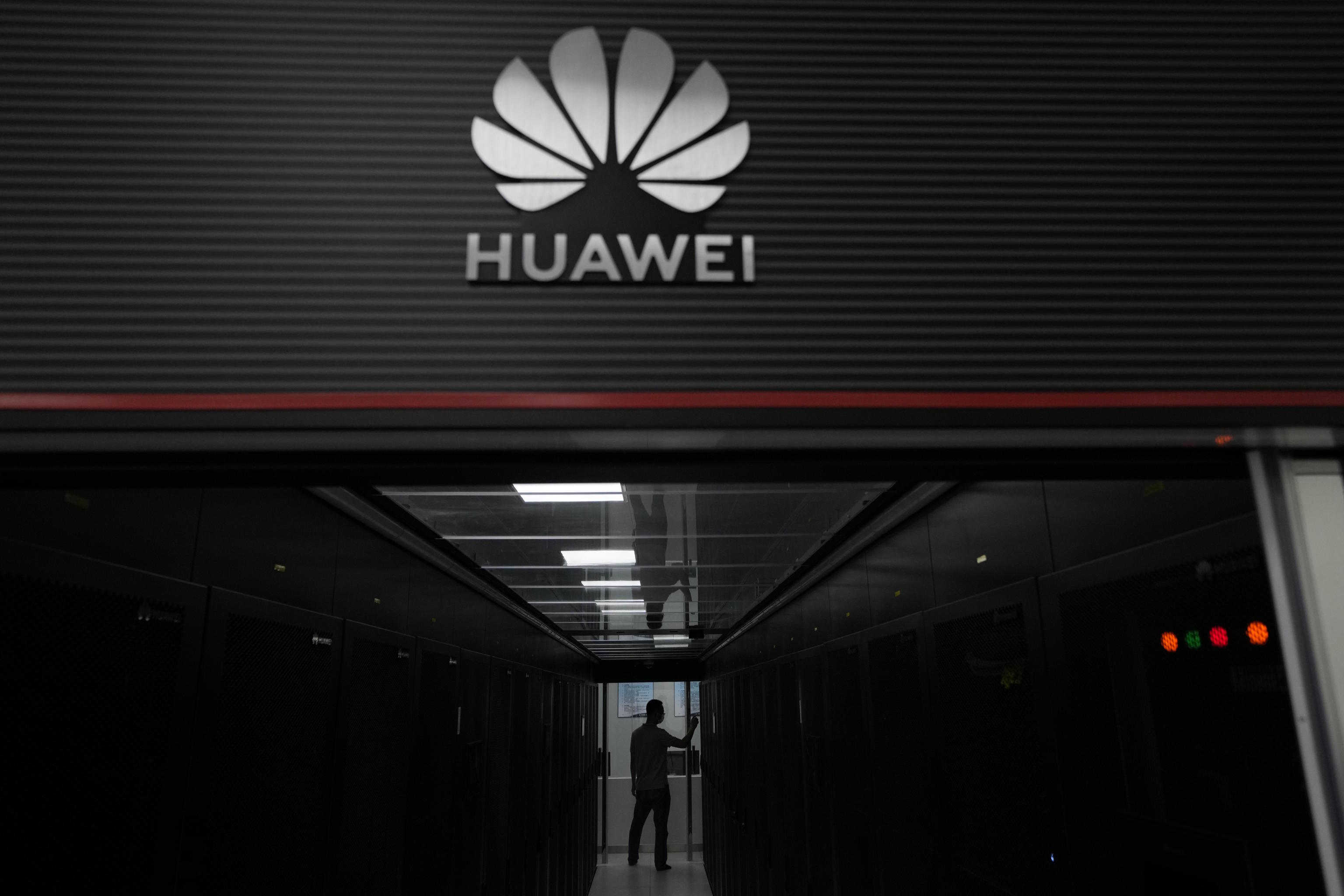
We know that Russia is working with China in a very concerning way. And we are still naive in relation to China. I heard that the Spanish Civil Guard bought a data storage system from Huawei [the Chinese Army company that the US and other countries are expelling from their telecommunications markets]. They say the Chinese told them there is no 'backdoor' in that system. Okay, keep dreaming!
Q. Is there a 'backdoor'?
A. The mayor of Dubai told me that when he bought a 'smart city' system from China, he thought it was wonderful because he would know everything about his citizens. But then he discovered he wasn't the only one. Beijing also knew everything about his citizens. We are very naive.
Q. Will European NATO members and Canada be ready to face Russia in three, four, or five years without the US, or with limited US support?
A. Why do you say "without the US"?
Q. So you don't believe the US intends to leave NATO.
A. The US is not going to leave NATO. The logic from The Hague was as follows: we must create a better balance between the capabilities that Canada brings to the Alliance and those provided by the US. Europe and Canada must do more in NATO and pay a larger share of the bill. So far, the US pays 65% of the cost of the Alliance, and yet we complain about US demands. NATO operates by consensus. Each country has one vote. But each country also has a responsibility to the Treaty.
If all allies fulfill what they promised in The Hague, European nations will have in 10 years capabilities that only the US has today, such as strategic airlift, satellites, or deep precision attack capability. NATO has all that, but it depends on the US for them. In 2011, the US said it did not want to participate in the operation in Libya [to overthrow Muammar Gaddafi]. But Europe could not carry it out without US air refueling, nor without its command and control, its satellites, its images, etc.
So, if we want Europe to play a role as one of the major actors in the world, and not just talk about the welfare state and being kind and nice, we must understand that it is not just about the economy, but also about power.
I recently spoke with a person in Belgium involved in politics, and he said, "I think we should be able to do all that without the US." And I replied, "But if you are not willing to pay the 2%!" If we had to achieve it without the US, the cost would be 5% to 10% of our GDP. I don't think we should go down that path. We should not think of a NATO without the US. First, because nuclear deterrence is one of the keys to our defense, and who will provide it? French and British nuclear weapons cannot offer the same effect as American ones.
Q. How do you see Trump's peace plan?
A. I am very skeptical about the chances of Vladimir Putin accepting it because it does not offer him incentives to end the war.
Q. Why?
A. First: Putin has turned the Russian economy into a war economy where 50% of the State Budget (7%-8% of the national GDP) is spent on the conflict in Ukraine. Although less, due to the sanctions recently imposed by the United States, Russian oil and gas continue to flow to the rest of the world. And there are many areas of the economy, such as consumption, but also automotive and aeronautical industries, that have suffered serious damage from the war. Therefore, if Putin stops, he will have a serious problem in returning that economy to normality and contributing to the nation.
Second: Putin has not achieved any of his goals. He has been at war for 11 years and does not even have all of Donbass.
And third, but not least: if the war ends, Putin will have to deal with the return to Russia of the 700,000 soldiers occupying Ukraine, who will come back home with serious traumas and medical needs that they probably will not receive. These demobilized soldiers will cause social problems and, on top of that, will earn much less than what they are currently receiving for fighting.
Q. What do you think of Ukraine's negotiating position?
A. Zelensky has been very smart not to say that the peace plan is ridiculous. Instead, he said, "Okay, I am ready to negotiate it." That's how the plan went from the original 28 points to 19, which had two consequences. The first: the pressure to reach an agreement by Thanksgiving Day [November 26] disappeared, probably because Trump's advisors told him that such a short deadline did not help reach an agreement. And the second: now it is the Russians who must respond.
I hope the US realizes that it is easier to pressure Ukraine than Putin, but what is really important is to pressure Putin. Otherwise, nothing will change. Every time Putin makes a [diplomatic] move, his only goal is to gain time.
Q. Is there a philosophical difference in how Russia and democracies approach this war?
A. Russia puts all its economy, all its military power, and all its financial capacity into winning. Europe and North America use their power to help Ukraine not to lose. Who do you think benefits from this asymmetry?
Q. Who?
A. China. While fueling a war in Europe without directly intervening, it continues to strengthen its own Armed Forces. If you listen to a Chinese diplomat or minister, they always say the "right" things. But if you compare what they say with what they do, it is very different. China and Russia call their cooperation "an unlimited partnership." This goes far beyond Ukraine. They have joint R&D projects in hypersonic missiles, space, satellites, submarines, Artificial Intelligence (AI), quantum computing... They collaborate more and more in the Arctic, where Beijing is interested in the opening of the "northern route" because it considers critical to have a shorter way to trade with Europe and the US.
70% of some very important drugs and 90% of the raw materials needed for our renewable energy are produced in China. So, if in 2035 - when the EU expects to have completed the energy transition - Xi - or his successor - does what Putin did in 2022 with oil and gas and turns off the tap, we will have a serious problem. That's why I tell people: "We have 10 years to get those raw materials in Canada, Finland, Sweden, Norway, and Australia. We can do it ourselves." But that requires opening mines and extracting ore. All of that is complicated and polluting. Then they say that also goes against the climate. We don't mind if it happens in China, but we don't want it in Sweden, Norway, the Netherlands, or Spain. And that is, in a way, hypocrisy.
If that's the case, we are making a choice: if we don't extract, we won't have electricity or heating in 2035. We want to save the planet, but the planet also suffers from what China does.
We must wake up to the reality that the world will not solve this for us, but we, by paying and working more. It is not up to the Americans to solve this. It is up to us.