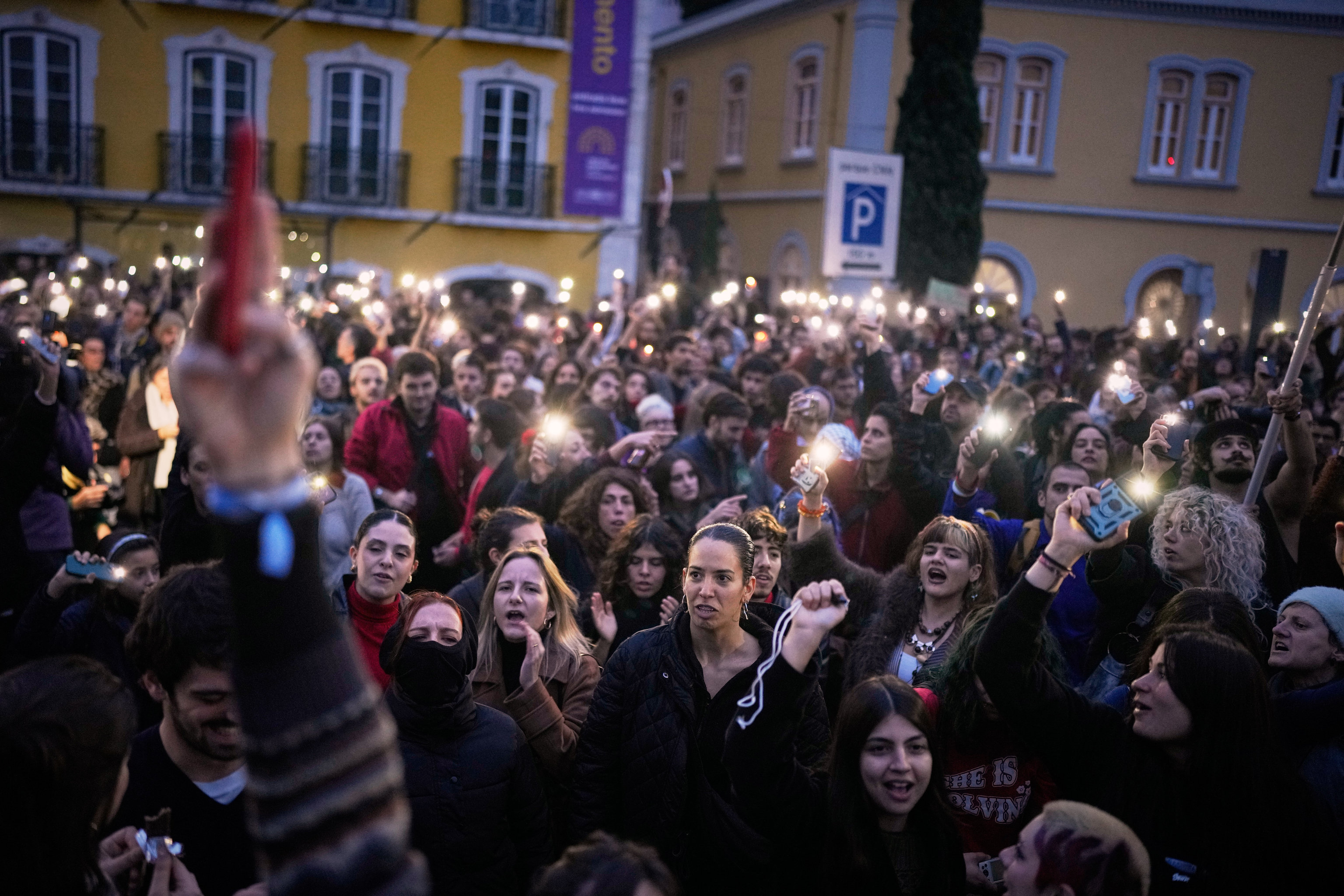
Total War of Figures. The first general strike held in Portugal in 12 years has been a "complete success" for the unions or "completely minority" for the Government of the conservative Luís Montenegro. The reason is a draft law that revises labor legislation that has not even started to be debated. The truth, according to all Portuguese media, is that healthcare, education, culture, municipalities, and especially transportation, stopped, making it very difficult to commute to workplaces.
The organizing unions - mainly CGPT and UGT - stated that the strike was "the biggest in history" and estimated that three million workers did not show up for work on Thursday, when the country has 5.3 million active workers. However, many tried but couldn't go to work. The Lisbon metro did not operate, Faro airport had to close, and transportation was affected by over 90%. "The country stopped," union spokespeople affirmed.
In schools - as in the entire public sector - the strike lasts for two days and continues on Friday and is almost general. By 9:00 on Friday, many Portuguese schools were closed, and 90% of university and polytechnic canteens were closed, according to the Independent Union of Public Bodies and Social Support Workers (Sitopas).
According to the Lusa agency, Lisbon woke up in a quite atypical way: the main arteries of the capital, usually congested with traffic, were clear, as if the city's rhythm had drastically changed.
However, the Government and the employers' association (CIP) stated that "the economy has functioned" and that "companies have not stopped." In the public sector, according to the Government, less than 10% of workers supported the strike. Various spokespersons from the center-right Government described the strike as "minority" and "insignificant."
The reason for the strike is a labor reform presented by the Government that, according to the left, makes labor relations more precarious, favors dismissals, and reduces workers' rights. If the Government does not back down, UGT has already threatened to repeat the general strike.