Costis' bad luck even made it to the cover of The New York Times: "In Spanish Village, Everyone's a Winner, Almost," the most influential newspaper in the world titled alongside an image of a group of retirees playing cards.
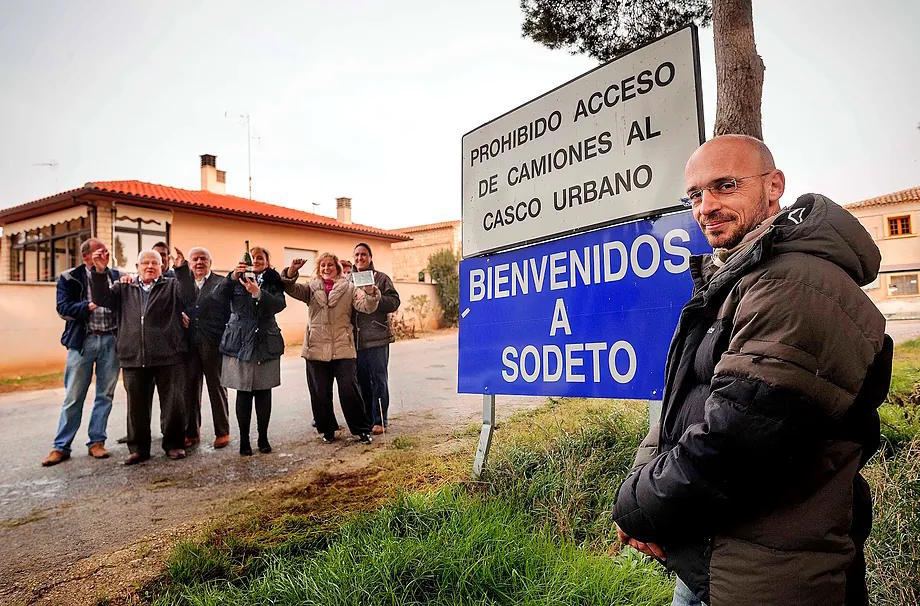
The lucky town was Sodeto (Huesca) and the "almost" referred to him, to Costis. The Christmas draw of 2011 had just taken place, and part of El Gordo - "a true national obsession," as explained by the NYT to its readers the peculiarity of our lottery - had been distributed among the 227 neighbors of this small town consisting of 75 houses.
The Sodeto Housewives Association had sold 1,200 tickets door-to-door for five euros each of number 58268 - four were played; one for the association - amounting to 96 million euros in prizes. If you do the math, it averages out to 1.28 million per household. In every single house, something had been won. Except in Costis' house.
Costis was the nickname for Konstantinos Mitsonakis, 56 years old today. The Greek sound engineer and photographer had arrived in Sodeto following a fellow countrywoman he had fallen in love with. The relationship ended, but he stayed. He bought an eight-hectare estate on the outskirts and settled in his barn, from which he had - and still has - privileged views of the "torrellones," impressive geological formations shaped like chimneys.
Around 10:00 a.m. on that December 22, 2011, while the mayor grabbed a megaphone and shouted the best news she had ever given - "Sodeto, congratulations, we've won the lottery" - a friend called Costis from the high-speed train. He said he didn't know what had happened in Sodeto, but it must have been something big because people on the train couldn't stop mentioning the name of the town on the phone.
Costis didn't quite understand the scenes he witnessed when he approached the square, but he went back to get his camera to record them. "They were jumping, shouting, crying. Their reactions seemed exaggerated to me. I heard them say: 'I got one ticket; I got four; I got eight...'. But I didn't quite understand what it meant. When they told me each ticket was worth 100,000 euros...".
Costis told us this when we visited him at his home in Sodeto in December 2012, a year later. "I think I'm going to get more out of the lottery than my neighbors because I have the perfect script," he also promised himself happily. The Greek referred to the return he anticipated from the documentary he was preparing.
Titled When It Struck, it started from the images of that pure happiness he captured in the early moments to delve deeper with dozens of hours of interviews into the human stories of the new millionaires and how El Gordo had changed their lives, if it had. Costis announced that it would premiere in 2015, then a couple of years later, later he said it would be in 2019.
-What happened to the documentary? -we asked him now.
-It's still in progress, I know it sounds absurd, but it's still in progress. We had to stop for about three years for various reasons, and we will take advantage to record the changes that have occurred in this time, to tell what so much money means for such a small population and how it affects their future. I'm sure there are many people who think there's no documentary about the town, but there is, be patient, - he replied, convinced that he will finish it in 2026.
He anticipates that the winners' lives haven't changed much. The town of farmers, who had invested in converting their lands to irrigation, paid off debts, bought better machinery, and fixed their homes. "They have gained in peace of mind," Costis summarizes, who still isn't a fan of the lottery. "I don't buy tickets, they buy them for me, like the housewives who say: 'We saved a ticket for you,' but I don't buy them."
-No, no, I pay for it. That's what I've learned, that you have to pay for it.