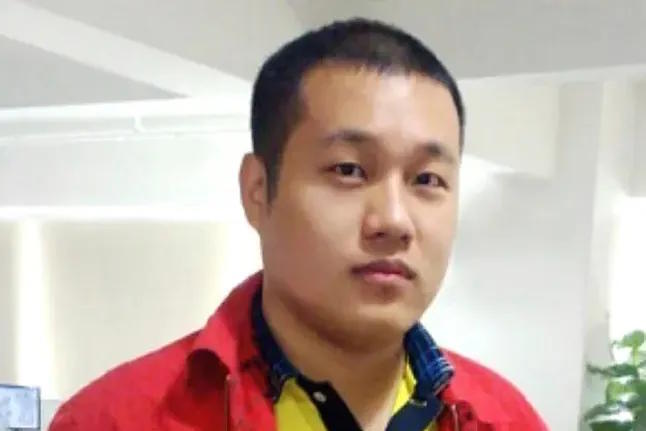
Dozens of children with the same haircut occupy several rows of chairs while a man records them with his mobile phone. With the help of nannies, he tries to organize them to get a family photo, but the little ones keep jumping and playing. Some approach the camera shouting "Dad!" in Mandarin. The images, recorded in 2022 and shared on Chinese social media, belong to Xu Bo, an eccentric billionaire who boasted of having fathered more than 100 children born in the United States through surrogacy.
In other videos, Xu claimed to be creating an "army." He presented himself as the "first father of China" and stated that his goal was to select, among all his offspring, at least 50 "high-quality children", destined to form a powerful family dynasty in the future, even through alliances with the children of Elon Musk.
In the summer of 2023, Xu Bo's name repeatedly appeared in a Los Angeles court. Judge Amy Pellman and her team were reviewing parentage applications related to surrogacy, a common procedure to grant parental rights before a baby is born. However, they detected a disturbing pattern: the same man was simultaneously claiming paternity of several unborn babies, while already being the legal father of others and in the process of having dozens more through surrogate mothers in California.
Faced with this situation, the judge ordered Xu to attend a confidential hearing. The billionaire appeared via video conference from China and, through an interpreter, explained his intentions unambiguously. His goal, he stated, was to have around twenty children born in the United States, preferably boys, whom he considered more suitable to inherit and lead his business empire.
Xu added that several of the already born children were being cared for by nannies in Irvine, Southern California, while the paperwork was being completed to move them to China. Judge Pellman reacted with alarm and reminded that surrogacy was designed to help people with reproductive difficulties to start a family, not as a mass production system of heirs managed from abroad. Ultimately, she denied the parentage applications, leaving several minors in a legal limbo.
The incident was later revealed by The Wall Street Journal, which exposed a phenomenon that had been developing for years: the use of surrogacy in the United States by Chinese elites to have children by the dozens. Although there is no other case as extreme as that of Xu Bo -47 years old, a magnate in the video game sector, founder of Duoyi Network with an estimated fortune of 28,000 million yuan (3,500 million euros), his story is not an isolated incident.
The scandal had erupted months earlier on Chinese social media when Xu's ex-girlfriend, Tang Jing, publicly claimed that the businessman had fathered "over 300 children," eleven of whom she had raised for years. According to Tang, for over a decade, the economic and personal cost of maintaining that family was enormous, and she demanded compensation of 300 million yuan from Xu.
In China, surrogacy is illegal and highly controversial. In the United States, on the other hand, it is regulated in some states like California and is accessible to foreign parents. For wealthy Chinese, there is also a key incentive: children born on U.S. soil automatically acquire citizenship.
For decades, while China enforced the strict one-child policy to curb population growth, many affluent citizens turned to surrogacy in the United States. The system allows genetic material to be sent from Asia and receive a newborn American months later, at a cost that can exceed $200,000 per child.
However, Xu Bo's case reveals a new logic among certain Chinese billionaires, who view parenthood as a business strategy and a way to ensure the genetic continuity and power of their lineage.
Another example is Wang Huiwu, president of the educational group XJ International Holdings, based in Sichuan. Wang used American donors to have ten daughters whom, according to local media, he planned to raise with the aim of marrying them off to influential men in the political, financial, or business fields in the future. It was not just about starting a family but building a global power network.
For years, this project remained hidden. The girls grew up in the United States under the care of nannies while Wang ran his conglomerate from China. In 2021, the leak of alleged messages related to this case caused a national scandal. Although his lawyers denied the accusations, his company's stocks plummeted.
Currently, Chinese forums and social media are debating the actual number of Xu Bo's children, confirmed by his own company to be over 100, as well as his aspiration to create "high-quality children", reopening the ethical debate on the limits of assisted reproduction used as a tool for power and genetic planning.