In April 2005, the French philosopher Bernard-Henri Lévy, who was then at the height of his popularity as a public intellectual, gave a lecture at the School of Advanced International Studies at Johns Hopkins University in Washington. During the Q&A session, the last question he was asked was, "Do you believe that Europe will be able to avoid becoming Eurabia?". Henri Lévy responded with a sentence: "Do you think California will be able to avoid becoming Mexifornia?". He then thanked the audience, said goodbye, and went to a dinner in his honor at the Mandarin Oriental hotel.
Henri Lévy was not very concerned about Eurabia or Mexifornia. Neither was his host, Francis Fukuyama, a moderate Republican and advocate for the legalization of undocumented immigrants, whose family was interned in a labor camp during the Second World War for the "crime" of being Japanese. In those days, the then-president, Republican George W. Bush, was using up all his political capital to legalize undocumented immigrants. He achieved nothing due to opposition from both a faction of the Republican Party and the sector closest to the unions of the Democratic Party.
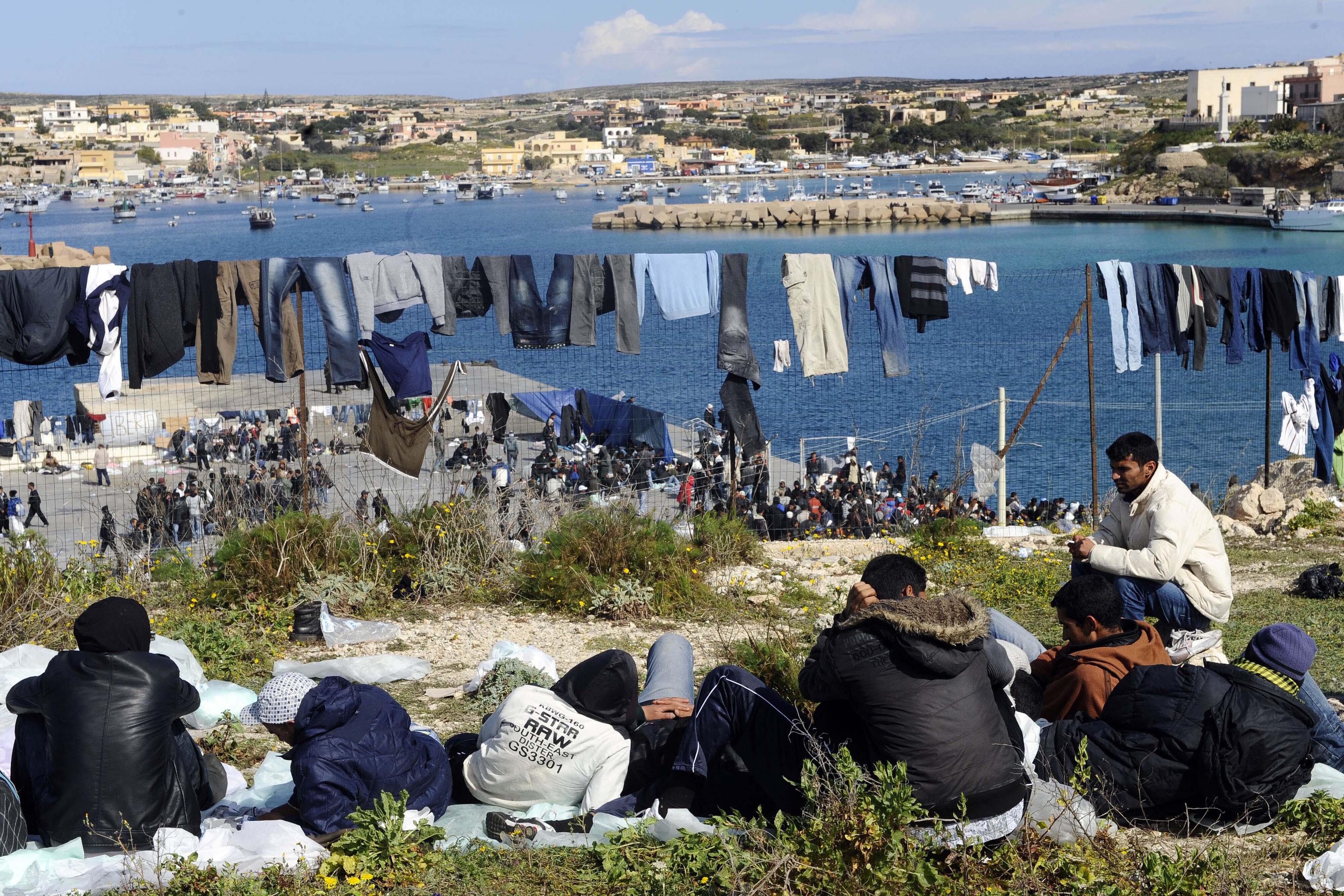
20 years later, the word Eurabia is the only thing missing from the National Security Strategy (NSS) of the United States, the document that sets the hierarchy of threats and strategic priorities of that country. In it, the White House warns that Europe is at risk of a "civilizational erasure", originating from three simultaneous processes: immigration eroding social cohesion, persistent lack of growth, and the "suppression of political freedom and sovereignty". Washington sees an aging Europe, inhabited by Arabs, Africans, and Latin Americans, culturally fragmented, politically subjected to the so-called woke thinking, and economically stagnant. Therefore, it considers it would be an increasingly unreliable partner for the US. It is the path to extinction.
However, the document does not define what civilization is, but it is clear that its message is political. The NSS makes it clear that a dominant part of the Donald Trump administration sees Europe as the real enemy, with its left-wing and multiculturalist culture. The fierceness of the attack is notable because this is a continent allied with the US. Washington has 70,000 soldiers in Europe as part of a military alliance, NATO, where an attack on one member is an attack on all. The only time that clause was invoked was not to defend any European country, but the US after the 9/11 attacks, 24 years ago. And the dependence is mutual. The barrels of the 8,900 famous M-1 tanks of the US Army are manufactured by the US company Watervliet Arsenal... but under license from the German company Rheinmetall.
When contrasting the claims of the NSS with demographic, economic, and social data, the diagnosis becomes more uncomfortable for those formulating it, and it gives the impression that this is not a clash of civilizations but a clash within the same civilization. The numbers indicate that the US shares almost all the structural problems it attributes to Europe. The European Achilles' heel is not immigration, culture, or the economy, but something more prosaic: the inability to create growing companies.
The US is right in saying that Europe is aging. But it is not an exception. It is a historical norm. The richer and more educated a society is, the fewer children it has. Almost all countries in the world, with the exception of sub-Saharan Africa and Central Asia, have a fertility rate below 2.1 children per woman, which is the minimum needed to maintain the population.
Chad (6.1 children per woman), Mali (5.6), or Afghanistan (4.8) do not have baby bonuses, stable jobs, cheap housing, or reconciliation programs. Quite the opposite. These are European policies (not even American, where there is no maternity leave). According to Eurostat, the fertility rate in the EU was 1.38 children per woman in 2023. Spain (1.12), Italy (1.24), and Germany (1.46) are among the countries with the lowest birth rates in the world. France, for decades presented as a European exception, has also fallen to 1.66. And the other exception, the Western country that was always a champion of birth rates, has fallen more than France.
That country is the US, where, according to the Centers for Disease Control and Prevention (CDC), the birth rate fell to 1.62 children per woman in 2023, the lowest level on record. According to the CDC, "fertility continues to decline." For decades, the US was a demographic anomaly: younger, more dynamic, with larger families. That exceptionalism has disappeared. Today, demographically, it aligns with Europe. A survey by the University of Chicago reveals that the percentage of Americans who consider having children "very important" has dropped from 59% in 1998 to 24% in 2023. Other data from the same study would likely unsettle the authors of the NSS: in those 25 years, patriotism has fallen from 64% to 38%; and religion, from 62% to 39%. The only thing that has increased is the appreciation of money, from 31% to 44%.
These figures point to two problematic truths. One, that "it is difficult to accept that people have fewer children because they want to," as stated last summer by Financial Times columnist Janan Ganesh, who is a good example of immigration, as he was born in Nigeria in 1982, into a family of Tamil refugees from Sri Lanka who fled the country to escape the civil war. The other is that immigration is not an ideological choice but an arithmetic necessity.
Until now, the US presented immigration as its own strength and as a weakness of others. But that does not mean that Trump's nativist outbreak is unprecedented. In the late 19th and early 20th centuries, with the arrival of Irish immigrants, there were job ads in the US that explicitly said, "Catholics need not apply." The erection of statues of Christopher Columbus - the same ones that are now being torn down due to the alleged colonialism of that historical figure - in the early 20th century was a slap in the face to Anglo-Saxon Protestant nationalism by newly arrived Italian immigrants (as a result, it is a dogma of faith in the US that Columbus was from Genoa).
Not even pickles were spared. "The children of immigrants are often fed pickles and other improper foods, leading them to suffer nervous disorders," says a 1910 school hygiene book, a time when that food was associated with Jews, Germans, and Russians. And there are much more tragic cases. After African Americans, the community that suffered the most lynchings and killings by the Ku Klux Klan was the Catholic community. According to former Hispanic affairs advisor to Barack Obama, Luis Miranda, "Americans lose control when one out of every seven inhabitants of the country was born abroad." The current figure is around 15%, or one in 6.6. So, everything could be part of a historical pattern. That is, if one does not believe Oscar Wilde's phrase, "History does not repeat itself; historians repeat themselves."
But immigration does not solve the demographic problem. First, because, although immigrant women have more children than those in the host country, their "fertility converges towards the host country's average over time and across generations," as stated by the UK's Office for National Statistics (ONS).
Therefore, neither Europe nor the US can outsource their demographic problem to immigration. Both need immigrants to avoid a rapid collapse, but neither has found a structural solution to declining birth rates. Additionally, Europe - and Spain - is next to Africa, the last region in the world where population growth is the highest. And the African countries with the highest birth rates are precisely those that form the southern border of the Sahara, placing them close to Europe.
This leads to the cultural impact of immigration. The Irish, Italians, Jews, or Germans who arrived in the US were not so different from the British and Germans who had already been populating the country for some time. With these populations, the data does not indicate otherwise.
Large comparative surveys from the European Social Survey, the World Values Survey, and the Pew Research Center show that immigrants mostly support democracy, the rule of law, and human rights, often more than the native population, especially when they come from authoritarian regimes.
But there is an exception to that rule: issues of gender, family, religion, and social roles, especially among the first generation. From the second generation onwards, these differences tend to disappear, according to the French Institute for Demographic Studies (INED) and the Federal Office for Migration and Refugees (BAMF). This is positive. However, if the first-generation population accounts for 16% of the population (US), 15% (UK), or 14% (France), it is a problem. This indicates that immigration introduces cultural changes, especially in gender, secularism, and family, and that these changes diminish over time. The question is, obviously, to what extent they will diminish, especially if the flow of new entries cannot decrease.
Once again, this affects the US as much as Europe. And also its own elite. Trump has directed all kinds of insults - "horrible," "wretched," "disgusting" - at the Muslim mayor of London, Sadiq Khan, but seems to get along well with the newly elected mayor of New York, Zohran Mamdani, despite the latter being much more leftist.
His vice president, J. D. Vance, joked in July 2024 that, with the Labour Party's victory, the UK "could become the first Muslim country with nuclear weapons." It is a statement that encapsulates what seems to underlie the NSS. But the British Labour Prime Minister, Keir Starmer, is an atheist, married to a Jew, and raising his children in the Jewish tradition. As for Vance, who converted from atheism to Catholicism in 2019, two years before entering the political forefront, he is married to a Hindu woman who maintains her religion, although the couple's children are Catholic. After all that, who can lecture whom on "civilizational erasure"?
The other major reproach of the NSS is economic, stating that Europe would become increasingly irrelevant compared to the US. Here, the diagnosis is once again partial. When observing the GDP per capita adjusted for purchasing power parity (PPP), the transatlantic gap exists but has not widened significantly since 2010. European growth has been slower, yes, but not catastrophic.
And, as Winston Churchill used to say, "I only believe in statistics that I have falsified myself." The US and Europe do not measure the growth of their economies in the same way. Although both use so-called hedonic prices, a mechanism that reduces the increase in the cost of living based on technological advancements, the US applies it more extensively than the EU. Furthermore, as technology plays a much larger role in its economy, it benefits from this.
As the first Chief Economist of the European Central Bank (ECB), the German Otmar Issing, used to sarcastically comment 25 years ago, "the US does not apply hedonic prices to construction, agriculture, or hospitality services because technological advancement is minimal there, and productivity does not grow. It only does so with software." Thus, smartphones, computers, tablets, social networks, and now artificial intelligence (AI) drive US growth. According to the OECD, if the EU employed the US statistical model, its GDP would grow by two tenths more per year. This would reduce the growth difference between the US and the EU by almost half. Because here's another point: the US is growing less and less. It has gone from 4% during Bill Clinton's presidency to an average of 2% in the last decade. This dangerously approaches the EU's 1.5% growth rate in the same period. Like with demographics, the two Atlantic blocs are starting to resemble each other in economic growth.
The real European problem lies in entrepreneurial dynamics. It is not that Europe does not create companies. In fact, it creates almost as many as the US because, again, in the US, the mere establishment of a company counts as a new business, even if it is inactive. Additionally, many American self-employed individuals have companies, and there is indeed a legal array of sole proprietorships. The problem in Europe is that it does not create enough growing companies.
As explained in a study led by University of Maryland economist John Haltiwanger, "the main divergence between the US and Europe is not the creation of new companies but the ability of young [companies] to scale." The causes are well known to anyone who has read an article on the Draghi report: shallower capital markets, especially venture capital, rigid labor laws, regulatory fragmentation, and more costly and stigmatizing insolvency regimes. The result is evident: the eight most valuable companies on the US stock exchange have an average age of 37. The eight most valuable on the London Stock Exchange, 152 years. Those on the Ibex, 103.
The technological lag in Europe is currently the continent's biggest challenge. As explained to EL MUNDO by former NATO Chief of Staff, Dutch Admiral Rob Bauer, "Europe's strategy has been to obtain defense from the United States, energy from Russia, and raw materials from China."
Thus, the underlying message of the NSS is that the United States would have found a virtuous balance between immigration, growth, and values. The data invites us to qualify that optimism. The US has as low fertility rates as Europe. It increasingly depends on immigration to sustain its labor market. It is experiencing extreme cultural polarization and has seen a decline in life expectancy and a brutal increase in internal inequalities.
It is not a problem of civilization or demographics but institutional. Europe has achieved a much higher life expectancy than the US, where life expectancy has fallen and is now below its level 16 years ago. And although the US leads the world in technology, the news website Axios reported this week that in Louisiana, recipes from the Great Depression of the 1930s are becoming popular due to the inability of the poorest segment of the population to buy food. It seems unlikely that Spaniards would resign themselves to resurrecting post-war recipes in exchange for having a $750 billion AI giant like OpenAI.
The European debate on immigration is not an anomaly but a preview of the American debate. Europe is not fading away. It is aging, transforming, and facing real tensions, just like the United States. Civilizations - or whatever they may be - are living beings, not museum pieces. This means they can indeed be erased, but also that they are constantly evolving.