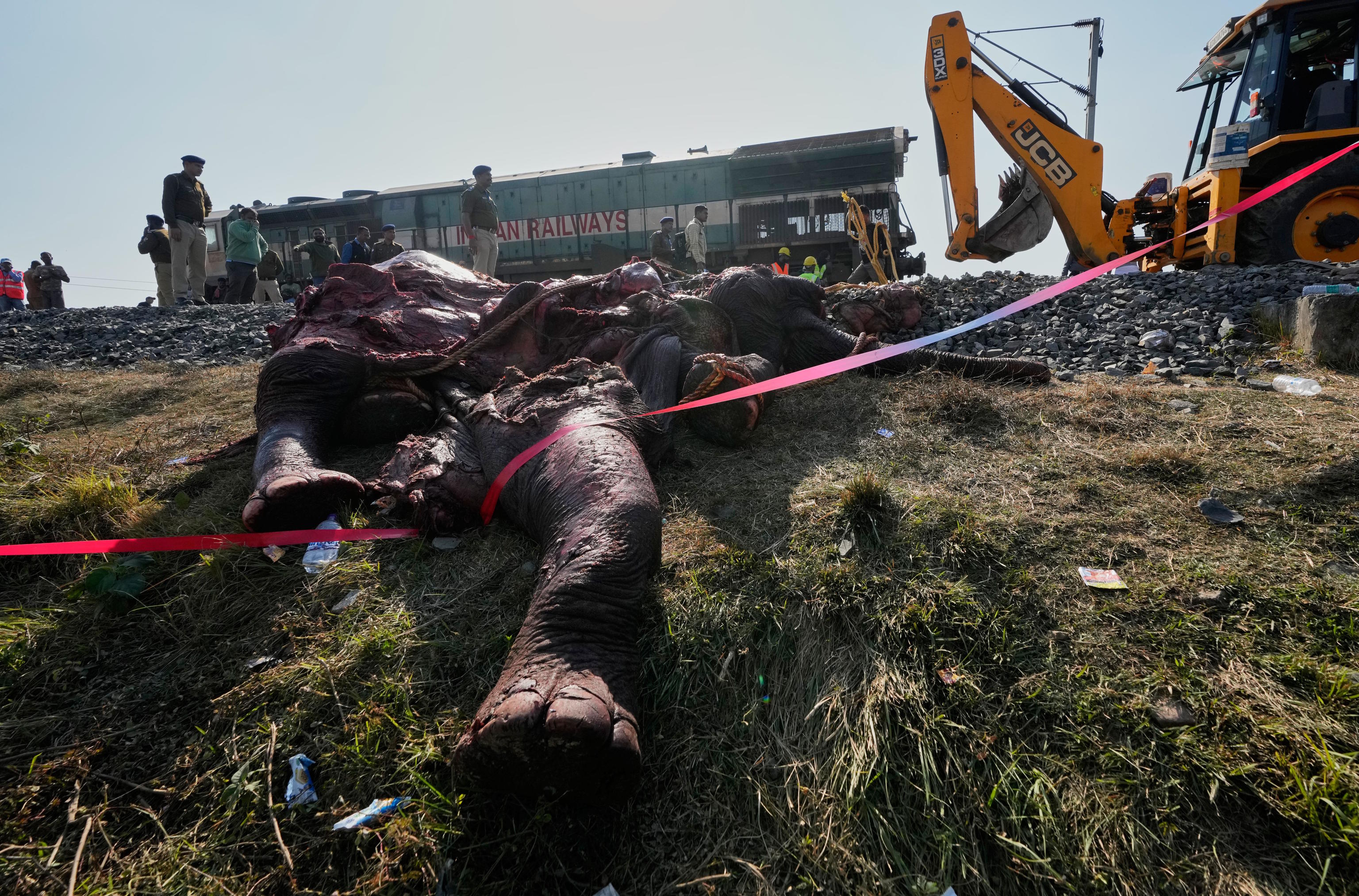
Assam's Chief Minister, Himanta Biswa Sarma, expressed deep sadness over the event, detailing that among the deceased animals are three adults and four calves. Given the seriousness of the situation, Sarma has instructed the Forest Department to conduct a detailed investigation and take urgent measures to ensure wildlife corridors, especially during seasons of reduced visibility.
Meanwhile, the operator Northeast Frontier Railway reported that the accident occurred in a section that was not designated as an elephant corridor. According to the official statement, the train driver activated the emergency brakes upon sighting the herd but could not avoid the impact. The collision was of such magnitude that it caused the derailment of the locomotive and five carriages, although no passengers on the train were injured.
This event highlights the growing tension between human expansion and conservation of nature. India currently safeguards nearly 60% of the world's wild elephants, giving it a crucial responsibility in the survival of this species in Asia, which is facing a serious decline due to habitat loss. The country is key to preserving genetic diversity and migratory corridors that connect dispersed populations.
For Indian society, this loss carries deep symbolic weight, as elephants, personified in figures like the god Ganesha, represent an ancestral link between humans and the natural environment.
This collision is like an iron scar cutting through the jungle path; as progress advances on rails, wildlife encounters lethal obstacles on routes they have traveled for millennia.