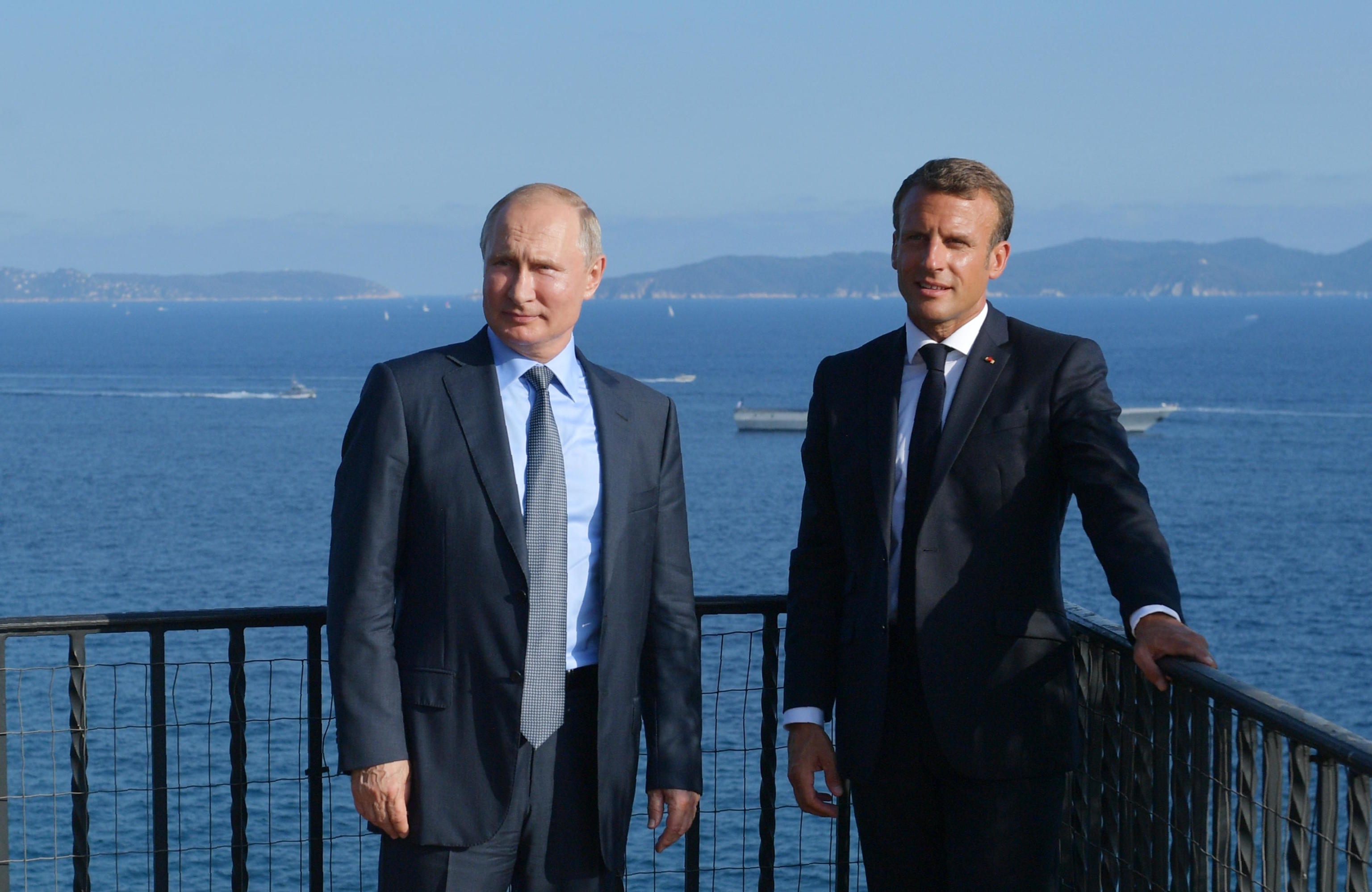
French President Emmanuel Macron has "welcomed" the readiness of Russian President Vladimir Putin to have a meeting in the coming days. On Friday, the French leader acknowledged that "it would be useful to speak again with his Russian counterpart, and Putin has acknowledged being "ready for dialogue," as stated by the Kremlin spokesperson, Dmitri Peskov.
The last time the two leaders spoke was during a long video conference of over two hours at the start of the summer, on July 1, 2025, the first occasion they met since that strange face-to-face encounter at the six-meter white oval table on February 7, 2022, on the eve of the Ukraine war.
In the last video conference, Macron took the lead, reiterating his support for the "territorial integrity" of Ukraine and calling for "a ceasefire as soon as possible." Putin, who mostly listened to his counterpart in the first hour, insisted that any potential peace agreement must be "long-term," while pointing out that the conflict "is a direct consequence of the policies of Western countries."
In recent months, the two leaders have exchanged harsh criticisms directly or indirectly. Macron has repeatedly highlighted "the Russian threat," while his military leaders warn that Russia is preparing for a major conflict with European countries by 2030. The Russian president has even compared Macron to Napoleon for his push towards "the increasing militarization of Europe."
The upcoming meeting between Macron and Putin will be influenced by the recent agreement of the Twenty-Seven leaders to grant a €90 billion loan from the EU to Ukraine (and the decision not to use the €210 billion of frozen Russian assets for now) and by the proposal for a possible four-party meeting (United States, Russia, Ukraine, and Europe) in the ongoing peace talks in Miami.
"From the perspective of a ceasefire as well as the specifics of a negotiated peace, it is useful to speak with Putin and not let only the United States lead the maneuvers to end the conflict," Macron reportedly confided to his collaborators, justifying a new approach to the Russian president.