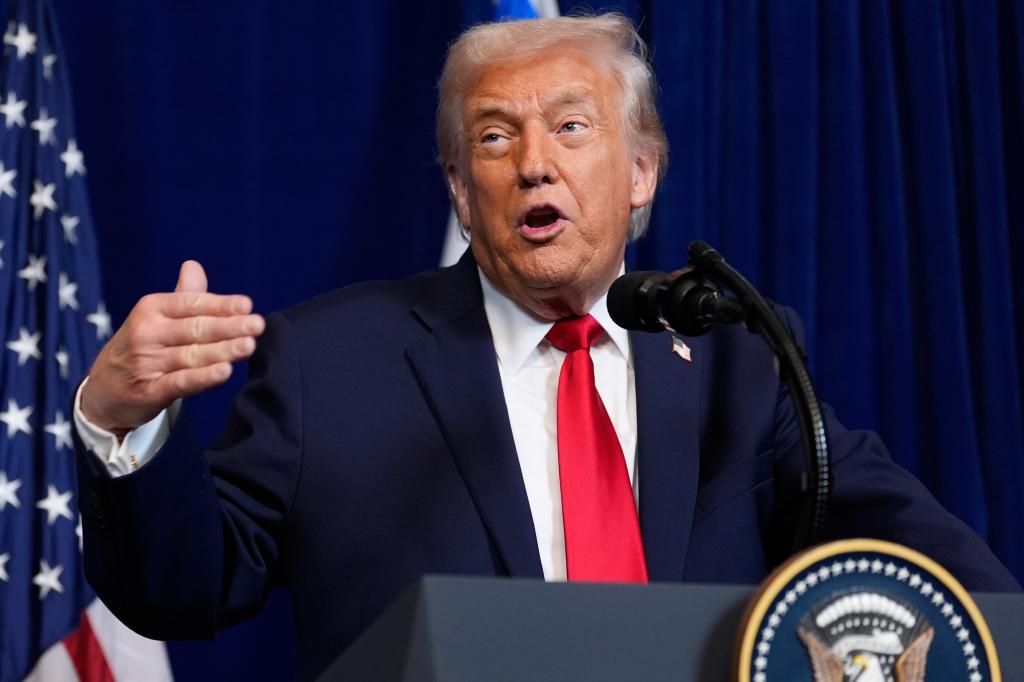
In early December, the Indiana State Senate voted against a proposal to ratify a new electoral map. The President of the United States, Donald Trump, was very interested in this initiative, known in political science as gerrymandering. The United States elects members of both houses of Congress directly, dividing each state into districts. To set the boundaries of each district, a census is taken every 10 years, established in the Constitution. However, parties learned long ago that by intentionally modifying demarcation lines, using street-by-street data on population, income, race, and past voting preferences, they could significantly alter the results and gain valuable political positions.
What is striking about what happened in Indiana is that the Republican leaders of the state Senate resisted the White House's demand. Trump pressured in every way possible, through individual calls, conference calls, tweets, messengers, and his favorite strategy: threatening any Republican who questions his orders with ending their political careers by presenting alternative candidates in each primary process to oust the rebels. And yet, even with personal harassment campaigns and physical threats from supporters, the map change did not occur.
Indiana is just one of the many battlegrounds in a brutal pre-election war throughout the United States. Gerrymandering is very common, but traditionally concentrated in the aftermath of each census. Not now. At this moment, there are new laws, maps, and proposals being debated or explored in at least 20 of the 51 states. It started with Texas, which in the summer approved a redistribution to secure five extra congressmen for the Republicans. California responded with a referendum, altering its own map to snatch another five seats. Similar actions are approved in North Carolina, Missouri, Ohio, New York, and Virginia. Plans are in place for Florida, Kansas, Nebraska, Illinois, Maryland, and more.
Why now and why with such boldness and ambition? There are critical elections in 2026, where Trump - the same president who keeps hinting at running again in 2028, despite the Constitution prohibiting it - risks losing control of both chambers. Thus, facing a Congress controlled by the opposition, capable not only of halting his legislative proposals but also of opening investigations, blocking appointments, and even launching an impeachment, a new impeachment trial attempting his removal. And anything goes.
Americans refer to the elections held every four years, but halfway through the presidential cycles, as midterms. They are undeniably crucial because the entire House of Representatives (435 seats) is renewed, along with one-third of the Senate. Moreover, these elections play a fundamental role in political life and the collective imagination. They often become the best and only way to penalize the majority party or the White House occupant, historically serving as a mechanism to maintain certain balances: granting enough power for profound change, but for a short time.
However, midterms have been something additional: a tool to try to interpret underlying currents and make sense of the concerns, priorities, and obsessions that run through a country that is, in reality, a continent, too large, too dispersed, and too complex to be understood and directed from Washington DC. And the great obsession right now is Trump and the future of democracy. "I fear we won't have elections in 2028 unless we react," says California Governor Gavin Newsom repeatedly.
Trump is leading an internal revolution, shaking the foundations of the Republic coinciding with its 250th anniversary. A redesign of the executive power, disregarding the legislative branch and attempting to subdue the judiciary. Additionally, deploying the National Guard in major cities across the country, which the opposition and countless analysts interpret as a dangerously attempt to normalize the presence of soldiers. It may not seem like an existential problem now, but everything changes if there are protests, demonstrations, or a repeat of the specific issues from the last elections, marked by threats to election workers or bombs in some districts on voting day, brutal political pressures on state authorities not to recognize results, or allegations of fraud in polling stations.
The Atlantic magazine dedicated its issue this month to the "chaos" and "turmoil" on the horizon, describing a scenario not impossible or unthinkable: a tight outcome in some counties, districts, or states that could determine legislative control. With soldiers following orders; the president's top allies in the Department of Justice, the FBI, or any other agency intervening to halt a recount or seize voting machines; and the president assuming his victory on social media. In 2024, 18 House of Representatives elections were decided by fewer than 10,000 votes, with Democrats winning 11 of them.
Partisan redistricting of district maps will play an essential role in an election year where it will be seen whether or not the White House occupant is penalized.
The mix is explosive. In 2020, Trump pressured state officials not to award victory in places like Georgia to Joe Biden. Now, he has mobilized thousands of lawyers to quickly go to court in the most competitive districts. But there is much more. The White House has requested the Department of Justice to investigate ActBlue, the main fundraising platform for Democrats, with over $3.5 billion in the 2024 election cycle. Trump wants to ban mail-in voting and blackmails states by threatening to deny them federal funds if they do not change their electoral requirements (some do not require a photo ID when casting a vote). For example, in March, he signed an executive order demanding the Election Assistance Commission to impose specific citizenship tests for voting and to change ballot rules.
Trump has been undermining citizens' trust in elections for years. In their processes and results. He has never accepted that he lost in 2020 and claims it was a Democratic theft. No high-ranking Republican official, whether in the government or states, can openly state something as basic as "Trump lost in 2020." They use evasive formulas when asked, like "Biden was appointed". The damage to the credibility of the process is evident. In 2024, Trump won by a significant margin, but the prior narrative was that it was impossible for him to lose, at least without cheating.
His campaign affects the entire process. He claims that millions of foreigners vote and always for Democrats. That fraud is massive, that machines are unreliable, that mail-in voting is a scam, even trying to prosecute the cybersecurity official who in 2020 did not endorse his theory that he had won. Or defaming officials who did their job.
The president has placed supporters of his conspiracies in key positions, both in electoral commissions and in the Department of Homeland Security, including ad hoc positions on electoral integrity. The U.S. voting system is very complex and slow, varying from district to district, and although historically it has worked because both parties accepted the rules, it is full of weaknesses that open the door to lawsuits, leaving judges or Supreme Courts to resolve disputes about which votes are valid, if a machine is suspicious, or how long a recount can take place. This was decisive in 2000 when George Bush defeated Al Gore after the Supreme Court's intervention.
Similarly, Trump's strategy targets - and greatly so - voters, their rights, and their fears. In some states, Republicans systematically try to cancel the voter registration of tens of thousands of people, usually African American, Latino, or Asian. The Immigration Department is being used as a tool. There are all kinds of rules aimed at reducing the number of voters, from identification requirements that, for various historical reasons, tend to disadvantage minorities to rules that prevent giving food or drink to people waiting in line at polling stations. Not to mention the presence of immigration agencies or the military in the streets. All analysts agree that the most tense moment will occur in 2028, but this 2026 will be the first test.