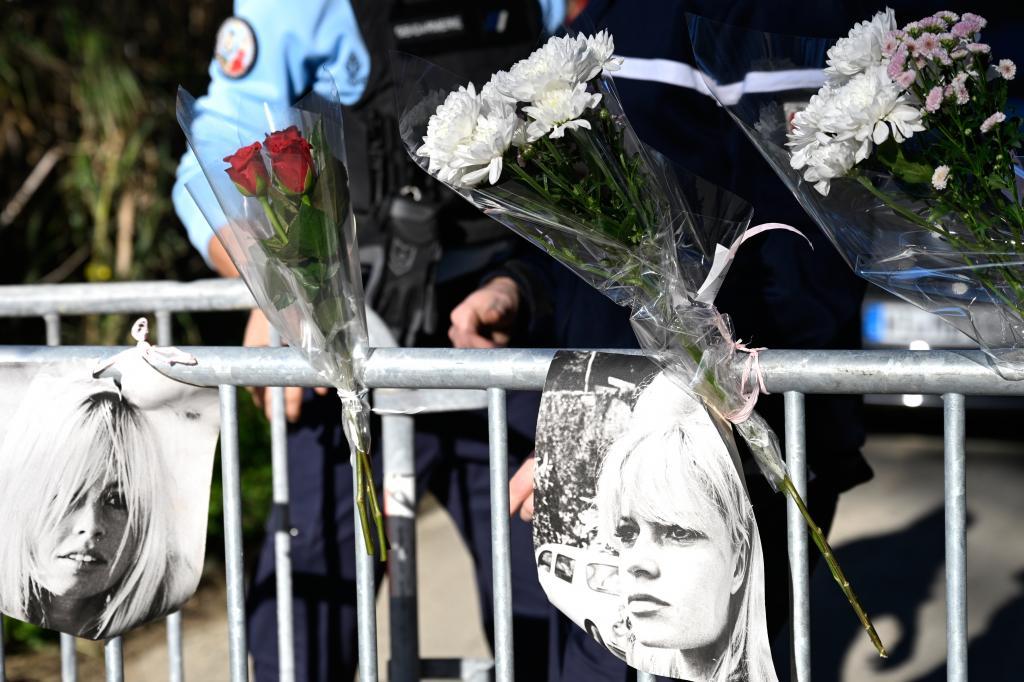
In the 50s and 60s, she was often called dazzling, incandescent, and the impossible dream of married men. The death of Brigitte Bardot at the age of 91 on Sunday, May 28, has sparked widespread coverage in the global press.
The great diva of French cinema, who retired from the big screen at the age of 39 in 1973, invested her earnings wisely after filming And God Created Woman (1956), Viva Maria! (1965), or The Legend of Frenchie King (1971).
There is talk of a fortune of 65 million euros, but it is a difficult figure to calculate due to the financial movements the actress made in the last decades of her life.
Jane Birkin: "With Serge Gainsbourg, we were drunk and on sleeping pills all day"
She had three high-value properties in the real estate market on the French Riviera, but at the time of her death, she only owned two, La Garrigue - near Le Capon- and La Madrague, in Saint-Tropez, valued at around 23 million euros. She donated the latter in 1992 to the foundation so that it could create a museum once she passed away. She only retained the usufruct. As she stated in an interview with Paris Match, "for two or three euros, which will feed the coffers of my foundation, the public will be able to visit my fisherman's house," she said.
She also specified that everything inside her home should remain intact after her death so that her fans could see how she had lived a simple life away from the splendor of stardom. This way, thousands of onlookers will witness a part of the history of one of the most popular actresses on the planet.
Yves Bigot, one of the biographers of the Parisian actress, has made it clear that the foundation benefited from almost all of Bardot's assets. He mentioned that she "pawned La Madrague" and, according to statements the actress made to Paris Match, "after squandering most of my star income, I had no more resources. For two months, I ran a stall at the Saint-Tropez market where I sold my mementos: bracelets and necklaces from Brazil and Mexico, signed photos, petticoats, hats... Then I auctioned off all the valuable items I owned in Paris: the precious jewelry given to me by my husband Gunther Sachs, my wedding dress with Roger Vadim, the silverware, the furniture, and even my guitar."
In 2020, she sold Le Castelet for 6.5 million dollars, an impressive medieval estate whose origins date back to the 16th century located on one of the hills surrounding Cannes.
Brigitte was never a spendthrift, she was quite conservative and had a clear vision for the future. She managed the transfer of her real estate, biographical rights, and other assets during her life to legally ensure that her wishes were respected.
Her heart was with and for animals. She loved them so much that she confessed in her book "Initials B.B.: Memoirs" (1996) that when her only son, Nicolas-Jacques Charrier (65), was born, she would have preferred to "give birth to a puppy." Even during her pregnancy, she referred to him as "a tumor." For these memoirs, she received 4 million euros.
Bardot always managed her own contracts and, of course, looked after her own interests. She received a percentage for the image rights of her more than 60 films, over 80 songs, as well as for the sale of autographed photographs and, in a nearly distant past, her association with luxury brands.
According to French inheritance law, the foundation cannot receive the entirety of the diva's estate as the réserve héréditaire must be taken into account, which protects the descendants with a portion of the parents' estate. Nicolas-Jacques is the actress's only son, and according to French civil law, he is entitled to 50% of the estate.
The assets transferred to the foundation are exempt from judicial claims, but the division of the remaining assets, royalties, and other funds must now be clarified by the courts. Legal experts expect the process to last for months or even years, given the complexity of life estate transfers and the mix of personal and philanthropic assets involved.
Nicolas-Jacques has been residing in Norway for four decades, where he married former model Anne-Line Bjerkam, with whom he has two daughters, Anna-Camille and Thea-Josephine, who have made Bardot a great-grandmother three times. In 2024, she referred to them in Paris Match as "three Norwegian children who do not speak French and whom I rarely see."
Her husband since 1992, Bernard d'Ormale, a politician from the National Front, apparently will not receive anything.