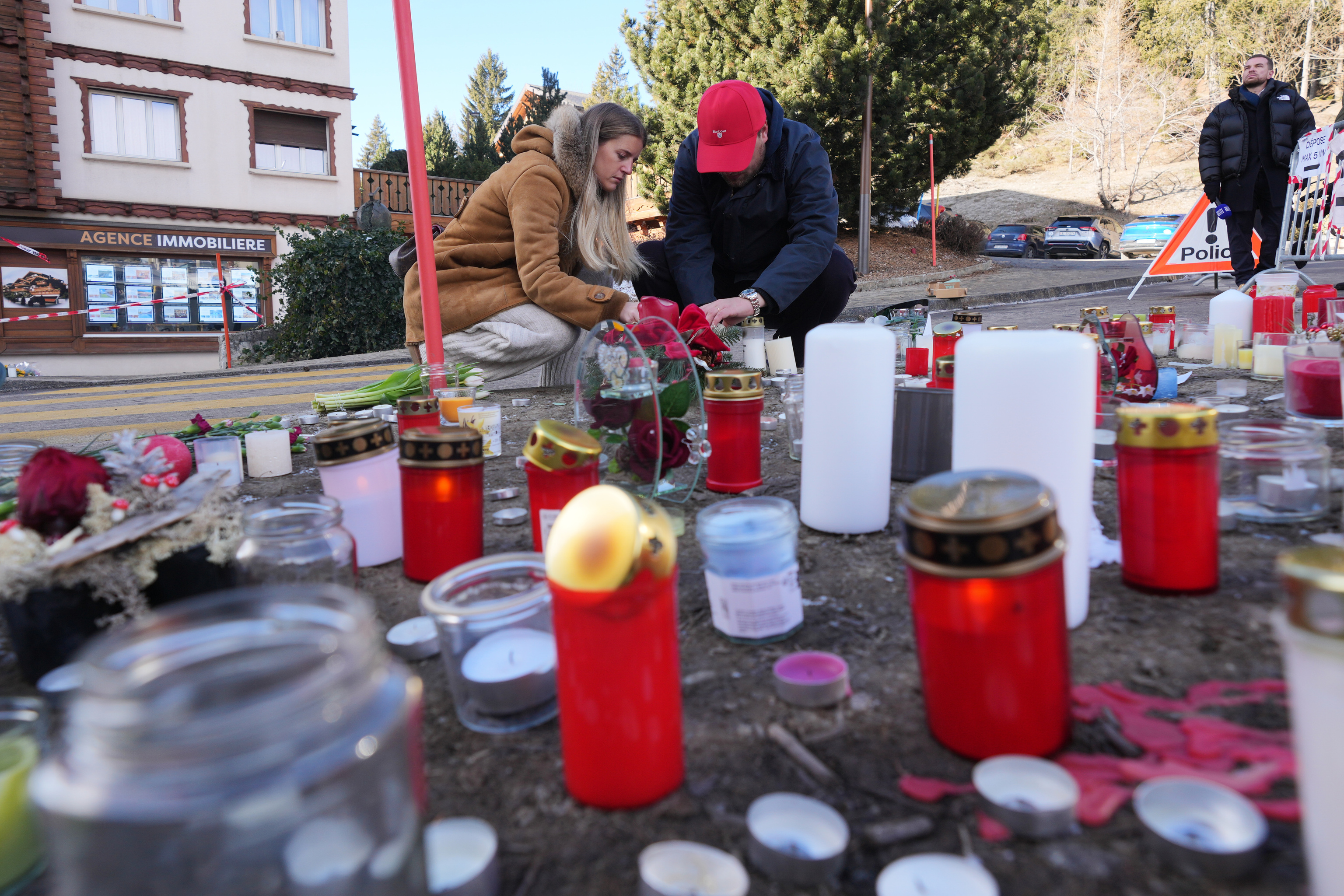
A flashover, a thermal bomb with temperatures of up to 2192ºF, has become the main hypothesis that Swiss authorities are considering to explain the 40 dead and 115 seriously injured during the New Year's party at the bar Le Constellation, in the center of Crans-Montana, in southeastern Switzerland.
Flashover is an extremely dangerous phenomenon that occurs in house fires, warehouses, or buildings when the fire goes from being localized in one spot to involving almost the entire space suddenly. Within a time frame of three to five minutes from the start of the fire, the accumulated heat causes the almost simultaneous ignition of all combustible materials in the area, without the flames directly touching them. At that moment, the fire goes from being controllable to total, the temperature skyrockets, and human survival becomes practically impossible.
All flashovers start with a small focal point, whether it's a sofa, a curtain, or a plug. A localized combustion that, in the case of Le Constellation, is believed to have started due to a flare in a champagne bottle. During the small fire, heat rises, a layer of gases forms on the ceiling, the room's temperature progressively increases, and it begins to radiate heat downwards, causing objects to heat up even if they are not burning.
Suddenly, a widespread pyrolysis occurs, materials release flammable gases, and when reaching an approximate temperature of 932-1112 °F, a sudden and almost total ignition occurs. The fire visually explodes and fills the space.
It is true that just before a flashover, firefighters usually notice certain warning signs, such as rolling flames on the ceiling (rollover), extreme darkening of smoke, unbearable heat at ground level, objects starting to burn without direct contact with the fire, or deforming and shattering glass. For emergency services, all of these are signals to immediately order evacuation.
Flashover becomes a deadly and nearly inescapable phenomenon not only due to the high temperatures (it is believed that in the Swiss bar they reached 2192ºF). Also because of the possibility of inhaling lethal toxic gases within seconds, the lack of visibility, and because there is no safe area inside the building to take refuge. Even dressed in professional gear, surviving a flashover is highly improbable.
History is full of major tragedies caused by this phenomenon. Such was the case of the Station Nightclub in Rhode Island in 2003. What started as a rock concert ended up becoming one of the deadliest fires in U.S. history. The pyrotechnics used on stage ignited the acoustic foam of the venue, and in just a minute and a half, the building experienced a flashover. 100 people died, many of them trapped at the main entrance. The footage recorded that night became mandatory material in the training of firefighters and safety technicians worldwide.
Another well-known incident was the Beverly Hills Supper Club fire in Kentucky in 1977. The luxurious dinner club had a small fire in a secondary area, but the highly combustible decoration of the venue led to several flashovers in the main halls, which were full of patrons. The result was devastating: 165 deaths. For years, this disaster marked a turning point in evacuation regulations, signage, and fire-resistant materials in leisure venues in the country.
The Hotel Dupont Plaza in Puerto Rico was also the scene of a flashover on another New Year's Eve in 1986. 97 people died, most due to inhalation. This case highlighted the lethality of smoke after a flashover.
A personal act of revenge triggered one of the deadliest fires in New York's history in 1990. The fire, set at the entrance of the Happy Land Social Club precisely to block the exit, generated a flashover that engulfed the entire venue. 87 people died, many of them young immigrants.
In the case of the Grenfell Tower fire in London in 2017, it was not a single flashover but a series of them within the apartments, exacerbated by a highly combustible facade that spread the fire outside the building. 72 people died. The disaster shook the UK and Europe, revealing how modern materials and building design can accelerate the transition to fully developed fires, even in high-rise residential buildings.
The case is reminiscent of the apartment block in Campanar in Valencia in February 2024. The fire started in one apartment but quickly spread throughout the facade and structure due to highly flammable facade panels, favoring an external propagation similar to a chimney effect. The rapid spread across multiple floors suggests a quick transition to a widespread fire, a behavior similar to what can be observed after a flashover in connected open spaces.
The case of Le Constellation also recalls the fire that ravaged the Pulse club in Koani, North Macedonia last March, during a concert with indoor pyrotechnics. The heat and sparks from the fireworks ignited the club's ceiling, causing the flames to spread rapidly throughout the space, filling it with toxic smoke and forcing people to run amid panic. 59 people died and over 150 were injured, many with severe burns and smoke inhalation. Although resembling a flashover, the technical investigation referred to sudden combustion and extreme fire expansion after the ignition of flammable materials inside.