Defense will remain a vital issue in Europe in 2026. Beyond what ultimately happens with the possible peace in Ukraine, the intelligence services of Germany or the Netherlands have already indicated that Russia is prepared to attack a NATO country. To the European Union, therefore. And that it will do so within a period of two to four years.
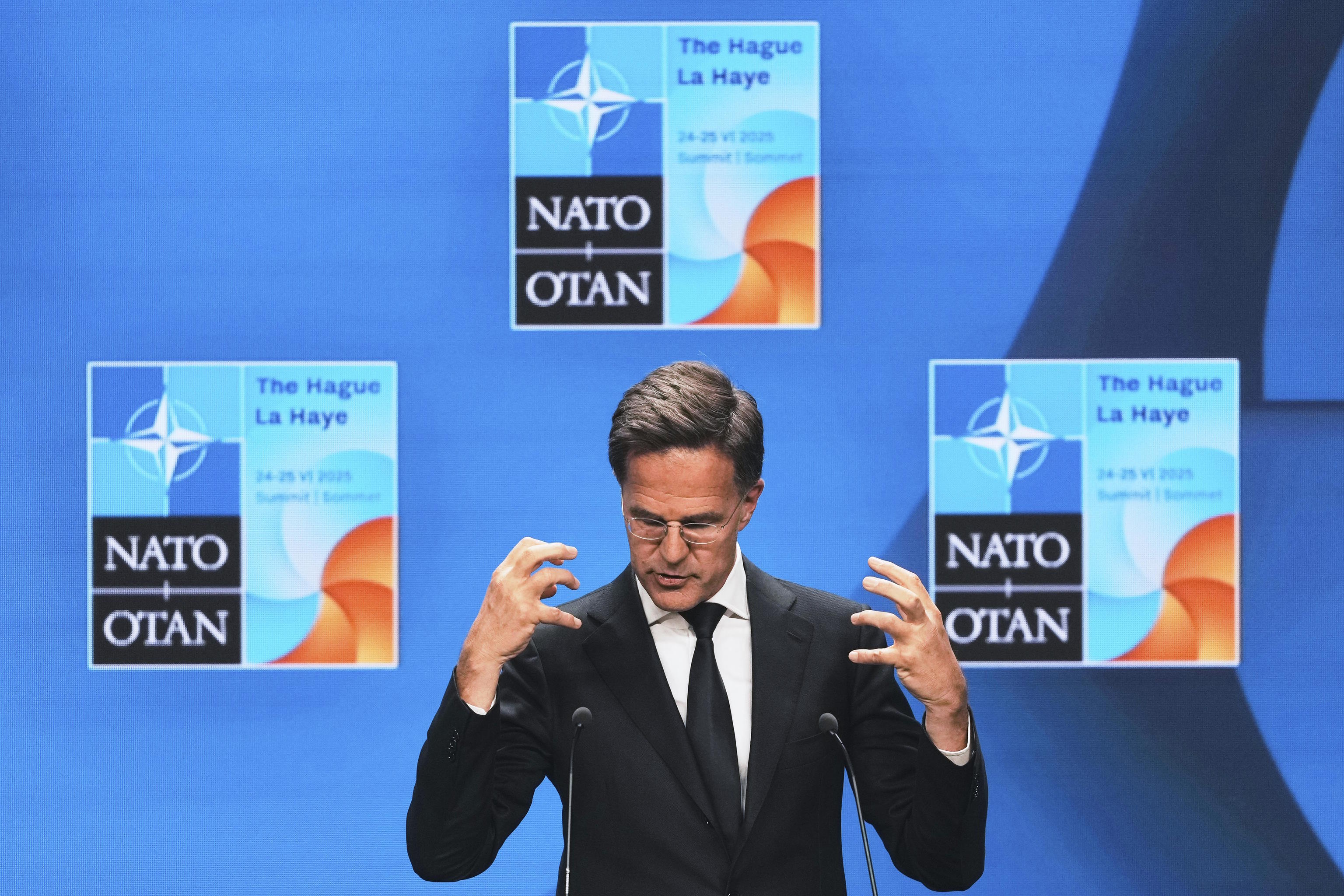
From NATO, the Secretary-General himself, Mark Rutte, has also clearly stated in recent weeks that the countries of the Alliance are "the next target of Russia." "We are already in the line of fire. We are facing a conflict on the scale of the war our grandparents and great-grandparents endured," he added a few days ago from Berlin. And Blaise Metreweli, director of the British MI6, which is probably the most important intelligence service in Europe, recently pointed out that Vladimir Putin's regime is "aggressive, expansionist, and revisionist" and that the front line is "everywhere."
The warnings are numerous and are accelerating in recent weeks as peace talks apparently progress in Ukraine. Because in Europe, it is considered that Russia cannot maintain two open conflicts at the same time, and if there is finally an agreement with Kiev, there will be time to rearm, give a certain rest to its troops, and initiate a new attack.
All of this may seem very distant from Spain, and it may be perceived as almost unrelated. But this is not the case at all, firstly because the country is part of NATO, which implies a commitment. Additionally, from the European Commission, efforts are being made to educate about the implications of Russian advancement. Obviously, it is highly unlikely that Russia would directly attack Madrid, despite Rutte having said on more than one occasion that a missile launched by Putin would take just a few minutes longer to reach the Spanish capital than Vilnius, for example. But the Commissioner for Security and Space, Andrius Kubilius, has pointed out on more than one occasion in this newspaper that in a situation of hybrid warfare, interferences can come in many ways. With drones over Spanish airports, as has already happened in Brussels or Copenhagen, directly affecting the important tourism sector. And in Brussels, many also remember Russia's involvement in the Catalonia procés.
There are also those who point out from some political circles that there is an element of excuse in all of this to favor the military industry and, of course, the United States. Certainly, the U.S. economy will benefit from the European rearmament process, and there is an economic interest in the Trump Administration's decision to stop militarily supporting Europe. They have the most advanced military technology and production capacity. But this does not make the threat from Russia any less real.
Therefore, 2026 must be a year in which EU countries advance in their rearmament process, and that includes Spain. The government of Pedro Sánchez has increased military spending to 2.1% of the Gross Domestic Product (GDP), a figure that should be sufficient to pass the capabilities assessment that NATO will carry out during the first half of 2026. But it is not at all clear that with that investment, it will be sufficient for the following year. In fact, the Alliance states that it is not, and that the government will have to increase its investment.
In Ukraine, the scene of the largest war on European soil since World War II, no one expects the peace talks between the U.S. and Russia to reach any agreement. The vast majority of Ukrainians, according to a recent survey, believe that the war will continue at least through 2026, such is the absolute distrust that exists regarding anything signed by Vladimir Putin or his peace promises.
The conflict in Ukraine enters its fourth year with little hope in the current talks, while the challenge for European countries will be to advance in their rearmament.
After nearly four years of invasion, during which the armies advanced mainly during the first months of the war, exhaustion is total. Russia has conquered 1% of Ukraine throughout 2025, a Pyrrhic achievement achieved at the cost of tens of thousands of casualties, especially on the Pokrovsk front, a city that Moscow has been trying to conquer since 2024 and where Ukrainians still resist in the north of the city.
The battlefield has become a testing ground for new military terrors, almost all of them robotic, which have turned the front into the deadliest of the 21st century. Spy drones, kamikaze drones, bombers, miners, logisticians, and even flamethrowers, all directed from basements several kilometers from the contact line, are revolutionizing warfare as the discovery of gunpowder did in 9th-century China. The first army capable of applying artificial intelligence to its machines to make them even more autonomous and lethal will not only take a giant step in defending military positions but will also lead the Defense industry for years.
For many analysts, the risk of military contagion to another NATO country is high if these two issues arise: Trump definitively forgets about Europe as an ally and neglects its defense, and a halt (even if precarious) in the war in Ukraine allows Russia to rebuild its battered forces, whose casualties have exceeded one million since 2022, including all the old Soviet armored vehicles burned on the roads of Ukraine.
But if these two issues arise, the Kremlin could carry out a provocation in the Baltic countries that, if left unanswered, would mean the end of the Alliance. For this reason, experts insist that Russia is not seeking an open war with Europe, which it could lose if the main allies join forces, but rather a hybrid operation that compromises a small territory in a gray area.
What is currently on the table is a negotiated end that still seems distant. Ultimately, Vladimir Putin does not yet have the incentives to stop because he knows he can sacrifice many more soldiers in his quest to achieve something he can call a victory.