The situation these days is quite common: can't you wait for the Three Wise Men to bring it to you? For those who celebrate the Christmas holiday, it is common to leave on a list for the royal pages those things they would like to receive: books, clothes, concert tickets... But many cannot wait because the desire hormone, dopamine, overwhelms them and precipitates their acquisition.
We are also a few days away from experiencing another moment governed by the dopamine rush: the opening of gifts on Three Kings' Day morning, which may well have been the same as that of Santa Claus a few days ago. "Children, but also adults, when they open Christmas gifts, open one and as soon as they can, move on to the next, and then another. And another." Writer Michael E. Long paints us a recent picture of how dopamine governs us and what we should do to remedy it. "No, open the gift and enjoy it. Take your time. Give thanks. Live the moment," he insists on being more aware of the present moment. Because that's what dopamine robs us of when it becomes harmful. "We can't let it make us do things we don't want, dull our ability to feel."
Long is adamant about the risks of a hormone that has been with us for millions of years and has driven our survival. But never, like now, has it dominated our lives so much, driven by a society bombarded by impulses. Whether through consumer society, "buying things we don't need," or social media, "tied to an endless scroll that numbs us," the challenge today is "how to face all those immediate opportunities for instant gratification that previous generations did not have."
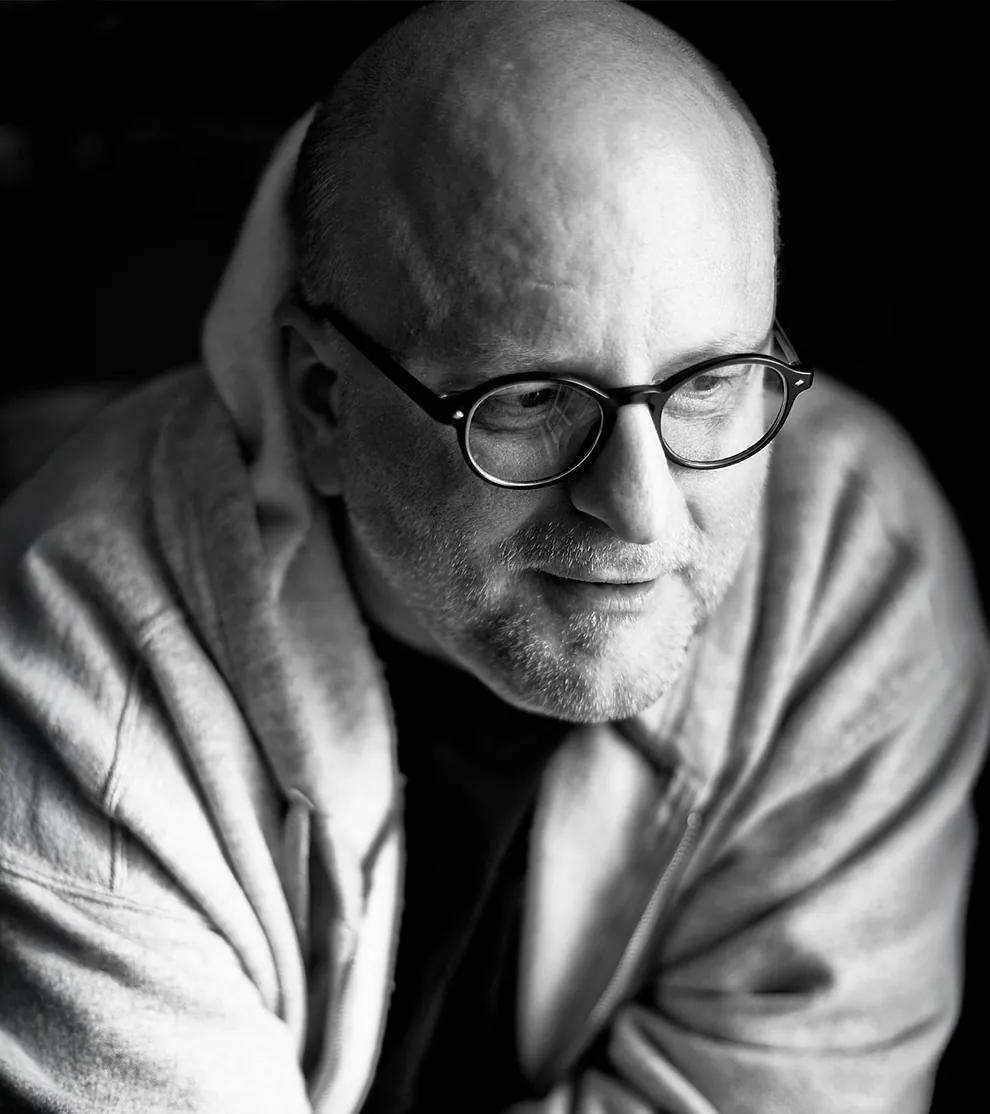
For this, Long has developed a practical guide: Dopamine under control. Understand why it works against you and how to turn it into your ally (Península). This is not the first time that this Physics graduate from Murray State University has dissected this hormone. Along with Daniel Z. Lieberman, he published in 2021 what could be considered the first part: Dopamine (also in Península), but whose English title is even more descriptive: The Molecule of more.
In that first part, they try to offer an explanation to understand, among other things, that dopamine works with reward or, more precisely, with "reward prediction error": something unexpected happens and we find it great, and we secrete dopamine. And if we don't find it, we look for it.
On the other side of the screen, through a video call, an animated Long invites us not to demonize dopamine.
Here Long pauses to reflect on whether dopamine and that desire for more and more leaves a void in people, because ultimately, as with addictions, "we become slaves to that feeling and seek a higher dose each time." Why?
He gives some clear examples that illustrate this type of situations. "Miley Cyrus said that at first everything was very exciting, but now she can perform in front of a million people and her heart doesn't even race; nothing excites her." The problem lies in constant overstimulation, "the more people experience this, the more problems we may face." And he mentions another well-known pattern: pornography. "Its consumption becomes increasingly extreme because people get used to what's normal and need greater stimulation to feel the same."
Have we lost the ability to get bored, to live without constant rushes of new sensations? Long is clear about this: "Bored people need to do something." That's why, "people argue so much on the internet." He argues that for them, "it's a safe place to vent extreme emotions, as they usually don't face each other physically."
Long insists that "dopamine dulls our ability to feel, so we start hitting harder to feel something." The writer quotes the words of singer Warren Zevon: "I'm going to throw myself against the wall because I'd rather feel bad than feel nothing at all."
Perhaps the reggaeton lyrics of Daddy Yankee, tweaked, reflect this situation perfectly: "She likes dopamine (gasoline); give me more dopamine. How she loves dopamine; give me more dopamine..." While society encourages us to rev up the hormone, Long suggests slowing down and enjoying situations where we don't need the rush.
In the book, there are hundreds of pages dedicated to managing dopamine in each of our vital spheres: family relationships, work... "One thing that works for me and I haven't included in the book is giving myself time when I physically go to a store to buy something." Long confesses that he often resorts to this resource. "When you're in the store and want to buy something, take it, put it under your arm, and carry it with you for about 10 or 15 minutes. Dopamine wants you to own things, so by having it, you satisfy that desire. Often, after a while, you'll realize that you just wanted to own it and not really use it, and you can put it back on the shelf." Easy.
He also admits that this works with children. "Sometimes they receive too many gifts, whether at this time or for their birthday. If we give them time to enjoy them one by one, they will dedicate the time their brain would have estimated and it won't be just an immediate and sterile impulse." How is it done? The educational method involves hiding the gifts once opened and letting them play with each one for as long as they want. After a few weeks, even a month, a new one is taken out. "And, voilà, the brain regains the feeling, but this time in a way that is more fulfilling and beneficial because it focuses its attention on one thing and not multiple senseless ones."
At this point, Long gives us the key for dopamine not to be bad, addictive, but good, creative, and satisfying: give yourself time to savor the impulse. How? "Something very simple that I do every day: when someone asks you a question or makes a request, stop, think about it, and make an intentional decision on how to react. For example, at the supermarket, when they ask if that's all, stop and think if you really have everything you need."
Long's reflections propose something almost revolutionary: to pause and decide. And this is a good purpose for 2026: "You can let dopamine choose for you, seeking something new, or you can pause, live in the here and now, and make a decision. That's the key to everything in this book."