Diomedes, a Panamanian taxi driver with a torrential chatter, squirms uncomfortably in his seat when he recalls the DEA and the US Army's mission to capture General Noriega on January 3, 1989. "The Americans had four bases here and it was very easy for them to conquer the country, although now we have them again all over the Caribbean."
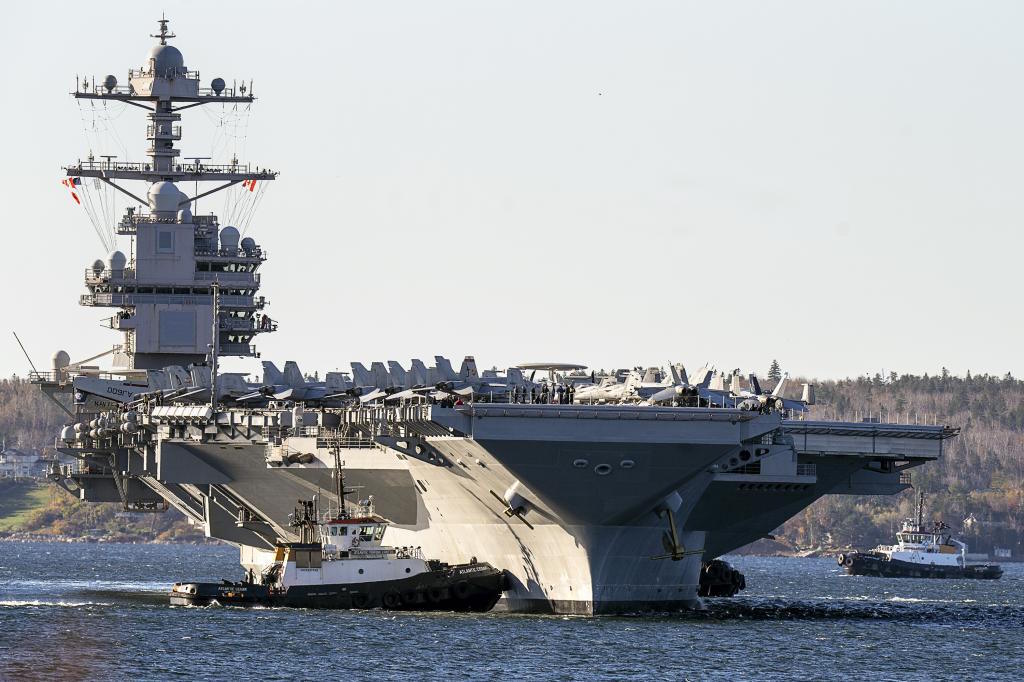
Flights from Europe, which already took a long time to reach this corner of Central America, now must delay an hour more to avoid the US operational zone north of Venezuela, because even though Nicolás Maduro is already detained, his large navy, in the largest deployment since World War II, still remains in place, awaiting orders. What is being discussed today at the mouth of the Panama Canal is that "approximately a dozen sanctioned vessels loaded with Venezuelan oil have left the country with their transponders turned off, attempting to break the US blockade."
President Trump has already made it clear that there may be "more interventions" in Venezuela, that "Cuba is about to fall," and that "China is operating the Panama Canal. We gave it to Panama and we will recover it."
The assertiveness at Mar-a-Lago has been felt, like seismic waves from an earthquake, from Cape Morris, the northernmost point on land on the planet, located in Greenland, to the windy Cape Horn in Chilean Patagonia, passing through Canada, Mexico, or Colombia. The American continent has become the playing field of Donald Trump's "new Monroe doctrine", updating with 21st-century methods that "America for the Americans" of President James Monroe in 1823, making it clear that when he speaks of "Americans," he means "Americans." In other words, more than a billion people (including the indigenous Inuit of Greenland) under Trump's volatile influence.
The operation to capture Maduro may not change much in the day-to-day life of Chavismo on the streets, with Delcy Rodríguez in power (although overseen from the Oval Office), but it changes almost everything on the continent. Threats are extending in the last hours to Mexico and Colombia, two governments more aligned with China and Russia than with Washington, and Marco Rubio's words are starting to sound scary: "Now you know that Trump is a president who acts," in contrast to those who talk but do not act.
A month ago, the White House already laid out this plan in a document: National Security Strategy 2025: "After years of neglect, the US will reaffirm and enforce the Monroe Doctrine to restore American preeminence in the Western Hemisphere and protect our national territory and access to key geographies throughout the region. We will prevent external competitors from deploying threatening forces or other capabilities, or owning or controlling strategically vital assets in our hemisphere. This Trump corollary to the Monroe Doctrine constitutes a restoration of common-sense and robust American power and priorities, consistent with US national security interests."
Can the United States now threaten to annex Canada as the 52nd state? Is it true that Washington "needs" this territory to secure its safety? The reality is that the United States already has a military base called Thule, about 1,200 kilometers from the North Pole, complemented by the Pituffik space control base, which is a strategically valuable node for its early warning radars, allowing the US to monitor emerging air and sea routes due to thawing, and serving as a deterrent to Russia's Arctic expansion. In other words, the US has a significant presence in the Arctic and probably would not have much trouble negotiating the opening of new bases in a collaborative framework with NATO, whose mandate includes surveillance of those waters. But Trump goes further: he is not so much seeking to expand borders as to redefine sovereignties.
Donald Trump's insistence on Greenland, Panama, Canada, or Venezuela fits with his reinterpretation of the Monroe Doctrine, whereby the US must prevent external powers from consolidating strategic presence in its immediate geographic surroundings: just as in the 19th century Washington arrogated the right to exclude Europe from the Western Hemisphere, today Trump extends that logic to the Arctic and the North Atlantic, considering Greenland a key platform. It is not so much a formal annexation as ensuring a functional zone of influence, where the sovereignty of third parties is subordinated to US national security interests.
Meanwhile, Latin America is ceasing to be a diplomatic neighborhood to become a strategic influence zone, as in the 80s and 90s, where the autonomy of states is subordinated to security, competition with China, and Washington's power logic, seeking to reduce the sovereignty of these countries and subject them to certain control of interests, as is already happening in Venezuela, a country that surpasses Saudi Arabia in the first place for world oil reserves.