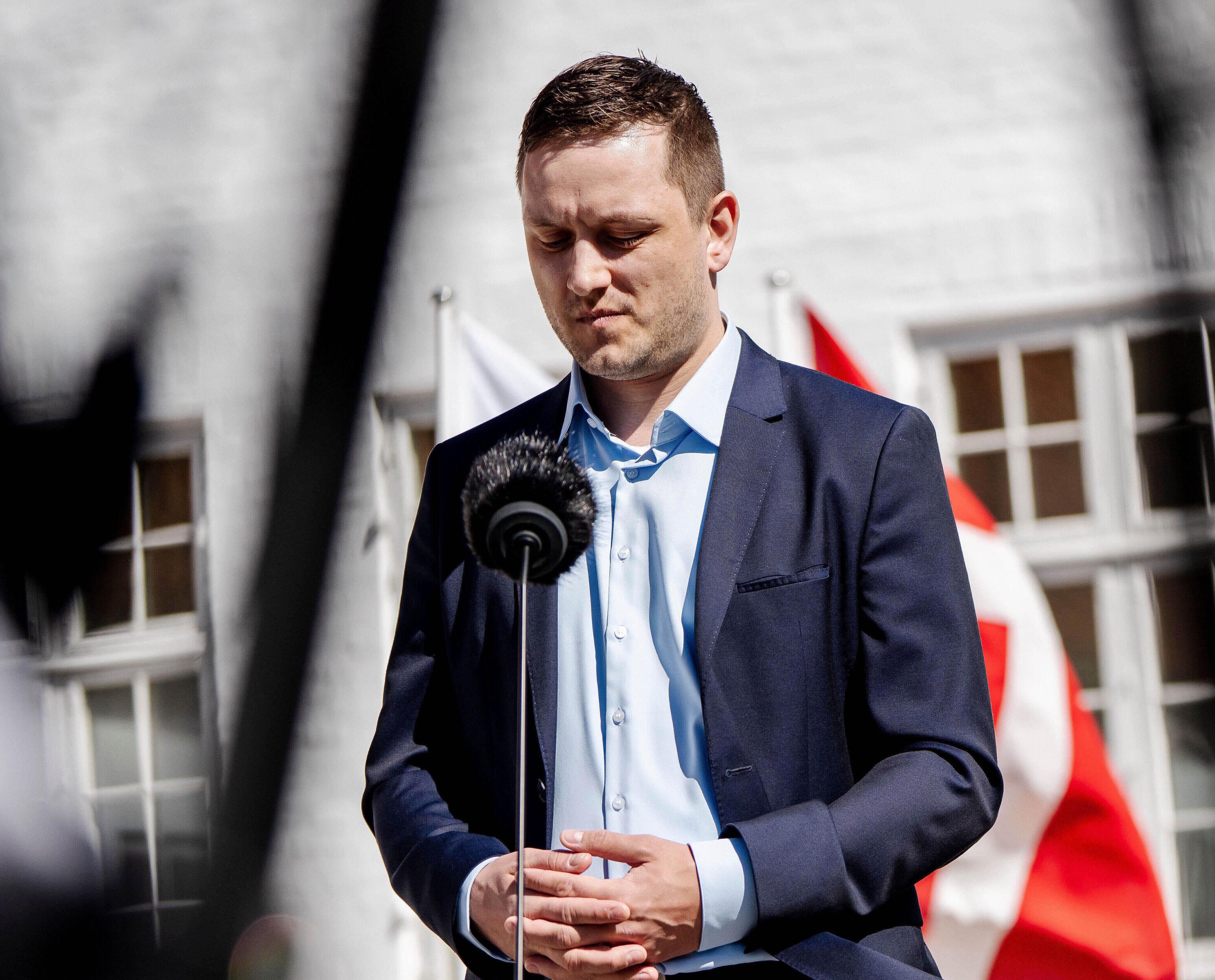
Faced with Washington's renewed interest in taking control of the island, Greenland's Prime Minister, Jens-Frederik Nielsen, appeared on Monday in Nuuk to deliver a message of calm and sovereignty, trying to dispel fears of a possible incursion into Danish territory. Despite the aggressiveness shown by the White House in the Caribbean, the Greenlandic leader has insisted that the legal and political nature of their territory prevents a similar action. "We are not in a situation where the United States can conquer Greenland. That is not the situation, so there is no need to panic," Nielsen stated firmly to the media. For the president, the current priority is not conflict but diplomacy: "We must try to reestablish contact" and "restore the good collaboration we have had." However, the patience of the autonomous government seems to be running out due to constant leaks and indirect statements coming from the United States. Nielsen has warned that his government will "toughen its stance" because they are "not satisfied with the situation we are in."
The Prime Minister has been particularly critical of headline diplomacy, stating that "enough of communication being done through the media and indirectly." The shadow of the military operation in Caracas has loomed over the entire press conference.
The island's strategic location and its significant mineral resources, such as crucial rare earth elements, have raised unsettling parallels in the international public opinion. However, Nielsen has categorically rejected any analogy with the Maduro regime. "Our country is not suitable for comparison with Venezuela. We have been a democratic country for many years," he pointed out. This distinction is crucial for the Nuuk government. While the intervention in Venezuela was justified under the premise of restoring democracy, in Greenland, institutional stability is the norm. According to Nielsen, "the situation is very different," and there is no room for comparison.
Faced with questions from The Atlantic magazine about the implications of the bombings in Caracas for the Arctic, Donald Trump simply responded that his partners "will have to form their own opinion." In the face of this lack of certainty, Nielsen has opted to strengthen traditional security structures.
The Greenlandic president has expressed his desire to "deepen" and "strengthen" the relationship with NATO. Likewise, he has demanded to establish a "direct line" of communication with Washington to avoid misunderstandings that could destabilize the region. Greenland seeks to remain a reliable strategic partner, but always respecting its democratic identity and autonomy.