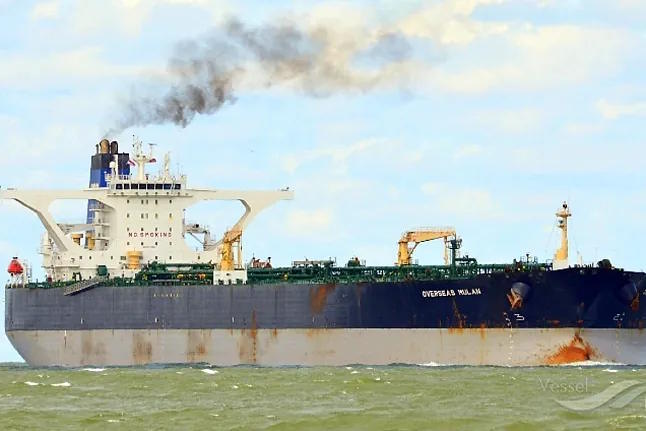
From the battle of Caracas to dismantle Chavismo, we have moved on to the tanker war. This Wednesday, a US Coast Guard vessel and several helicopters with special forces captured the Bella1 freighter flying the Russian flag and renamed just hours before as Marinera. The incident took place between Iceland and the UK, in a region plagued by the harsh weather of the North Atlantic. This freighter had managed to evade the blockade that the US ships had set up in the Caribbean two weeks earlier.
The Russian navy had deployed, in turn, a submarine and other warships to try to escort it to their bases in the Baltic Sea, such as Kaliningrad, or to Murmansk in the North Sea. But it seems that these efforts have come too late. The ship is now in US hands, has changed course, and is heading towards northern Scotland. The vessel was seized in compliance with a court order issued by a US federal court, and the crew, now with military personnel on board, did not resist. Pete Hegseth, US Secretary of Defense, posted on his X social media profile: "The sanctioned and illicit Venezuelan oil blockade continues in full effect anywhere in the world."
The Bella1, now renamed Marinera when it left the Caribbean, has an interesting history, not uncommon in the world of naval traffic. It is believed to have an Iranian owner, sailed under the flag of Guyana, and was attempting to enter Venezuela to load oil. It was subject to sanctions, like many old rusted hulls used to circumvent the ban on setting sail. The crew removed the Guyana flag off the coast of Venezuela and, as they did not have the Russian flag on board, painted it on the hull and registered in the city of Sochi to try to go unnoticed, despite being 333 meters long, equivalent to the USS Gerald Ford aircraft carrier.
Meanwhile, US authorities report that they have captured a second freighter, similar in appearance to the previous one trying to escape from the Caribbean at this moment. It is the M Sophia, flying the Panamanian flag, whose transponder was turned off 167 days ago off the coast of West Africa.
As reported by The New York Times, three other tankers from the ghost fleet suspected of transporting Russian or Iranian oil subject to sanctions have changed their flags in recent days, attempting the same operation as the Bella1 and registering their home port in Russian ports like Sochi or Taganrog.
According to US sources, it tried to approach Venezuelan ports to load, but was unsuccessful, so it seems it is not carrying oil at the moment. The ship turned off its transponder to avoid detection and left the blockade. A US Coast Guard Legend-class ship set sail after it and tried to intercept it three times unsuccessfully, encountering resistance from the crew. The US anti-submarine aircraft located it again sailing towards the North Atlantic.
As it approached the UK coast, several US special forces teams were preparing to board the freighter. At that moment, The Wall Street Journal reported that Russia was preparing to act by deploying a submarine and escorting the vessel, but the US did not back down, and this Wednesday they successfully captured the Bella1 near the Faroe Islands.
If it is not carrying oil, what is it transporting to motivate such a military deployment and force a clash on the high seas? At the moment, there are more questions than answers. The ship's journey took it from Iran to Venezuela and from there, it was heading to Russia, now under the Moscow flag.