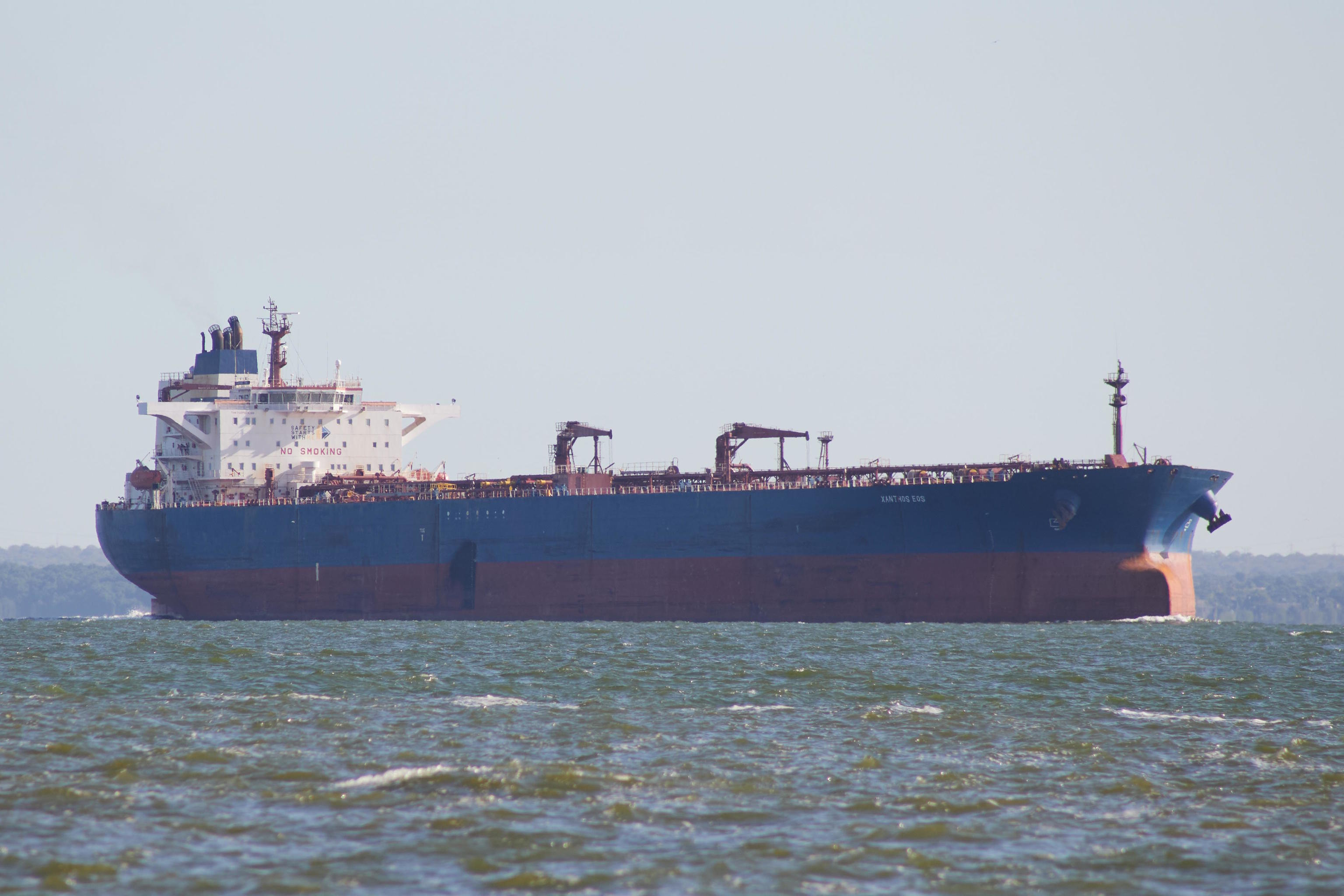
An ocean of Venezuelan oil sails aimlessly. With its land storages overflowing and hands tied by U.S. sanctions, Caracas has boosted the oil on water, as the fuel stored and transported in large tankers is known. The escalation accelerated in December, amid Donald Trump's offensive against the regime of Nicolás Maduro. Currently, more than 90 million barrels of Venezuelan oil are scattered at sea, according to Goldman Sachs, a floating warehouse worth around 5.4 billion dollars (4.6 billion euros) at the current Brent price.
Goldman estimates that the volume of Venezuelan oil at sea has increased by about 50 million barrels on an annual basis. The biggest surge occurred in the final months of 2025, days before the detention of the Bolivarian leader, following Washington's naval blockade order to stop the Venezuelan product from leaving. The measure triggered a logistical earthquake that is disrupting global fuel flows.
"While Venezuelan oil exports over the past six weeks have remained virtually unchanged, its import has decreased by around 0.4 million barrels per day on an annual basis. At the same time, the oil on water has increased (...) due to U.S. orders blocking tankers and tightening sanctions on shipping companies," explains the Wall Street bank.
The product leaves Venezuela by ship but does not reach its destination. Sanctions hinder the final delivery, creating a sort of wandering warehouse. This is exacerbated by the fact that the country's land storages are already full, worsening the bottleneck. According to Goldman Sachs, Venezuela's production could have already decreased by about 0.8 million barrels per day for this reason. Meanwhile, Wood Mackenzie predicts a slowdown in production - from 820,000 barrels per day last November to around 300,000 barrels at the beginning of 2026 - as U.S. interventionism forces the withdrawal of buyers and production halts due to excess stock.
The wandering oil is not only a logistical challenge but also fuels global oversupply. The market assumes that, even in a scenario where a U.S.-backed government could ramp up production, crude prices will remain below $60 in 2026. Partly because any recovery of oil activity in Venezuela requires time and significant long-term investments in an unstable country. But mainly because a global surplus of 3.85 million barrels per day is expected in 2026, according to the International Energy Agency (IEA).
The Trump administration announced yesterday that it will indefinitely control all of Venezuela's oil, a measure backed by a deterrent military escalation. Prior to Maduro's detention, Washington had deployed 15,000 marines and special forces in the Caribbean to reinforce naval pressure and prevent ghost ships carrying banned oil to Asia.
China plays a key role. According to U.S. intelligence reports, in September, the Asian giant accounted for around 84% of Venezuela's oil exports. Business sources claim that Trump's intervention has generated a "boomerang effect": "Emerging countries have perceived it as interference that has increased their sympathy towards the sanctioned country." Beijing, they argue, now feels supported by the Global South to perpetuate its dollar-independent trading scheme, where Venezuelan barrels are bought with yuan or cryptocurrencies.
A second source in the trading business assumes that, if the blockade persists, the high-seas transfers will continue. "The oil will reach ports like Malaysia, where they will change its origin to launder its sale. The usual," they denounce.