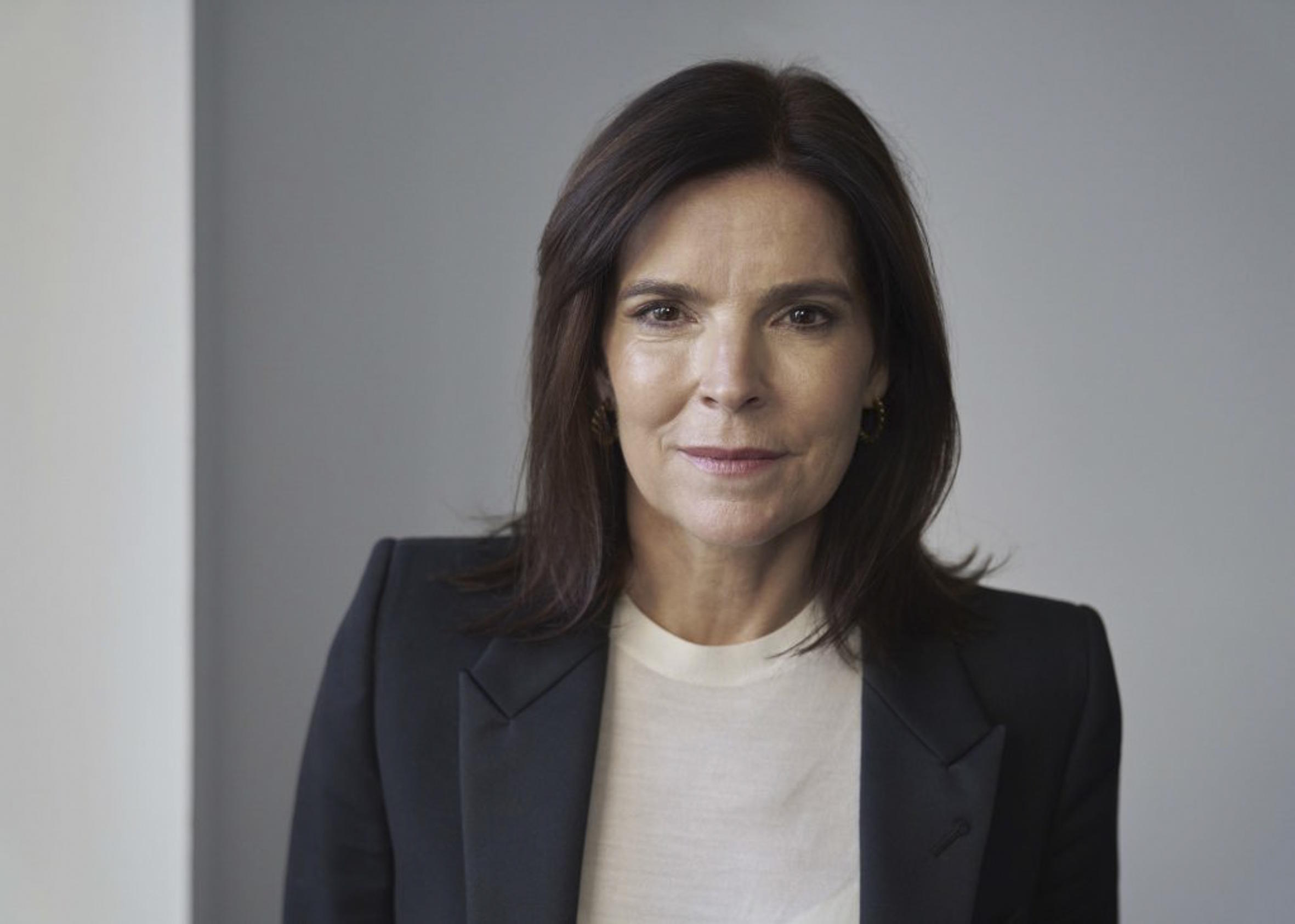
Emma Tucker began her career at Financial Times. After working as a reporter and international correspondent, she took over the weekend supplement of the leading newspaper in Europe. In 2007, she joined News Corp, holding various positions before being appointed director of The Sunday Times, the first woman to lead the newspaper in over a century. Two years later, she made a leap across the Atlantic to repeat the feat at The Wall Street Journal, a transatlantic with nearly five million subscribers and embroiled in a legal battle after Donald Trump personally attacked her and sued the newspaper for $10 billion over its reporting on the Epstein Case and the president's ties to the financier.
"Trump is a president of enormous significance. We report firmly on what he is doing and the consequences, but without catastrophizing".
Trump has been in the White House for less than 12 months, 2026 has barely started, and it's impossible to keep up. There are too many things, happening too quickly, of too high importance. I had this exact conversation this morning in our meeting discussing everything that has happened since January 1st. It started with news about drugs in South America. Then it moved on to a military operation, a regime change, and now it seems everything is related to the drop in oil prices. How do you explain this to readers? How do you help them understand? The truth is, none of us really know what the overall plan of this Administration is or where this will end. And that's why I believe that all we can do in a moment like this is report rigorously on the facts and provide our expertise to try to make sense of it. There is a lot of noise on social media. We know that, but when it comes to reliable sources, like EL MUNDO or the WSJ, our responsibility is to provide reliable information, even if it doesn't make much sense. In a moment like this, navigating the news is really complicated, and I always fear that we might be missing something in this infinite deluge of news. I always go to bed thinking if we are missing the big picture, the complete image. We need to have the flexibility to cover these huge events, but also the depth to depict what is really happening.
The problem is not just a constant flood of news, but of 'big pictures'. Yes, 20 years ago we had a debate about foreign interventions, oil, democracy, and 'nation-building'. But now we have the end of history, a clash of civilizations, the end of democracy, the end of the rules-based order, of Bretton Woods, of the 20th century, of international law, of alliances, of NATO...
And let's not forget the enormous technological advances that will change how we work and operate in society. The job market, huge geopolitical, technological, and economic changes. Not to mention climate issues, scientific and atmospheric changes. It's a challenge for the media because when so many changes are happening, and everything is so momentous, as you rightly say, how can we blame people for reading novels, watching Disney movies, cooking shows, or endlessly scrolling? People want to take care of their mental health. So, as media, we should carefully consider how we tell these stories.
How do we convey that we may be witnessing the beginning of the end of NATO?
Concern for the future of NATO is completely understandable. The Danish Prime Minister has said that if the US were to attack Greenland, it would mean the end of the Alliance. Six months ago, we would have said it was an exaggeration, Trump's hyperbolic language, but now it does seem like a possibility. Today in the newsroom, we were wondering who is an ally nowadays. If we remember the major events that shook the world in the late 80s, like the fall of the Berlin Wall, financial crises, and so on, they were significant events, but the dividing lines were clear. In 1989, when the Wall fell, it was very clear who was on each side, what each side thought, who stood together. And the same with 9/11. Whereas now, it seems like everything, everyone, all kinds of alliances and lines are changing, which for Europeans evokes what happened before World War I. And also, in a way, before World War II. So I think it's completely understandable that people are worried about the future of NATO, especially now, in the past week, more than at the end of last year. The events in Venezuela have really accelerated everything.
"Trump is a president of enormous significance. We report firmly on what he is doing and the consequences, but without catastrophism."
With this Administration and this president, it is very difficult to establish boundaries, red lines. What do you consider hyperbolic and what not? We have politicians and analysts saying that the US will not have free and competitive elections in 2026 or 2028. Some are already talking about an authoritarian regime, an absolute monarchy.
I think there is a lot of exaggeration, and one of them is suggesting that the United States is heading towards some kind of dictatorship because, in the end, the country has the most solid history of democracy, and there are many Americans who still firmly believe in the Constitution, in the institutions... The country is about to celebrate its 250th anniversary. I think everyone should take a breath. I believe the midterm elections will be held normally. The United States is still functioning wonderfully in many aspects, and the economy is strong. It's easy, when you are not in the United States, to be very scared about what is happening because it is very unexpected and unusual, but I think people should stay calm.
Do you really think that checks and balances are working?
Well, the legal system is. Many have criticized Congress for not taking a firm stand, and there are certainly criticisms of executive overreach or exceeding its authority, so to speak, but the system is still functioning. Certainly, the press is still doing its job. In a way, Trump is an incredibly transparent president, and he cannot be blamed for access. There have been some fluctuations in the institutions, but they have not been undermined, they have been tested. I think Congress and the judicial system are also being tested, but I believe that, at least so far, it is too early to consider it lost.
You say that journalists are doing their job, and it is true in terms of being critical of the Administration. But something is wrong if, despite reporting everything that happens, there are no practical consequences. Previously, the media seemed to have more oversight power. Not anymore. This president openly says many things, and nothing happens.
Perhaps we need to reflect on our role. Our duty is to inform the people. Traditionally, we have been observers of what happens, not participants. Being observers meant ensuring that people were informed about the decisions made on their behalf, explaining how it was done, shedding light on information that people do not want to be made public so they can draw their own conclusions. We have done many reports analyzing some of the connections and interests underlying many of the decisions Trump is making. With that, citizens can choose whether to be scandalized or just shrug, but our duty is to inform. Trump has forced us to reflect. A good example of this was the press conference with Mamdani, the Mayor of New York. The press did what it always does: try to create tension, a kind of friction between them, reminding the president, for example, that Mamdani had called him a fascist. Before, that would have been very uncomfortable, and everyone would have waited to see what the president said. But he simply laughed and replied, "I've been called worse. It doesn't matter." And that disarmed journalism because Trump didn't care. Instead of always seeking conflicts, journalists should strive more to explain what is happening and stop thinking that it is our job to generate controversies. That's what social media does, and very successfully. Social media constantly generates conflicts. Our job should be to inform people about what is happening so they can make informed decisions. And truly understand the nature of the Administration.
To what extent do you think your reflection is conditioned by a kind of survivor bias? 'WSJ', like 'Financial Times' or 'The New York Times', have millions of subscribers, thousands of journalists, and are doing well, but local press is disappearing in the US, and many media outlets are struggling worldwide.
We are doing well, and we are successful, but I always tell the newsroom that the environment is challenging and it affects us a lot. Growing in a subscription business in the world we live in is really difficult. We are lucky, and I understand that, but we are not complacent. The challenge for news providers is that there is an appetite for news, but people have become accustomed to consuming it in different ways. I believe they tell us that they care about the news, that they want honesty, facts, that they want independent media that can hold governments accountable. The collapse of local media is a very tragic story, but, to be a bit more optimistic, I believe there will be a future where local newsrooms can be managed much more economically. Some tasks that were previously done by humans are now done by AI. We now have a small, agile news team focusing on local news. I think you are absolutely right in highlighting the challenges, but I also believe there are opportunities for the future. And we must consider that new audiences will not expect different news. They not only want to read but visually sophisticated journalism. So I think the environment is challenging but also exciting because it is up to us to find ways to reach audiences and keep their interest.
Of everything that is happening, what is important, what is noise, and what is an almost existential challenge?
Regardless of what one thinks of Donald Trump and his methods or his style of governing, it is absolutely clear that he is a president of enormous significance. There is no doubt that he will go down in history as a very, very significant president. We are reporting firmly on what he is doing and the consequences of his actions, but we are trying not to be catastrophic. Readers can be if they want, but that is not our job. We must ensure that we provide people with the best possible information. There are days when it seems that everything we believed, everything we took for granted, is in the past. That everything we trusted is up for discussion, on the negotiating table.And precisely because of that, when you navigate in such a world, you must be very careful not to stray down the wrong path or judge too quickly. That doesn't mean relativizing, pretending it's business as usual, or that nothing serious or dangerous is happening.
And that's not even mentioning the technological revolution and the power and impact of a few tech gurus, owners of social networks with more influence and reach than any other medium.
We could have dedicated the entire interview to that and still fall short. Regardless of geopolitical changes, the speed at which AI is affecting the world, and the amount of wealth being generated is incredible, more than noteworthy. From one angle, it's a story of enormous success. On the other hand, I believe that this year will see tension between the desire to advance with technological progress and the need to implement some form of barriers. Even within the Maga movement, there is a certain division between those who say, "We can't regulate because China will get ahead," and those who say, "Yes, but we must ensure to protect children or the vulnerable." That's why I think this year in the United States, there will be more talk about freedom, whether it is granted or not to the tech barons, who continue to amass wealth and market share. It harkens back to earlier times, with the robber barons, the great industrial magnates.